
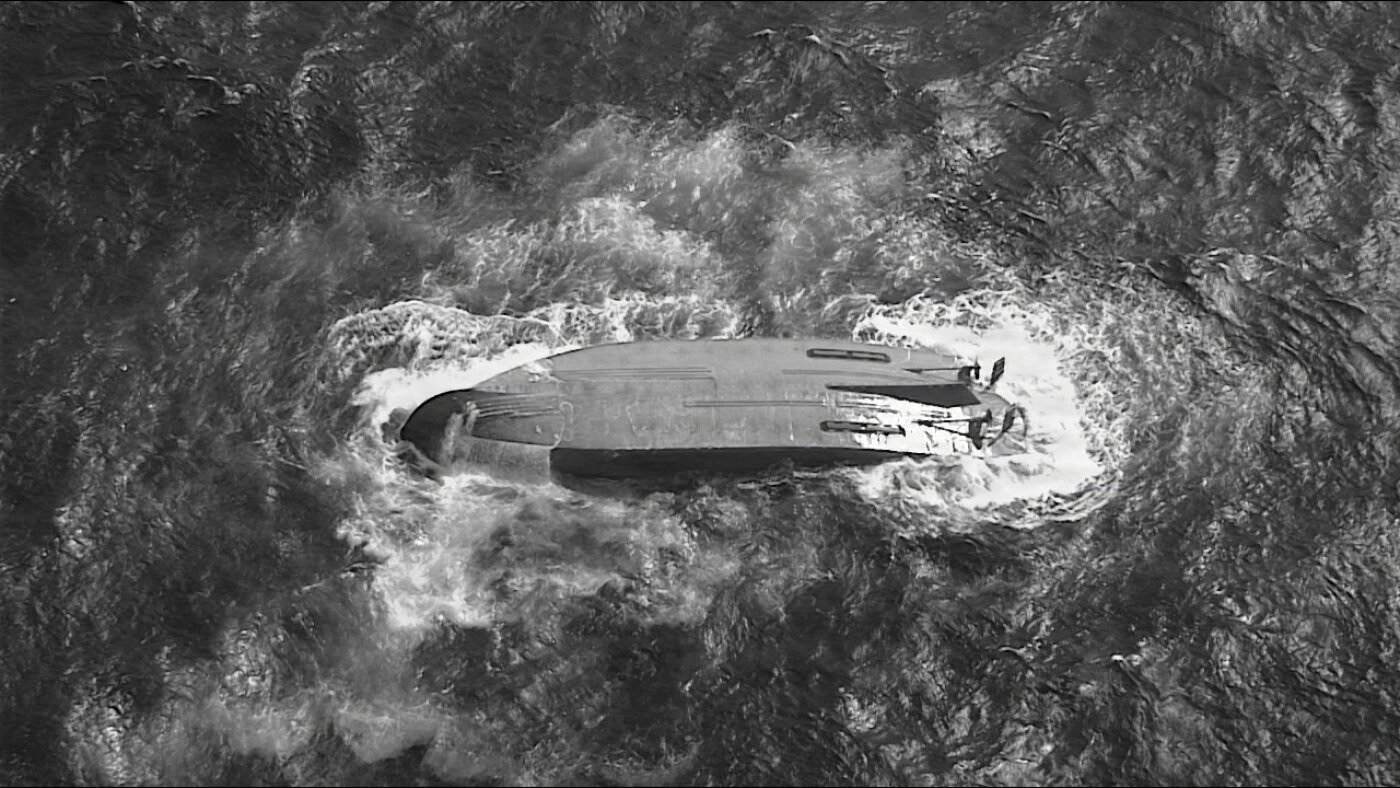
The U.S. Coast Guard spotted an overturned vessel near Saipan on April 18, 2026, during an ongoing search for the Mariana, a 145-foot dry cargo ship that lost power amid a rapidly intensifying typhoon in the Western Pacific. The sighting, made by an HC-130 Hercules aircraft crew from Coast Guard Air Station Barbers Point in Hawaii, marked a significant development in the multi-day rescue operation that has drawn attention from maritime authorities across the region. While the overturned craft has not yet been formally identified, its location and timing align closely with the last known position of the Mariana, prompting heightened focus on determining the fate of the vessel and its crew.
The Mariana, registered in the United States and operated by a Pacific-based shipping firm, reported engine failure on April 15 as Typhoon Higos approached the Mariana Islands with sustained winds exceeding 130 mph. According to the Joint Typhoon Warning Center, the storm rapidly intensified over warm Pacific waters, creating hazardous sea conditions that complicated efforts to tow or stabilize the disabled vessel. Coast Guard District 14 in Honolulu confirmed that the Mariana issued a distress call late on April 15, prompting the immediate deployment of cutters, aircraft, and coordinated support from the Guam-based Rescue Coordination Center.
Search efforts have involved assets from the U.S. Navy, the Japan Coast Guard, and local maritime agencies in the Commonwealth of the Northern Mariana Islands. As of April 19, no survivors or debris from the Mariana had been recovered, though officials emphasized that the search area remains expansive due to strong ocean currents and shifting weather patterns. The overturned vessel spotted on April 18 was observed approximately 40 nautical miles northeast of Saipan, floating inverted in rough seas, with no visible signs of life or movement detected during aerial surveillance.
Maritime safety experts note that vessels of the Mariana’s size and class are particularly vulnerable to sudden loss of propulsion in extreme weather, as engine failure eliminates critical maneuverability needed to avoid hazardous wave patterns. The National Transportation Safety Board has stated it is monitoring the situation and may initiate a formal investigation once the search phase concludes, particularly if the vessel is located and recovered. Such investigations typically examine maintenance records, crew training, and weather routing decisions leading up to the incident.
The incident has renewed discussions about maritime safety protocols in typhoon-prone regions, especially for older cargo vessels operating in remote Pacific corridors. The U.S. Coast Guard’s Pacific Area command reiterated that all commercial vessels transiting U.S. Waters are required to carry emergency position-indicating radio beacons (EPIRBs) and maintain regular check-ins with shore-based monitoring systems. However, gaps in real-time tracking persist for some foreign-flagged or infrequently reporting ships, a concern highlighted in a 2025 Government Accountability Office report on maritime domain awareness in the Indo-Pacific.
Families of the Mariana’s crew, believed to consist of 12 to 16 multinational seafarers, have been contacted through the vessel’s managing operator and are receiving support from Coast Guard liaison officers. Officials have not released names or nationalities pending verification and next-of-kin notification procedures. The Coast Guard encourages the public to avoid speculation and rely on official channels for updates, noting that misinformation can hinder rescue operations and cause unnecessary distress.
As of the latest update on April 20, search operations continue with expanded apply of sonar-equipped vessels and airborne radar sweeps, focusing on subsurface detection in case the vessel sank after capsizing. The Coast Guard has not announced a timeline for suspending active search efforts, stating that decisions will be based on probability of survival, environmental conditions, and consultation with naval experts. The next scheduled briefing from Coast Guard District 14 is expected on April 22, unless significant developments occur earlier.
For real-time updates on the search for the Mariana and safety advisories for mariners in the Western Pacific, the public can refer to the U.S. Coast Guard’s Pacific Area website and the Joint Rescue Coordination Center in Guam. These official sources provide verified information on mission status, weather conditions, and contact details for families seeking assistance.
Stay informed, share verified updates, and help ensure accurate information reaches those affected by this ongoing maritime emergency.
The U.S. Coast Guard spotted an overturned vessel near Saipan on April 18, 2026, during an ongoing search for the Mariana, a 145-foot dry cargo ship that lost power amid a rapidly intensifying typhoon in the Western Pacific. The sighting, made by an HC-130 Hercules aircraft crew from Coast Guard Air Station Barbers Point in Hawaii, marked a significant development in the multi-day rescue operation that has drawn attention from maritime authorities across the region. While the overturned craft has not yet been formally identified, its location and timing align closely with the last known position of the Mariana, prompting heightened focus on determining the fate of the vessel and its crew.
The Mariana, registered in the United States and operated by a Pacific-based shipping firm, reported engine failure on April 15 as Typhoon Higos approached the Mariana Islands with sustained winds exceeding 130 mph. According to the Joint Typhoon Warning Center, the storm rapidly intensified over warm Pacific waters, creating hazardous sea conditions that complicated efforts to tow or stabilize the disabled vessel. Coast Guard District 14 in Honolulu confirmed that the Mariana issued a distress call late on April 15, prompting the immediate deployment of cutters, aircraft, and coordinated support from the Guam-based Rescue Coordination Center.
Search efforts have involved assets from the U.S. Navy, the Japan Coast Guard, and local maritime agencies in the Commonwealth of the Northern Mariana Islands. As of April 19, no survivors or debris from the Mariana had been recovered, though officials emphasized that the search area remains expansive due to strong ocean currents and shifting weather patterns. The overturned vessel spotted on April 18 was observed approximately 40 nautical miles northeast of Saipan, floating inverted in rough seas, with no visible signs of life or movement detected during aerial surveillance.
Maritime safety experts note that vessels of the Mariana’s size and class are particularly vulnerable to sudden loss of propulsion in extreme weather, as engine failure eliminates critical maneuverability needed to avoid hazardous wave patterns. The National Transportation Safety Board has stated it is monitoring the situation and may initiate a formal investigation once the search phase concludes, particularly if the vessel is located and recovered. Such investigations typically examine maintenance records, crew training, and weather routing decisions leading up to the incident.
The incident has renewed discussions about maritime safety protocols in typhoon-prone regions, especially for older cargo vessels operating in remote Pacific corridors. The U.S. Coast Guard’s Pacific Area command reiterated that all commercial vessels transiting U.S. Waters are required to carry emergency position-indicating radio beacons (EPIRBs) and maintain regular check-ins with shore-based monitoring systems. However, gaps in real-time tracking persist for some foreign-flagged or infrequently reporting ships, a concern highlighted in a 2025 Government Accountability Office report on maritime domain awareness in the Indo-Pacific.
Families of the Mariana’s crew, believed to consist of 12 to 16 multinational seafarers, have been contacted through the vessel’s managing operator and are receiving support from Coast Guard liaison officers. Officials have not released names or nationalities pending verification and next-of-kin notification procedures. The Coast Guard encourages the public to avoid speculation and rely on official channels for updates, noting that misinformation can hinder rescue operations and cause unnecessary distress.
As of the latest update on April 20, search operations continue with expanded use of sonar-equipped vessels and airborne radar sweeps, focusing on subsurface detection in case the vessel sank after capsizing. The Coast Guard has not announced a timeline for suspending active search efforts, stating that decisions will be based on probability of survival, environmental conditions, and consultation with naval experts. The next scheduled briefing from Coast Guard District 14 is expected on April 22, unless significant developments occur earlier.
For real-time updates on the search for the Mariana and safety advisories for mariners in the Western Pacific, the public can refer to the U.S. Coast Guard’s Pacific Area website and the Joint Rescue Coordination Center in Guam. These official sources provide verified information on mission status, weather conditions, and contact details for families seeking assistance.
Stay informed, share verified updates, and help ensure accurate information reaches those affected by this ongoing maritime emergency.