
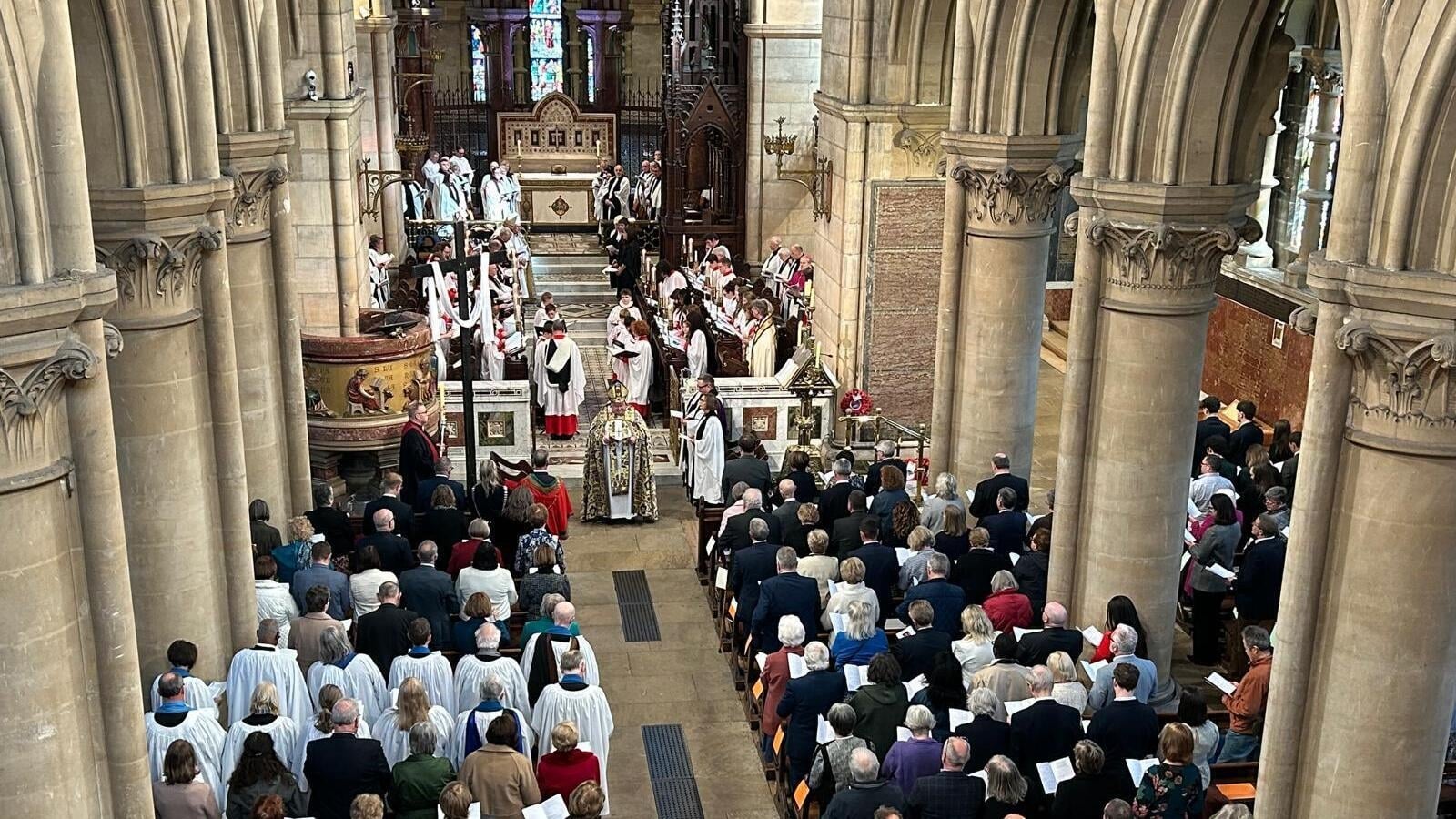
Bishop Paul Colton has retired after more than two decades serving the Anglican dioceses of Cork, Cloyne and Ross in the Church of Ireland. A farewell service was held at St Fin Barre’s Cathedral in Cork to mark the conclusion of his episcopal ministry, which began in 2002. Colton’s retirement brings to a close a significant chapter in the life of the southern Irish diocese, one characterized by interfaith engagement, social advocacy, and efforts to modernize church governance.
The service, attended by clergy, civic leaders, and members of the public, reflected both the breadth of Colton’s influence and the deep respect he garnered across religious and community lines. As Bishop of Cork, Cloyne and Ross, he oversaw a diocese spanning parts of Counties Cork and Kerry, ministering to a widely dispersed Anglican population. His leadership coincided with periods of profound social change in Ireland, including debates over marriage equality, reproductive rights, and the role of religion in public life—issues on which Colton frequently spoke with measured compassion and theological clarity.
Born in Dublin in 1958, Paul Colton studied theology at Trinity College Dublin and was ordained in the Church of Ireland in 1983. Before his episcopal appointment, he served in parish ministry in Dublin and later as Director of the Church of Ireland’s Centre for Theology and Ministry. His election as Bishop of Cork, Cloyne and Ross in 2002 followed the retirement of Bishop John Neill, who went on to become Archbishop of Dublin. Colton’s consecration took place at St Fin Barre’s Cathedral on 23 June 2002, a service attended by ecclesiastical leaders from across the Anglican Communion.
Throughout his episcopate, Colton emphasized ecumenical dialogue, particularly with the Roman Catholic Church in Ireland. He participated regularly in the Irish Inter-Church Meeting and was known for his warm relationship with Catholic bishops in the southern province, including former Bishop of Cork and Ross John Buckley and later Bishop Fintan Gavin. In 2015, he joined other church leaders in signing a joint statement advocating for the protection of asylum seekers and refugees, a position informed by his visits to direct provision centers and his public criticism of Ireland’s asylum system.
Colton also advocated for greater inclusion within the Church of Ireland, supporting efforts to welcome LGBTQ+ individuals while maintaining fidelity to the church’s official doctrine on human sexuality, which defines marriage as between a man and a woman. In 2018, following the Republic of Ireland’s referendum to remove the constitutional ban on blasphemy, he acknowledged the vote as a reflection of evolving societal attitudes while reaffirming the church’s commitment to respectful discourse. His approach often sought to balance tradition with pastoral sensitivity, a stance that drew both praise and criticism within the wider Anglican Communion.
Under his leadership, the diocese undertook structural reviews aimed at improving financial sustainability and congregational vitality. Facing declining attendance and aging clergy—trends mirrored across mainline Protestant denominations in Western Europe—Colton encouraged innovative models of ministry, including shared pastoral responsibilities and greater lay involvement. He also supported the preservation of historic church buildings, many of which date to the 18th and 19th centuries, while recognizing the financial challenges of their upkeep in rural areas.
The Bishop of Cork, Cloyne and Ross is one of the ten episcopal sees within the Church of Ireland, the autonomous province of the Anglican Communion covering the entire island of Ireland. Though numerically smaller than the Roman Catholic Church in Ireland, the Church of Ireland retains a significant cultural and architectural presence, particularly in urban centers like Cork, Dublin, and Belfast. Colton’s diocese includes notable sites such as St Fin Barre’s Cathedral—a Gothic Revival masterpiece designed by William Burges—and the historic St Multose Church in Kinsale, which dates back to the 12th century.
His retirement follows the standard practice in the Church of Ireland, where bishops are invited to submit their resignation upon reaching the age of 70, though actual retirement may occur later depending on health and diocesan needs. Colton turned 70 in 2028, but had indicated his intention to step down several years prior to allow for an orderly transition. The process of selecting his successor began in late 2023, involving consultation with diocesan representatives, clergy, and lay members, culminating in the election of a modern bishop by the Episcopal Electoral College.
The Reverend Doctor Michael Burrows, currently Bishop of Cashel, Ferns and Ossory, was elected as the next Bishop of Cork, Cloyne and Ross in early 2024. His consecration is scheduled for later this year, pending completion of canonical procedures. Burrows, known for his scholarly function in ecclesiology and his experience in rural ministry, has signaled a continuity of Colton’s emphasis on dialogue and outreach, while also expressing interest in strengthening youth engagement and digital ministry initiatives.
As Colton steps back from active episcopal duties, he is expected to retain the title of Bishop Emeritus of Cork, Cloyne and Ross, a honorary designation granted to retired bishops in recognition of their service. He has indicated plans to remain in the Cork area, where he and his wife have lived for over two decades, and to continue occasional preaching and teaching engagements, though without administrative responsibility.
The retirement of a long-serving bishop often prompts reflection on the evolving role of religious leadership in secular societies. In Ireland, where weekly church attendance among Anglicans has declined significantly since the mid-20th century, bishops like Colton have increasingly acted as moral voices in public debate rather than administrators of large congregations. His tenure coincided with the Church of Ireland’s own internal discussions about relevance, identity, and mission in a pluralistic republic.
Stakeholders affected by the transition include clergy and parishioners across the diocese, particularly those in rural communities where churches serve as vital social hubs. Local councils and heritage organizations also maintain interest in the diocese’s stewardship of historic properties, many of which are protected structures under Irish law. Ecumenical partners—including Catholic, Methodist, and Presbyterian leaders—have noted Colton’s personal contributions to interfaith cooperation, describing him as a consistent bridge-builder.
For readers seeking official updates on the Church of Ireland’s governance, diocesan announcements, or liturgical calendars, the Church of Ireland’s website provides centralized access to news, policies, and contact information for each diocese. The Diocese of Cork, Cloyne and Ross maintains its own section with details on parish contacts, safeguarding procedures, and upcoming services. The Representative Church Body, the governing authority of the Church of Ireland, publishes annual reports and financial statements available to the public.
As the Anglican Communion continues to navigate global tensions over doctrine and governance, the retirement of figures like Paul Colton offers a moment to assess not only individual legacies but also the broader trajectory of regional churches adapting to changing times. His service underscores the enduring, if evolving, presence of Anglicanism in Irish life—a presence marked not by numerical dominance but by persistent engagement with education, social justice, and interreligious understanding.
Now that Bishop Paul Colton has officially retired, attention turns to the consecration of his successor, Bishop Michael Burrows, later this year. The Church of Ireland has confirmed that the Episcopal Electoral College completed its election process in February 2024, with Burrows receiving the required majority. A date for his consecration service at St Fin Barre’s Cathedral will be announced in the coming weeks following consultation with the College of Bishops and the Primate of All Ireland, Archbishop John McDowell.
We welcome your thoughts on this story. Share your reflections in the comments below and assist spread informed conversation by sharing this article with others.