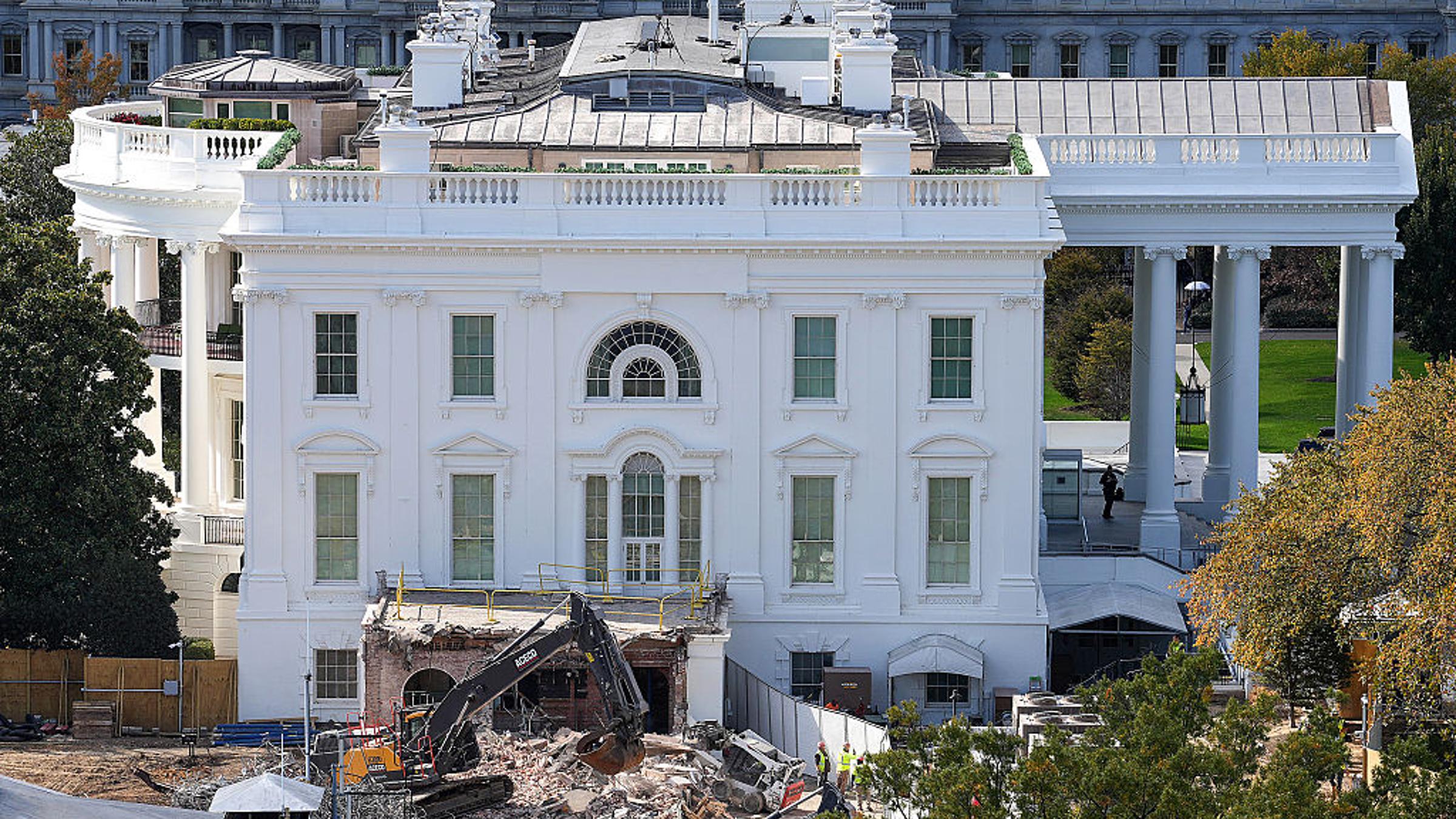
As legal proceedings continue over the proposed renovation of the White House East Wing, attention has shifted to a less visible but potentially significant component of the project: an underground facility intended to replace the existing Presidential Emergency Operations Center. While public discourse has focused on the above-ground elements, including a planned ballroom, government filings and judicial orders indicate that perform beneath the surface may proceed under specific legal conditions tied to national security considerations.
The controversy centers on whether the administration has the authority to proceed with construction without congressional approval, particularly after a federal judge ruled in late March that all above-ground work must halt until Congress authorizes the project. However, the same ruling permitted certain underground activities to continue if deemed necessary for the safety and security of the White House—a provision the administration has invoked to justify ongoing work on what it describes as a modernized underground complex.
To understand the significance of this development, it is essential to examine the history and function of the facility being replaced. The Presidential Emergency Operations Center, or PEOC, has served as a secure underground shelter beneath the White House since its construction during World War II. Designed to protect senior officials in the event of an attack, the PEOC has evolved over decades into a hardened communications and command center capable of supporting presidential operations during crises.
Historical accounts confirm its use during pivotal moments, including the September 11, 2001 terrorist attacks, when then-Vice President Dick Cheney was taken to the facility shortly after the first plane struck the World Trade Center. According to his memoir and contemporaneous reports, Cheney remained in the PEOC for much of the day, coordinating the government’s response. President George W. Bush, who was in Florida at the time, was later flown to the bunker that evening after Air Force One was deemed a potential target.
More than a decade later, during the protests near the White House in June 2020 following the murder of George Floyd, former President Donald Trump was briefly escorted to the PEOC. He later described the visit to Fox News as a security precaution, stating he was underground for a short period and characterizing it as an inspection rather than a prolonged stay. These instances underscore the facility’s enduring role as a last-resort shelter for presidential continuity.
Over time, the PEOC has undergone upgrades to reflect evolving threats and technological needs. While specific details remain classified, publicly available information from the White House Historical Association notes that the space includes reinforced concrete walls, advanced air filtration, secure communications systems, and provisions for extended occupancy. It is designed not merely as a bunker but as a functional command center where the president and key advisors could continue to govern during an emergency.
The current controversy arises from plans to replace this aging infrastructure with a new facility described by administration officials as a “massive” underground complex. In public remarks, Trump has characterized the project as encompassing blast-resistant structures, secure telecommunications, bio-defense capabilities, and medical facilities. He has also stated that the new ballroom being constructed above ground would serve in part as a protective cover for the work below, featuring bulletproof glass and other security enhancements.
These claims were echoed in legal filings submitted to the federal court overseeing the case. In a document submitted earlier this year, the Department of Justice, representing the administration, outlined plans for the underground work, including missile-resistant steel components, drone-proof materials, and blast-hardened glazing. The filing also referenced the development of specialized areas for medical response, secure communications, and classified military installations—though it provided no schematics, timelines, or cost estimates.
Critics, including the National Trust for Historic Preservation, have challenged the legality of the project, arguing that alterations to the White House—a National Historic Landmark—require congressional authorization under the National Historic Preservation Act. The organization filed suit in late 2024, contending that the demolition of the East Wing and associated construction violate preservation laws designed to protect the integrity of the presidential residence.
In its March 31 ruling, Judge James E. Boasberg of the U.S. District Court for the District of Columbia sided with the preservation group, ordering a halt to all above-ground construction until Congress acts. However, he acknowledged an exception for work necessary to ensure the safety and security of the White House, a determination that would require case-by-case evaluation. The judge did not define what constitutes such necessity, leaving room for interpretation by the administration.
Following the ruling, the administration maintained that the underground work qualified under this exception. White House officials have not disclosed the nature or scope of the classified elements of the project, citing national security concerns. In a court filing, Secret Service Deputy Director Matthew Quinn stated that pausing construction would impede the agency’s ability to fulfill its protective mission, though he offered to provide more details to the judge in a closed setting.
Similarly, Joshua Fisher, the White House Director of Management and Administration, told the National Capital Planning Commission in January that certain aspects of the project involve top-secret work currently underway. When pressed for details by reporters, White House Press Secretary Karoline Leavitt declined to elaborate, stating only that military upgrades were underway and that she was not authorized to discuss specifics.
Because much of the project remains shielded from public view, independent verification of claims about the scale, cost, or capabilities of the underground facility is not currently possible. The administration has not released a formal budget for the work, and the $400 million figure cited in some reports refers specifically to the above-ground ballroom component, not the subterranean construction.
Historical precedents for underground presidential facilities suggest that such projects are typically undertaken with careful engineering and security planning. During the Cold War, for example, extensive studies were conducted on emergency relocation sites for government continuity, including the well-known Raven Rock Mountain Complex and the bunker beneath the Greenbrier Hotel. While the White House’s subterranean space is far more limited in scale, it serves a distinct purpose: immediate, on-site protection for the president and senior staff during the critical minutes following an attack.
Experts in continuity of government note that while the PEOC is not designed to withstand a direct nuclear strike, it provides protection against blast effects, chemical agents, and electromagnetic pulses up to certain thresholds. Its value lies in its proximity to the Oval Office, allowing for near-instantaneous relocation—a factor that could be crucial in scenarios where early warning is limited.
The balance between transparency and security remains a central tension in this debate. While the public has a right to understand how public funds are used and whether alterations to a national monument comply with preservation laws, the executive branch maintains that certain details of defensive infrastructure must remain classified to prevent adversaries from exploiting vulnerabilities.
As of now, the project remains in a legal holding pattern. Above-ground work is paused pending congressional action, but underground activities may continue if they meet the narrow criteria established by the court. No further hearings have been scheduled in the case, and neither Congress nor the courts have issued new directives regarding the project’s status.
For those seeking to follow developments, the docket for the case—Civil Action No. 2025-4316—is available through the U.S. District Court for the District of Columbia’s public access system. Updates may also emerge from the National Trust for Historic Preservation, which continues to monitor the litigation, or from congressional committees with oversight responsibilities for federal construction and historic preservation.
What remains clear is that the White House, as both a working office and a national symbol, exists at the intersection of security, history, and democratic accountability. Any changes to its physical structure—whether visible or concealed—carry implications that extend beyond engineering into the realms of law, memory, and governance.
Stay informed, share your thoughts, and join the conversation about how we balance safety with transparency in the places that define our democracy.
Keep reading