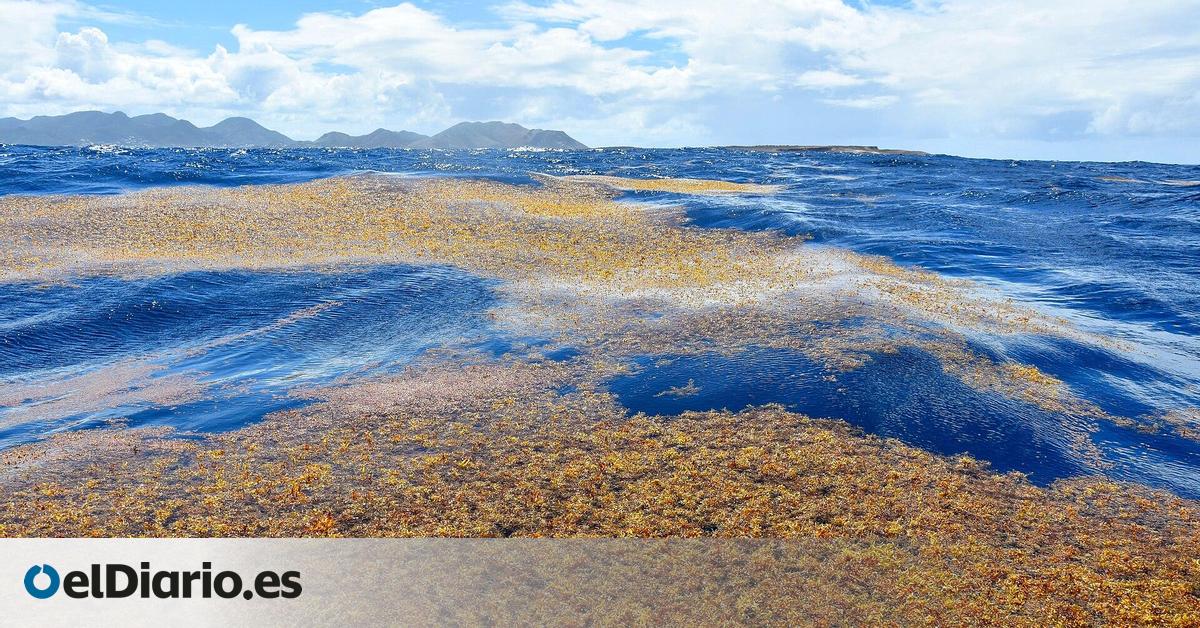
Along the sun-drenched shores of Cádiz, a quiet invasion is unfolding beneath the waves and across the sand. Rugulopteryx okamurae, a brown seaweed native to the Pacific waters of Japan and Korea, has established a formidable presence along Spain’s southern Atlantic coast, transforming what was once a minor nuisance into a persistent environmental and economic challenge. Its rapid spread, first detected in the region around 2015, has prompted urgent scientific inquiry not only into its ecological impact but also into innovative ways to turn this growing biomass into a resource rather than a burden.
The algae’s arrival is no accident of nature. Scientists trace its introduction to maritime traffic, likely via ballast water or hull fouling from vessels traveling between Asia and Europe. Once established in the sheltered waters of the Strait of Gibraltar, it found ideal conditions: warm temperatures, ample nutrients from agricultural runoff, and a lack of natural predators. Unlike native seaweeds that are kept in check by marine herbivores, Rugulopteryx okamurae faces little grazing pressure, allowing it to form dense underwater monocultures that smother seagrass beds and block sunlight from reaching the seafloor.
This submerged dominance is where the real damage occurs. While the rotting piles on beaches produce a foul, eggy odor from hydrogen sulfide released during decomposition, the greater threat lies beneath the surface. Studies conducted by the University of Sevilla’s Marine Biology Laboratory present that the alga can reduce light penetration by up to 70% in invaded areas, severely impacting native flora such as Cymodocea nodosa and Zostera noltei, two seagrass species vital to coastal biodiversity and carbon sequestration. The alteration of benthic communities has ripple effects through the food web, affecting fish nurseries and invertebrate populations that local fisheries depend on.
“The problem isn’t what you see on the sand — it’s what’s happening below the tide line,” explained Juan José Vergara, professor of marine ecology at the University of Sevilla, in a 2023 presentation at the International Conference on Marine Invasions. “When this alga carpets the seabed, it doesn’t just compete for space — it rewrites the rules of the ecosystem.” His remarks, echoed in subsequent peer-reviewed research, underscore a growing consensus among marine biologists that invasive macroalgae pose a silent but profound threat to temperate coastal zones worldwide.
From Coastal Nuisance to Circular Opportunity
Faced with mounting removal costs — Cádiz alone has reported spending over €500,000 annually on algae collection and disposal since 2020 — researchers began exploring whether the very trait that makes Rugulopteryx okamurae problematic — its rapid growth and high biomass yield — could be harnessed for sustainable use. A collaborative project launched in 2019 between the University of Sevilla, Red Eléctrica de España (REE), and the Spanish National Research Council (CSIC) set out to evaluate pathways for valorizing the invasive seaweed under principles of the circular economy.
Initial phases focused on ecological monitoring and removal logistics. Data collected from monitoring stations along the Cádiz coastline revealed that in peak season, single cleanup operations can extract more than 60 tonnes of wet algae from just a few kilometers of shore, as recorded in municipal waste logs from 2022 and 2023. In La Línea de la Concepción, crews removed 10 tonnes in under two days during a March 2023 surge, highlighting the labor and fuel intensity of current management strategies.
These figures prompted a shift from mere containment to resource recovery. Scientists began testing anaerobic digestion — a process where microorganisms break down organic matter in the absence of oxygen — to produce biogas rich in methane. Early lab trials showed that one tonne of dried Rugulopteryx okamurae could yield approximately 120 cubic meters of biogas, with methane content reaching 55–60%, comparable to some agricultural waste streams. Further optimization through mechanical and thermal pretreatment increased methane output by up to 30%, according to findings published in the journal Renewable Energy in 2024 by a team led by Rafael Borja of CSIC’s Institute of Carboquímica.
“The algae isn’t just fuel — it’s a feedstock,” Borja noted in an interview with Agencia SINC. “With proper pretreatment, we’re not only generating renewable gas but also producing a digestate that, after salinity reduction, can serve as a biofertilizer for salt-tolerant crops.” This dual output — energy and soil amendment — positions the invasive species as a potential cornerstone of coastal biorefineries, particularly in regions where traditional agriculture faces salinity challenges.
Biological Preprocessing: Insects as Eco-Engineers
Recognizing that raw algae contains high levels of iodine, heavy metals, and polyphenols that can inhibit microbial activity in digesters, researchers turned to nature for a solution: invertebrate bioconversion. In partnership with the University of Extremadura, teams began experimenting with two species known for their robustness in organic waste processing: the black soldier fly (Hermetia illucens) and the Madagascar hissing cockroach (Eublaberus serripennis).
These invertebrates were fed dried, milled algae in controlled environments. Over a 14-day period, the black soldier fly larvae reduced algal mass by up to 65%, converting it into protein-rich frass and larval biomass suitable for animal feed. The cockroaches, while slower, demonstrated a unique ability to tolerate high iodine concentrations, breaking down complex phenolic compounds that often stall microbial digestion. Post-processing, the resulting material showed lower toxicity and improved biodegradability in subsequent anaerobic stages.
“We’re not trying to eliminate the algae with bugs — we’re using them as a preprocessing step,” explained María López, lead researcher on the invertebrate project at the University of Extremadura. “Believe of it as a biological primer: the insects make the algae more digestible for microbes, just like chewing makes food easier for our stomachs to handle.” The approach, detailed in a 2024 study in Journal of Environmental Management, offers a low-energy, low-chemical alternative to traditional pretreatment methods.
Expansion Beyond the Strait: A National Alert
What began as a localized concern in the Bay of Cádiz has now evolved into a nationwide monitoring priority. Confirmed sightings of Rugulopteryx okamurae have emerged as far north as Galicia, including the protected marine environs of the Islas Cíes, where its presence raises alarms for delicate kelp forests and endangered species like the European spider crab (Maja squinado). The Spanish Ministry for Ecological Transition (MITECO) has classified the alga as an invasive alien species of concern under Royal Decree 630/2013, which governs the prevention and management of biological invasions in Spanish territory.
Under this framework, regional governments are required to implement early detection protocols, rapid response plans, and strict controls on the transport of potentially contaminated materials — including fishing gear, diving equipment, and even beach maintenance machinery — to prevent accidental spread. In 2023, MITECO allocated €1.2 million to a national surveillance network coordinated by the Spanish Oceanographic Institute (IEO), which now includes monthly underwater drone surveys and citizen reporting portals.
“We’re treating this like a biological oil spill,” said Carmen Quintana, MITECO’s invasive species coordinator, in a 2024 briefing to regional environmental agencies. “The goal isn’t eradication — that’s likely impossible now — but containment, impact mitigation, and turning the threat into a managed resource.”
Toward a Sustainable Model
The work in Cádiz is increasingly seen as a pilot for broader application. Beyond biogas and fertilizer, researchers are investigating extracts from Rugulopteryx okamurae for potential use in cosmetics and pharmaceuticals, leveraging its high antioxidant and antimicrobial properties. Preliminary studies by the CSIC and the University of Sevilla’s Faculty of Pharmacy have identified compounds with activity against Staphylococcus aureus and anti-inflammatory effects in cell cultures, though clinical applications remain years away.
Initiatives like Bosque Marino, promoted by Redeia and the Ecomar Foundation, aim to channel public and private funding toward marine restoration projects that incorporate invasive species management as part of ecosystem recovery. These efforts emphasize community involvement, training local fishers and coastal municipalities in sustainable harvesting techniques that double as environmental stewardship.
As of early 2025, the anaerobic digestion pilot plant at the University of Sevilla’s Cartuja campus continues to operate on a semi-continuous basis, processing up to 2 tonnes of algae per week. Data from this facility is being used to refine models for potential commercial-scale facilities, with interest expressed by several Andalusian waste management consortia.
The story of Rugulopteryx okamurae is no longer just about invasion — it’s about adaptation. What began as a ecological warning sign is now prompting a reimagining of coastal resilience: one where the line between waste and resource is redrawn not by ignoring the problem, but by confronting it with science, ingenuity, and a willingness to see value in the unexpected.
For updates on invasive species monitoring in Spanish coastal waters, visit the Ministry for Ecological Transition’s official portal on biological invasions. Citizens can report sightings through the IEO’s Observadores del Mar platform.
If you found this exploration of coastal innovation informative, consider sharing it with others interested in marine sustainability or circular solutions. Join the conversation below — what other overlooked resources might be hiding in plain sight along our shores?