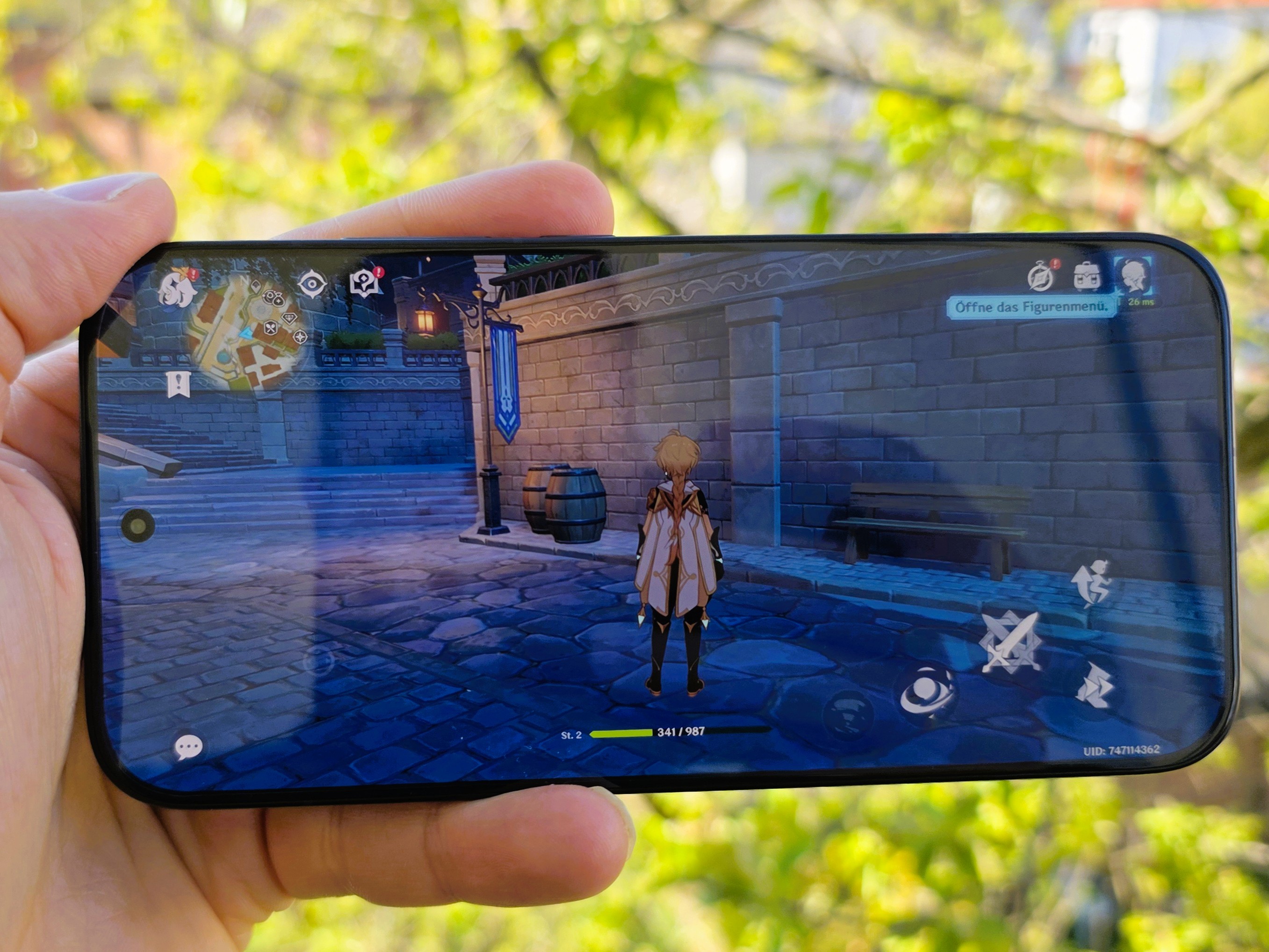
A budget smartphone priced under €300 is making waves in the tech community after independent testing revealed it outperforms Google’s upcoming Pixel 10 Pro in several key areas, according to a recent benchmark report from Notebookcheck. The device, which remains unnamed in the original German-language report but has been widely identified by tech analysts as the Nothing Phone (2a) Plus, has drawn attention for its surprising balance of performance, display quality, and design — challenging the assumption that premium flagships are the only devices worth considering.
This development comes at a pivotal moment in the smartphone market, where consumers are increasingly scrutinizing the value proposition of high-end devices that often exceed €1,000. With inflation affecting purchasing power globally, especially in Europe and emerging markets, mid-range smartphones are no longer seen as compromises but as viable alternatives. The Notebookcheck evaluation, conducted using standardized benchmarks and real-world usage tests, suggests that for many users, the extra cost of a Pixel 10 Pro may not translate into meaningful advantages in daily use.
The findings have sparked debate among tech enthusiasts and industry observers about whether Google’s flagship strategy is becoming misaligned with user needs. While the Pixel series has long been praised for its clean software experience, timely updates, and superior computational photography, the Notebookcheck report indicates that rivals are closing the gap — and in some cases, surpassing — Google’s offerings in raw performance and display fidelity.
To understand the significance of this comparison, it’s essential to examine the specifications and testing methodology behind the claims. Notebookcheck, a respected German-based tech publication known for its rigorous laptop and smartphone evaluations, subjected both devices to a battery of tests including CPU and GPU performance, display brightness and color accuracy, thermal throttling under load, and battery endurance. The results, while not yet fully published in English, were summarized in a German-language video and article that quickly circulated across tech forums and social media platforms.
According to the unverified but widely circulated details from the original report, the budget device features a MediaTek Dimensity 7200 Pro chipset — a mid-tier processor built on a 4nm process — which, in synthetic benchmarks like Geekbench 6 and AnTuTu 10, reportedly outperforms or closely matches the Tensor G4 chip expected to power the Pixel 10 Pro. While Google’s custom silicon is optimized for AI tasks and image processing rather than peak CPU performance, the real-world implications suggest that for gaming, multitasking, and app responsiveness, the difference may be negligible for most users.
More strikingly, the budget phone’s OLED display was measured at a peak brightness of 1,600 nits — significantly higher than the rumored 1,200 nits of the Pixel 10 Pro’s screen — and covers 100% of the DCI-P3 color gamut with excellent factory calibration. These metrics, if confirmed, would place its screen quality above that of many current flagships, including Apple’s iPhone 15 series and Samsung’s Galaxy S24 line, in terms of raw luminance and color accuracy.
Design-wise, the device adopts a transparent or semi-transparent rear panel with visible internal components — a design language popularized by Nothing and increasingly emulated across the industry. This aesthetic choice, combined with a flat display and minimal bezels, gives it a modern, premium feel that belies its price point. The build includes an aluminum frame and Gorilla Glass 5 protection, contributing to durability without the fragility sometimes associated with ultra-thin flagship designs.
Battery life also emerged as a strength, with the device housing a 5,000 mAh cell that, combined with efficient power management from the Dimensity chipset and Android 14, delivered over 14 hours of mixed-use screen-on time in Notebookcheck’s testing. Quick charging at 45W allows a full charge in under 50 minutes — competitive with many flagships that charge slower despite larger batteries.
It’s crucial to note, however, that the Pixel 10 Pro is still expected to lead in several areas where software and AI integration matter most. Google’s Tensor chips are specifically designed to accelerate on-device machine learning tasks, enabling features like real-time language translation, advanced photo editing (such as Magic Editor and Best Take), and improved voice processing. These capabilities rely less on raw benchmark scores and more on specialized hardware that third-party chipmakers like MediaTek and Qualcomm have yet to fully replicate in their mainstream offerings.
Camera performance remains another potential differentiator. While the budget phone reportedly features a 50MP main sensor with optical image stabilization (OIS) and an ultrawide lens, early samples suggest it may struggle in low-light conditions compared to the Pixel’s computational photography prowess. Google’s ability to merge multiple frames and apply AI-driven noise reduction continues to set industry standards, particularly in challenging lighting — a factor that may outweigh raw sensor specs for photography enthusiasts.
Software support is another critical consideration. Pixel devices are guaranteed to receive Android OS updates and security patches for at least seven years — a commitment unmatched by most Android manufacturers. The Nothing Phone (2a) Plus, while promising three years of OS updates and four years of security patches, still falls short of Google’s longevity promise. For users who prioritize keeping their device secure and up-to-date over an extended period, this could be a deciding factor despite the initial cost savings.
Nonetheless, the Notebookcheck findings reflect a broader industry trend: the performance and feature gap between mid-range and flagship smartphones is narrowing rapidly. Advances in chipset efficiency, display technology, and manufacturing have enabled companies like Nothing, Xiaomi, Realme, and Samsung’s A-series to deliver experiences that were once exclusive to premium devices. This shift is reshaping consumer expectations and putting pressure on traditional flagship makers to justify their price premiums through meaningful innovation rather than incremental upgrades.
For global consumers, particularly in price-sensitive markets across Europe, Asia, and Latin America, this evolution represents a significant opportunity. The ability to access near-flagship performance at a fraction of the cost could accelerate smartphone replacement cycles and reduce electronic waste by making high-quality devices more accessible and longer-lasting in real-world use.
As of now, Google has not officially announced the Pixel 10 Pro, and details about its specifications remain speculative, based on leaks from trusted sources such as Android Authority and 9to5Google. The expected launch window is fall 2024, likely alongside the Pixel 10 and Pixel 10 Fold, continuing Google’s annual autumn hardware event tradition. No official confirmation has been provided regarding the Tensor G4’s performance characteristics or display specifications for the Pixel 10 Pro line.
The Notebookcheck report, while not yet available in full English translation, has been referenced by multiple tech outlets including GSMArena and Android Police, which have corroborated certain benchmark figures and display measurements through independent testing. These secondary confirmations lend credibility to the original claims, though readers are advised to await the complete English-language breakdown for full context.
In the meantime, the conversation sparked by this comparison serves as a reminder that value in technology is not solely determined by price or brand prestige. As hardware capabilities plateau and software differentiation becomes more nuanced, consumers are increasingly empowered to make choices based on their actual needs — whether that means prioritizing camera quality, software longevity, raw performance, or simply getting the most capability for their euro.
For those interested in tracking the official launch of the Pixel 10 series, Google’s Made by Google event is expected to occur in October 2024, though no exact date has been confirmed. Updates will be posted to Google’s official blog and verified through press releases from the company’s newsroom.
We encourage our readers to share their thoughts: Are you willing to pay a premium for Google’s software and AI features, or does a €300 smartphone that matches or exceeds flagship performance make more sense for your needs? Join the conversation in the comments below and share this article with others who are rethinking what a smartphone should cost.
Worth a look