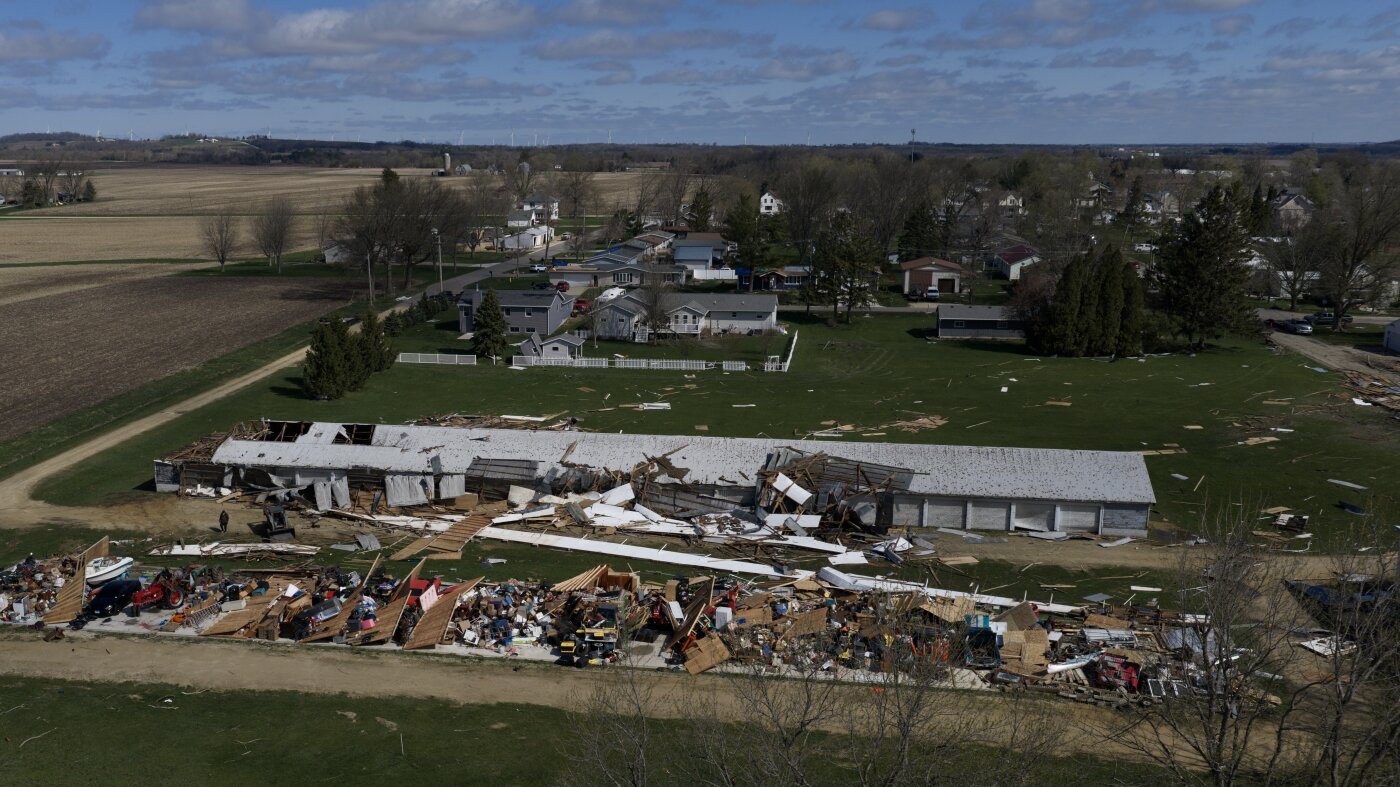
Communities across the American Midwest are in the early stages of recovery after a series of severe thunderstorms and tornadoes swept through multiple states over the weekend, leaving behind damaged homes, downed power lines, and blocked roadways. Emergency responders and volunteers have begun cleanup operations in affected areas, focusing on debris removal, safety assessments, and restoring essential services. The storms, which developed along a strong frontal system moving eastward from the Rockies, prompted numerous tornado warnings and watches across Illinois, Indiana, Missouri, and Kentucky.
Preliminary reports from local emergency management agencies indicate that at least 12 tornadoes were confirmed by the National Weather Service (NWS) between Friday evening and Sunday morning, with the strongest rated EF3 on the Enhanced Fujita scale. One particularly long-track tornado touched down near Effingham, Illinois, and traveled over 60 miles before lifting near Vincennes, Indiana, causing widespread structural damage along its path. No fatalities have been officially reported as of Monday morning, though several injuries were treated at regional hospitals.
The cleanup effort is being coordinated by county emergency operations centers, with support from the Federal Emergency Management Agency (FEMA) and the American Red Cross. In Marion County, Illinois, officials opened a disaster relief center at the local community center to distribute water, food, and hygiene kits to displaced residents. Similar efforts are underway in Henderson County, Kentucky, where volunteers are helping clear fallen trees from rural roads to allow access for utility crews.
Storm Impact and Verified Damage Assessments
According to the NWS office in Paducah, Kentucky, survey teams confirmed tornado activity in five counties across western Kentucky and southern Illinois on Saturday. The most significant damage was reported in Massac County, Illinois, where a tornado destroyed multiple homes and a small manufacturing facility near Metropolis. The agency noted that straight-line winds exceeding 80 mph similarly contributed to widespread tree damage and power outages across the region.
Ameren Illinois reported that over 45,000 customers lost electricity at the peak of the outages, with restoration efforts ongoing as crews work to repair downed lines and substations. In a statement released Sunday evening, the utility said it had deployed more than 200 workers from neighboring states to assist with repairs, prioritizing critical facilities such as hospitals and water treatment plants. Duke Energy Indiana confirmed similar outages affecting approximately 18,000 customers in the southern part of the state.
Preliminary estimates from local officials suggest that property damage could exceed $50 million across the affected counties, though final figures will not be available until damage assessments are completed. The Illinois Emergency Management Agency (IEMA) has activated its State Emergency Operations Center in Springfield to monitor the situation and coordinate state resources if needed.
Volunteer Response and Community Resilience
In the absence of major injuries or loss of life, community members have emphasized the importance of mutual aid in the immediate aftermath of the storms. In Evansville, Indiana, a group of residents organized a cleanup brigade using social media to coordinate efforts in the hardest-hit neighborhoods. Similar grassroots initiatives have emerged in Paducah and Cape Girardeau, Missouri, where volunteers are helping elderly residents clear debris from yards and driveways.
The American Red Cross has opened shelters in several locations, including a temporary facility at a high school gymnasium in Harrisburg, Illinois, to house those whose homes were damaged or destroyed. Officials encourage residents to register with the Red Cross Safe and Well website to inform family members of their status. FEMA has also begun accepting applications for individual assistance through its online portal for residents in declared disaster areas.
Meteorologists note that while the immediate threat has diminished, the potential for additional severe weather remains elevated through midweek as another system moves into the Plains. The Storm Prediction Center (SPC) in Norman, Oklahoma, has issued a slight risk outlook for severe thunderstorms across parts of Oklahoma and Kansas on Tuesday, with the primary threats being large hail and damaging winds.
Ongoing Recovery and Safety Guidance
As cleanup continues, officials are urging residents to exercise caution when handling debris, particularly around downed power lines and unstable structures. The Occupational Safety and Health Administration (OSHA) has released guidance for volunteer cleanup crews, recommending the use of protective gear such as gloves, hard hats, and eye protection. Residents are also advised to document property damage with photographs for insurance claims and to contact their providers as soon as possible.
Local health departments in affected counties have issued boil water advisories in areas where water pressure dropped due to infrastructure damage, recommending that residents boil tap water for at least one minute before consumption. The Centers for Disease Control and Prevention (CDC) has also provided guidance on preventing illness during disaster cleanup, including tips on avoiding carbon monoxide poisoning from generators and proper mold remediation techniques.
Looking ahead, state emergency managers say they will continue to assess needs in the coming days and may request additional federal assistance if local resources grow overwhelmed. For now, the focus remains on supporting affected families, clearing roads, and restoring power — a process expected to take several days in the hardest-hit zones.
Residents seeking official updates are encouraged to monitor their county emergency management agency’s website or social media channels, as well as the National Weather Service’s local forecast offices. The FEMA app provides real-time alerts and information on disaster assistance programs.
As communities start to rebuild, the spirit of cooperation evident in the early cleanup efforts offers a reminder of resilience in the face of natural disasters. Those wishing to support recovery efforts can donate to verified local relief funds or volunteer through established organizations such as the United Way or Habitat for Humanity, which are coordinating longer-term rebuilding initiatives.
For the latest verified information on weather alerts, recovery resources, and safety guidelines, readers are advised to consult official sources rather than unverified social media posts. World Today Journal will continue to monitor the situation and provide updates as new developments occur.
Related reading