
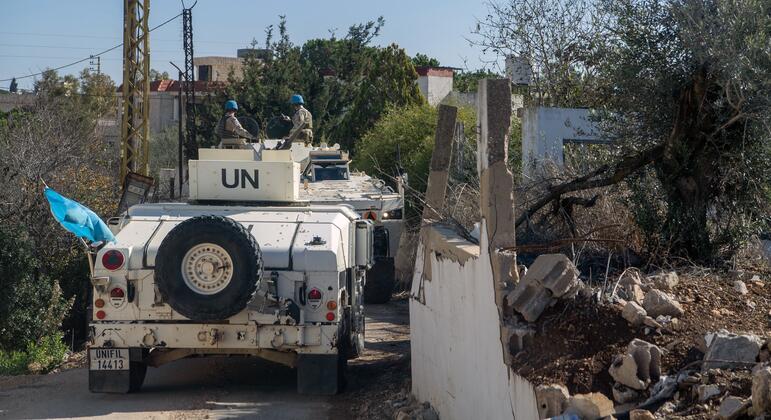
The United Nations secretary-general has issued a strong condemnation following the killing of a peacekeeper and the injury of three others in southern Lebanon, marking another violent incident targeting UNIFIL personnel in a region long marked by tension.
The attack occurred on Saturday when a patrol from the United Nations Interim Force in Lebanon (UNIFIL) came under fire in the vicinity of the Blue Line, the UN-demarcated boundary between Lebanon and Israel. According to a statement released by UNIFIL, the peacekeepers were conducting a routine foot patrol when they were struck by gunfire from an unidentified source. One peacekeeper was killed at the scene, while three others sustained injuries and were evacuated for medical treatment.
Secretary-General António Guterres condemned the attack in the strongest possible terms, calling it a “clear violation of international law” and an affront to the safety of those serving under the UN flag. “Attacks on peacekeepers are unacceptable and must cease immediately,” Guterres said in a statement issued from UN headquarters in New York. He urged all parties to respect the safety and security of UN personnel and to allow UNIFIL to carry out its mandate without interference.
The incident underscores the ongoing risks faced by the approximately 10,000 peacekeepers deployed across southern Lebanon as part of UNIFIL’s mission to monitor the cessation of hostilities between Lebanon and Israel, ensure the withdrawal of Israeli forces from Lebanese territory, and assist the Lebanese government in restoring its effective authority in the area.
UNIFIL Patrol Comes Under Fire Near Blue Line
UNIFIL confirmed that the attack took place near the town of Kfar Kila, a location frequently cited in past incidents involving cross-border tensions and sporadic violence along the Blue Line. The mission stated that the patrol was clearly marked and operating within its authorized area of operations when it came under fire.
Three injured peacekeepers were treated at a UN medical facility before being evacuated to a hospital in Naqoura for further care. Their nationalities have not been publicly disclosed, pending notification of next of kin. The fallen peacekeeper’s identity is also being withheld by UN protocol until family notification is complete.
UNIFIL said it has launched an immediate investigation into the attack and is coordinating with the Lebanese Armed Forces to identify those responsible. The mission reiterated its commitment to maintaining stability in the region despite the dangers faced by its personnel.
The secretary-general’s condemnation aligns with recent UN Security Council resolutions calling for the protection of peacekeepers and demanding accountability for attacks on UN personnel. Under international humanitarian law, deliberate attacks on peacekeepers may constitute war crimes, particularly when they are clearly identifiable and engaged in non-combat duties.
Rising Tensions Along the Israel-Lebanon Border
The incident occurs amid heightened volatility along the Israel-Lebanon border, where exchanges of fire between the Israeli military and Hezbollah have intensified in recent months. Since October 2023, the border has witnessed near-daily incidents involving artillery, rockets, and cross-border raids, raising concerns about a broader regional escalation.
UNIFIL has repeatedly warned that the growing frequency of such incidents endangers both civilians and peacekeepers. In its monthly reports, the mission has documented over 150 violations of the cessation of hostilities understanding since the escalation began, including incursions by Israeli aircraft into Lebanese airspace and rocket launches from Lebanese territory toward Israeli-held areas.
Lebanon’s caretaker government has condemned the attack on the UN patrol and called for restraint from all parties. Lebanese Prime Minister Najib Mikati stated that Lebanon remains committed to UN Security Council Resolution 1701, which ended the 2006 Israel-Hezbollah war and established the framework for UNIFIL’s expanded mandate.
Israeli military officials have not issued a specific statement regarding this incident but have previously asserted that their actions along the border are defensive and aimed at preventing threats from Hezbollah, which Israel, the United States, and the European Union designate as a terrorist organization.
UN Calls for Accountability and Protection of Peacekeepers
In response to the killing, the UN has urged the Lebanese authorities to conduct a thorough investigation and bring those responsible to justice. UN spokesperson Stéphane Dujarric said the organization expects full cooperation from Lebanese officials in identifying the perpetrators.
“Peacekeepers are not targets,” Dujarric emphasized during a press briefing. “They are there to support peace, not to become victims of violence. Any attack on them undermines the very purpose of their mission and must be met with accountability.”
The UN has also called on member states to reinforce political and financial support for UNIFIL, noting that the mission operates under significant constraints despite its critical role in preventing further escalation. As of early 2026, UNIFIL’s annual budget exceeds $500 million, funded through UN assessed contributions.
Human rights organizations, including Amnesty International and Human Rights Watch, have echoed the UN’s concerns, urging all parties to respect international law and protect civilians and humanitarian workers in conflict zones.
What In other words for Regional Stability
The killing of a UN peacekeeper serves as a stark reminder of the fragility of the current situation along the Israel-Lebanon border. While UNIFIL’s presence has helped prevent a full-scale resumption of hostilities since 2006, repeated attacks on its personnel challenge its ability to operate effectively and safely.
Analysts warn that if such incidents continue without consequence, they could erode confidence in the UN’s ability to maintain peacekeeping operations in volatile environments. Conversely, a robust response — including thorough investigations, accountability measures, and renewed diplomatic engagement — could reinforce the importance of upholding international norms.
For now, the focus remains on mourning the fallen peacekeeper, supporting the injured, and ensuring that those responsible for the attack are held accountable. The UN has not announced any changes to UNIFIL’s operational posture but said it continues to assess security conditions on the ground.
As developments unfold, the international community will be watching closely to see whether this incident prompts renewed diplomatic efforts to de-escalate tensions or further entrenches the cycle of violence along one of the world’s most fragile borders.
Next Steps and Official Updates
The next official update on the investigation is expected from UNIFIL within seven to ten days, pending coordination with Lebanese authorities. The UN secretary-general’s office has indicated that he will continue to monitor the situation closely and may raise the matter at the next UN Security Council meeting on Lebanon, scheduled for late May 2026.
Readers seeking official information can consult the UNIFIL website (unifil.unmissions.org) or the United Nations Peacekeeping resource page (peacekeeping.un.org/en) for statements, reports, and operational updates.
We invite our readers to share their thoughts on this developing story in the comments below and to help spread awareness by sharing this article with others who seek reliable, fact-based reporting on global affairs.