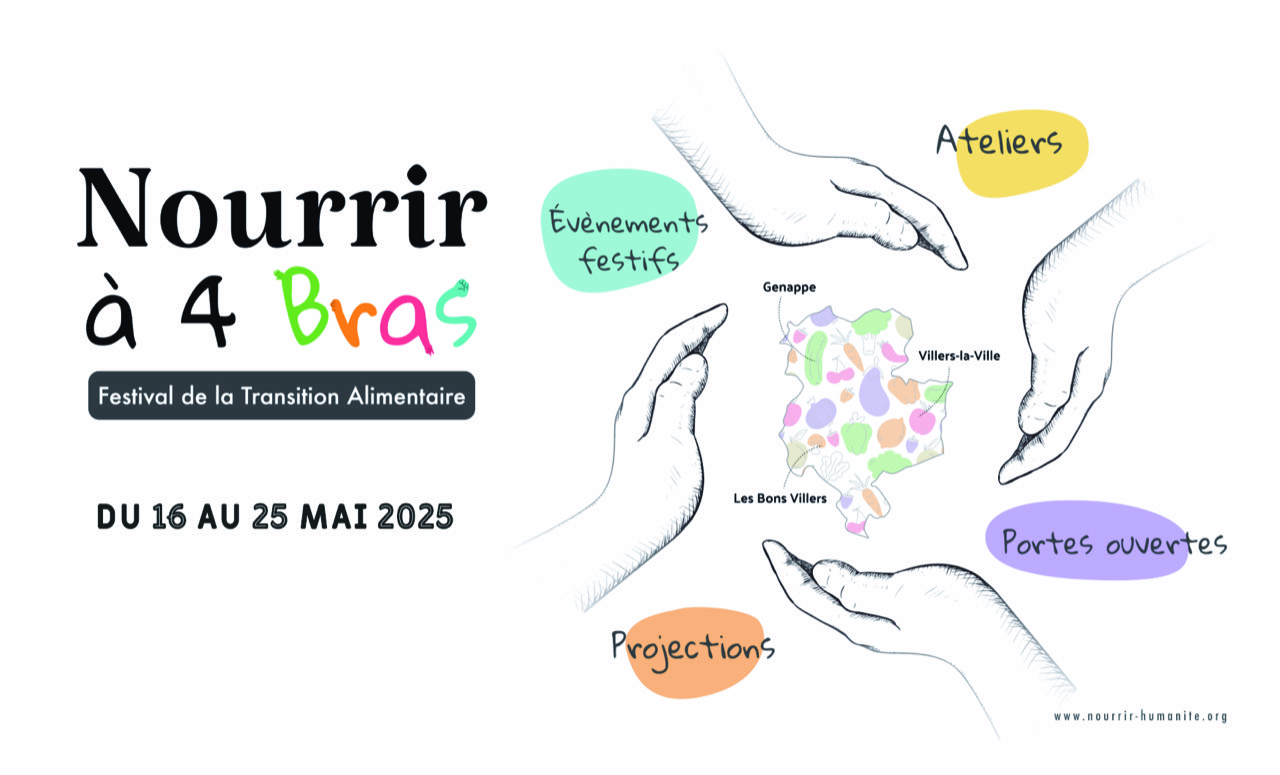
The Nourrir à 4 Bras food transition festival is set to return for its third edition from May 29 to June 7, 2026, spanning the Belgian municipalities of Genappe, Les Bons Villers, and Villers-la-Ville. This annual event, dedicated to reimagining sustainable and equitable food systems, continues to grow in scope and impact, drawing attention from local communities and international observers interested in food justice initiatives.
Organized by Nourrir l’Humanité, the festival places food justice at the heart of its 2026 programming, emphasizing equitable access to healthy, culturally appropriate, and affordably produced food. Over the course of ten days, attendees can participate in workshops, farm visits, thematic walks, and community dialogues designed to examine the influences shaping food choices—from industry practices and pricing structures to social norms and environmental impacts.
The festival’s mission extends beyond awareness-raising to fostering collective action and experimentation. By creating spaces for dialogue between producers, consumers, activists, and policymakers, Nourrir à 4 Bras aims to co-create solutions that transform food from a privilege into a shared right. This year’s edition builds on previous iterations by deepening its focus on systemic change and community-led decision-making in food systems.
As interest in sustainable food movements grows across Europe, events like Nourrir à 4 Bras serve as vital platforms for education and engagement. The festival’s location in Wallonia—a region with strong agricultural traditions and increasing focus on short supply chains—underscores its relevance to both local realities and broader transitions toward agroecological practices.
Understanding Food Justice at the Core of the 2026 Festival
Food justice, as defined by the festival organizers, encompasses fair compensation for producers, inclusive participation in food-related decisions, and universal access to nutritious and culturally resonant food. This framework challenges existing disparities in the global food system by addressing not only what people eat but how food is produced, distributed, and valued.
The 2026 edition will explore these principles through a diverse program of activities, including open days at local farms, interactive workshops on sustainable cooking and gardening, and guided walks that highlight the ecological and social dimensions of food landscapes. These experiences are designed to facilitate visitors reflect on their own roles within the food system while learning about alternatives rooted in solidarity and sustainability.
By centering justice, the festival seeks to move beyond individual behavior change toward structural transformation. Discussions will examine how power dynamics, economic pressures, and policy frameworks shape food access—particularly for marginalized communities—and what steps can be taken to ensure fairness and resilience across the supply chain.
Activities and Community Engagement Across Three Municipalities
Spanning Genappe, Les Bons Villers, and Villers-la-Ville, the festival leverages the unique characteristics of each locality to offer a varied and immersive experience. In Villers-la-Ville, known for its historic abbey and rural surroundings, activities may include guided tours of community gardens and discussions on monastic approaches to food and sustainability. Les Bons Villers, with its mix of farmland and residential areas, is expected to host farm open days and markets featuring local producers. Genappe, situated near major transportation routes, may serve as a hub for larger gatherings, panel discussions, and youth-focused initiatives.
.jpeg/111px-500px_photo_(41786312).jpeg "Villers Food Les Bons Villers")
Over the ten-day period, the festival will balance educational content with participatory actions, encouraging attendees not only to learn but to contribute to ongoing efforts. Past editions have included seed exchanges, communal meals made from locally sourced ingredients, and collaborative art installations that visualize food system challenges and hopes.
All events are designed to be accessible and inclusive, with attention to language accessibility, physical access, and intergenerational participation. The organizers emphasize that the festival is not merely an observation of change but an invitation to co-create it—welcoming farmers, chefs, students, activists, and curious citizens alike to share knowledge and build connections.
The Growing Movement for Sustainable Food in Wallonia and Beyond
Nourrir à 4 Bras operates within a broader context of increasing interest in sustainable food systems across Belgium and Europe. Wallonia has seen growth in initiatives promoting short food supply chains, organic farming, and urban agriculture, supported by both grassroots efforts and regional policies aimed at strengthening local resilience.
The festival aligns with European Union goals under the Farm to Fork Strategy, which seeks to build food systems fairer, healthier, and more environmentally sound. By highlighting local efforts and fostering transnational dialogue, Nourrir à 4 Bras contributes to a growing network of actors working to transform how food is produced and consumed.
Its focus on justice adds a critical dimension often missing in sustainability conversations—ensuring that ecological transitions do not deepen existing inequalities but instead promote fairness and inclusion. This approach resonates with global movements advocating for food sovereignty, agroecology, and the right to food as fundamental human rights.
Looking Ahead: The Festival’s Role in Shifting Food Paradigms
As the festival prepares for its 2026 edition, organizers indicate that programming will continue to evolve based on community feedback and emerging challenges in the food sector. While specific details for future years have not been announced, the commitment to returning annually suggests a long-term vision for sustained engagement and impact.
For those interested in attending or learning more, official updates are typically shared through the Nourrir l’Humanité website and associated social media channels in the months leading up to the event. The festival remains free and open to the public, reinforcing its commitment to accessibility and broad participation.
In a time when food systems face mounting pressures from climate change, economic instability, and social fragmentation, initiatives like Nourrir à 4 Bras offer a model of how communities can approach together to imagine and build alternatives. By combining education, celebration, and concrete action, the festival not only reflects changing attitudes toward food but actively helps shape them.
As May 2026 approaches, the return of Nourrir à 4 Bras stands as a reminder that transforming how we eat is not just about what ends up on our plates—but about the values, relationships, and systems that bring it there.
For ongoing updates and confirmed details about the 2026 program, readers are encouraged to consult the official Nourrir l’Humanité platform as the event draws nearer. Share your thoughts and experiences with food justice initiatives in the comments below, and help spread awareness of efforts working toward a more just and sustainable food future.