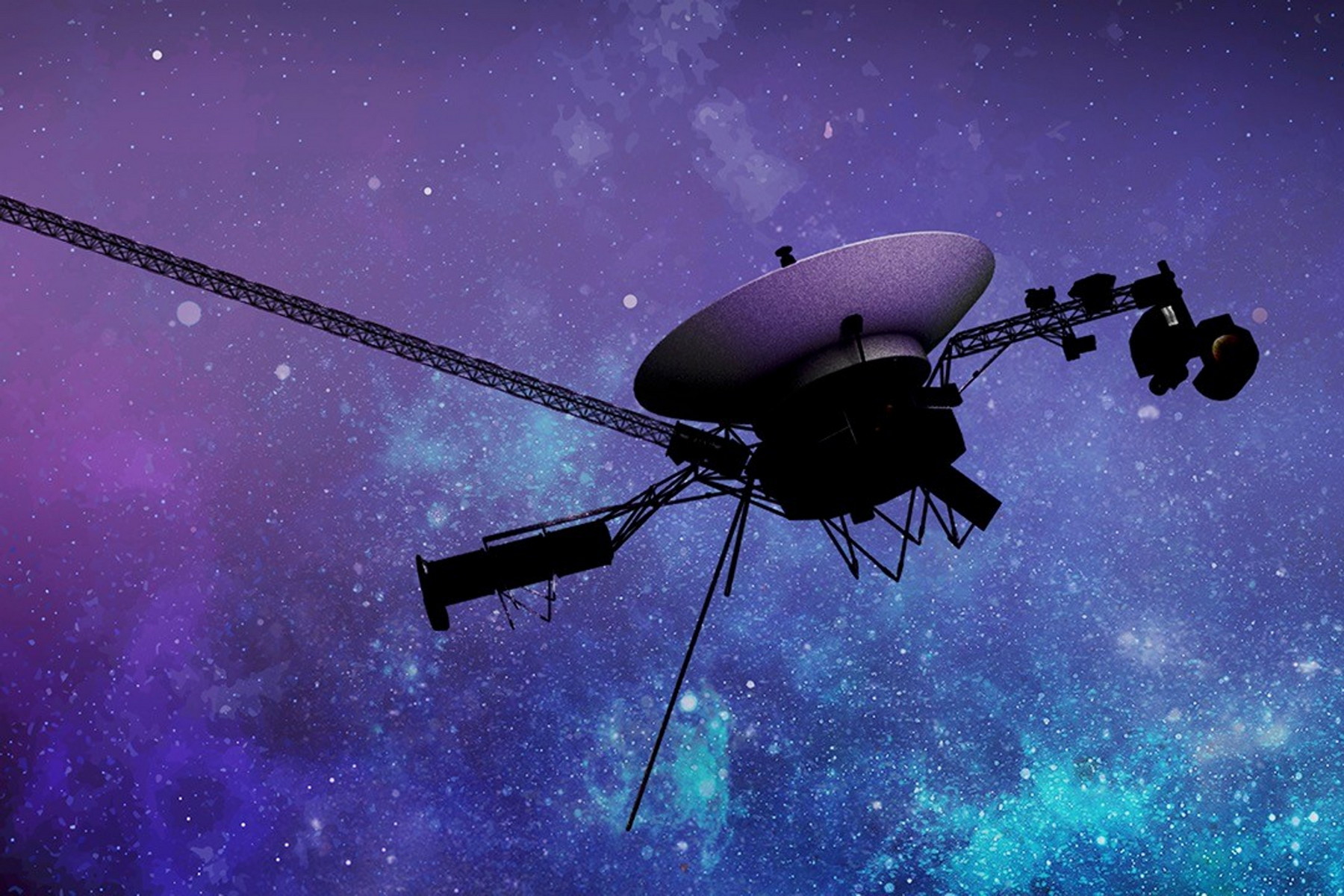
NASA has begun powering down non-essential systems on Voyager 1 to extend the spacecraft’s operational life as its radioactive power source continues to decay. The aging probe, now over 15 billion miles from Earth, is facing diminishing returns from its plutonium-238 fueled radioisotope thermoelectric generator, which loses about 4 watts of power per year. To conserve energy, mission engineers recently shut off the cosmic ray subsystem instrument, one of the last remaining science tools still collecting data in interstellar space.
This latest power management decision follows a pattern of careful resource allocation that has kept Voyager 1 functioning far beyond its original 4-year mission design. Launched in 1977 alongside its twin Voyager 2, the spacecraft entered interstellar space in 2012 and continues to send back valuable data about the heliosphere’s boundary and the environment beyond our solar system. With power levels now critically low, every watt saved could mean months or even years of additional scientific return.
The cosmic ray subsystem, which detects high-energy particles from outside the solar system, was drawing power that could no longer be spared. Its deactivation reduces the spacecraft’s total power consumption, allowing longer operation of other critical systems like the magnetometer and plasma wave subsystem, which study magnetic fields and plasma density in interstellar space. Engineers emphasize that no single instrument is being sacrificed lightly, but the hierarchy of survival prioritizes maintaining communication and basic spacecraft health.
According to NASA’s Jet Propulsion Laboratory, which manages the Voyager mission, the spacecraft currently operates on less than half the power it had at launch. Despite this, it continues to return data that shapes our understanding of the local interstellar medium. The decision to power down instruments is not made lightly; each step is reviewed by mission scientists to ensure the highest possible scientific value is extracted from the dwindling energy supply.
Voyager 1’s journey has become a testament to long-term engineering foresight. Its computers, built with 1970s technology, still execute commands sent across billions of miles, though the one-way light time now exceeds 22 hours. This delay means engineers must plan commands days in advance, anticipating how the spacecraft will respond without real-time feedback. The resilience of the spacecraft’s design has allowed it to withstand radiation, micrometeoroid impacts, and the gradual degradation of components over nearly five decades.
While no formal end date has been set for the mission, mission planners estimate that Voyager 1 could continue operating some instruments until around 2025, depending on power availability and engineering ingenuity. The current strategy of selective instrument shutdowns aims to stretch that timeline as far as possible. Each saved watt represents a trade-off between immediate data collection and long-term mission viability.
The broader implications of the Voyager mission extend beyond planetary science. As the most distant human-made object, Voyager 1 carries the Golden Record—a phonograph record containing sounds and images selected to portray the diversity of life and culture on Earth. Though its batteries will eventually die, the spacecraft will continue drifting through interstellar space as a silent ambassador of humanity, long after its final transmission fades.
For those following the mission, NASA provides regular updates through the Voyager mission status page, which includes real-time telemetry data, power levels, and instrument activity. The Deep Space Network, a global array of large radio antennas, remains the lifeline for communicating with the spacecraft, sending commands and receiving its faint signals across the vast expanse of space.
As Voyager 1 continues its silent journey through the cosmic dark, its legacy is already secure: it redefined the boundaries of space exploration and demonstrated what is possible when human ingenuity is applied to the long game. Though its instruments may soon fall silent, the data it has gathered—and the inspiration it provides—will endure far beyond the lifetime of the spacecraft itself.
Stay informed about the Voyager mission’s progress and share your thoughts on what this enduring journey means for the future of space exploration.
Keep reading