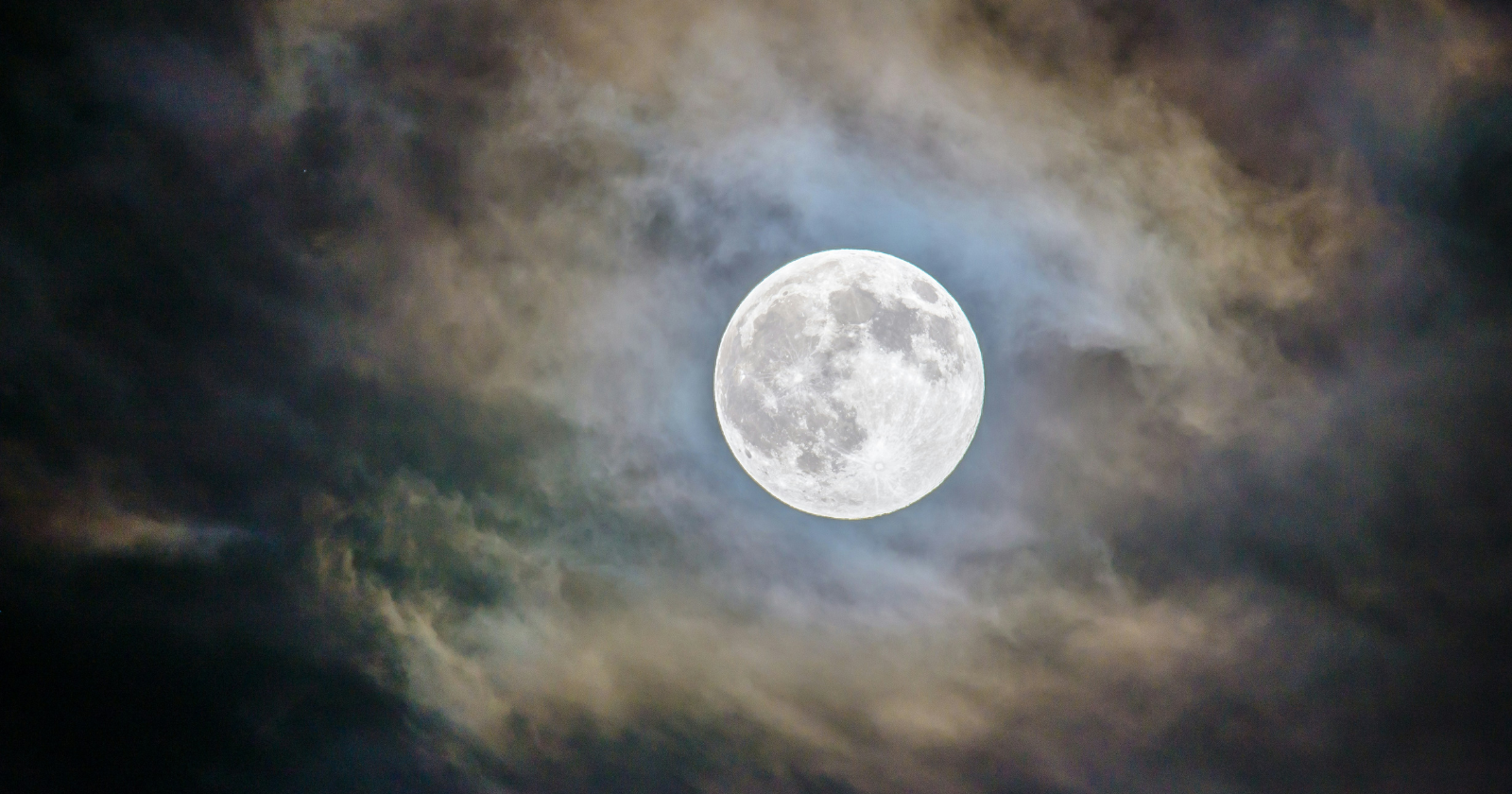
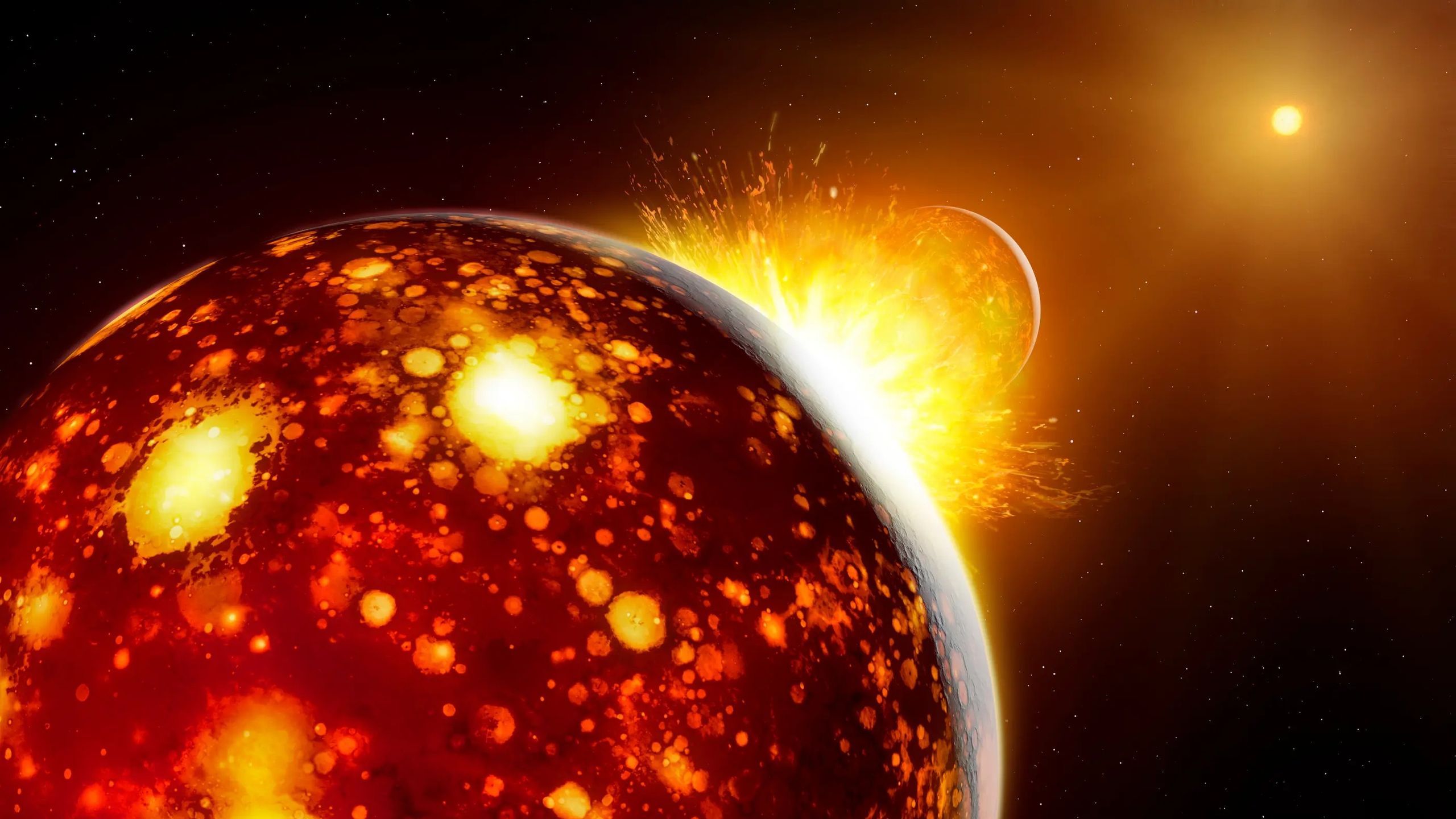
Four and a half billion years ago, Earth was barely a planet, functioning as a half-molten ball of rock still cooling from its own violent formation. This impact was hard enough to melt rock into vapor and throw a ring of debris into orbit around what was left of the planet.
The Giant-Impact Origin of Earth’s Moon
For a long time, three competing ideas attempted to explain the size ratio between Earth and its moon. One hypothesis suggested the moon formed somewhere else entirely and was captured by Earth’s gravity; another proposed that a young, fast-spinning Earth flung off a piece of itself; and a third suggested Earth and the moon formed side by side from the same dust cloud. None of these three held up once scientists compared the chemistry of moon rocks brought back by Apollo astronauts to rocks from Earth’s mantle.
The surviving explanation is the giant-impact hypothesis, which proposes that a Mars-sized world struck the early Earth at an angle. Researchers nicknamed this impactor Theia, after the Greek titan said to have given birth to the moon goddess Selene. New analysis of moon samples from Apollo missions, terrestrial rocks, and meteorites indicates that Theia was a rocky world that formed in the inner solar system, likely even closer to the sun than Earth. Timo Hopp, a geoscientist at the Max Planck Institute for Solar, stated that Theia and proto-Earth come from a similar region of the inner solar system,
as reported by Livescience.
The Chemistry and Planetary Building Blocks of Theia
During the turbulent first 100 million years after the sun formed, the inner solar system was crowded with dozens to hundreds of planetary embryos—moon- to Mars-size worlds that frequently collided, merged, or were kicked into new orbits by gravitational chaos and Jupiter’s immense pull. To determine how Theia formed, a research team focused on extremely subtle differences in iron isotopes, combining those measurements with isotopic signatures of molybdenum and zirconium. They then compared the results with known meteorite compositions.
Across hundreds of modeled scenarios, the only configuration that successfully reproduced the chemistry of Earth and the moon was one in which Theia formed in the inner solar system. The models indicate that Theia was likely a rocky, metal-cored world containing roughly 5 to 10% of Earth’s mass. Furthermore, both proto-Earth and Theia contain material from an unsampled inner-solar-system reservoir absent from known meteorite collections.
Gravitational Interaction, Tides, and Slowing Rotation
The moon, otherwise known as Luna, is Earth’s only natural satellite. According to nineplanets.org, it was created 4.6 billion years ago and is the fifth-largest moon in the solar system. The moon’s gravitational attraction is stronger on the side of Earth nearest to it and weaker on the opposite side, causing Earth and its oceans to stretch along the line toward the moon. This gravitational interaction produces profound physical effects on both bodies.
Key physical parameters of the Earth-moon system include:
- Moon’s Orbit: 384,400 km from Earth
- Moon’s Diameter: 3,476 km
- Moon’s Mass: 7.35 x 10^22 kg
- Synodic Month: 29.5 days between successive new moons
Earth’s rotation carries its tidal bulges slightly ahead of the point directly beneath the moon, producing a torque on Earth and an accelerating force on the moon. This creates a net transfer of rotational energy from Earth to the moon, slowing down Earth’s rotation by about 1.5 milliseconds per century and raising the moon into a higher orbit by about 3.8 centimeters per year. But since then, the moon’s gravitational pull on the Earth has been slowing our planet’s rotation, resulting in an increasingly longer day.
Related reading