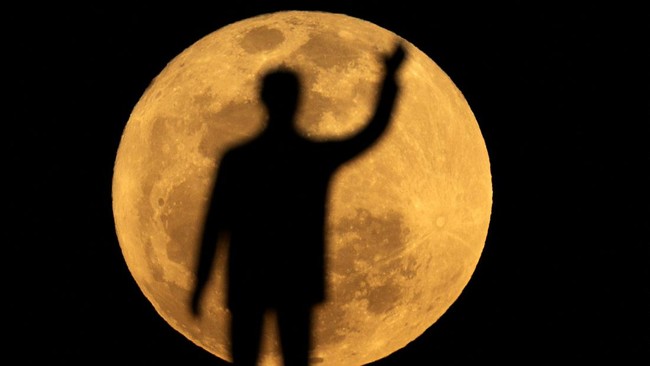
The moon is currently receding from Earth at a rate of approximately 3.8 centimeters per year, a phenomenon driven by complex gravitational interactions between our planet and its natural satellite. While this migration has been ongoing for billions of years, recent geophysical studies have highlighted how this orbital drift influences Earth’s rotational speed, effectively lengthening the duration of our days over geological time scales.
According to data from NASA, the moon was formed roughly 4.5 billion years ago, likely as the result of a massive collision between a Mars-sized body and the proto-Earth. Since that event, tidal forces have acted as a gravitational brake on Earth’s rotation. As the moon pulls on Earth’s oceans, it creates tidal bulges that lead to friction, gradually transferring angular momentum from Earth’s rotation to the moon’s orbit. This transfer is the primary mechanism pushing the moon into a higher, more distant trajectory.
The Mechanics of Lengthening Days
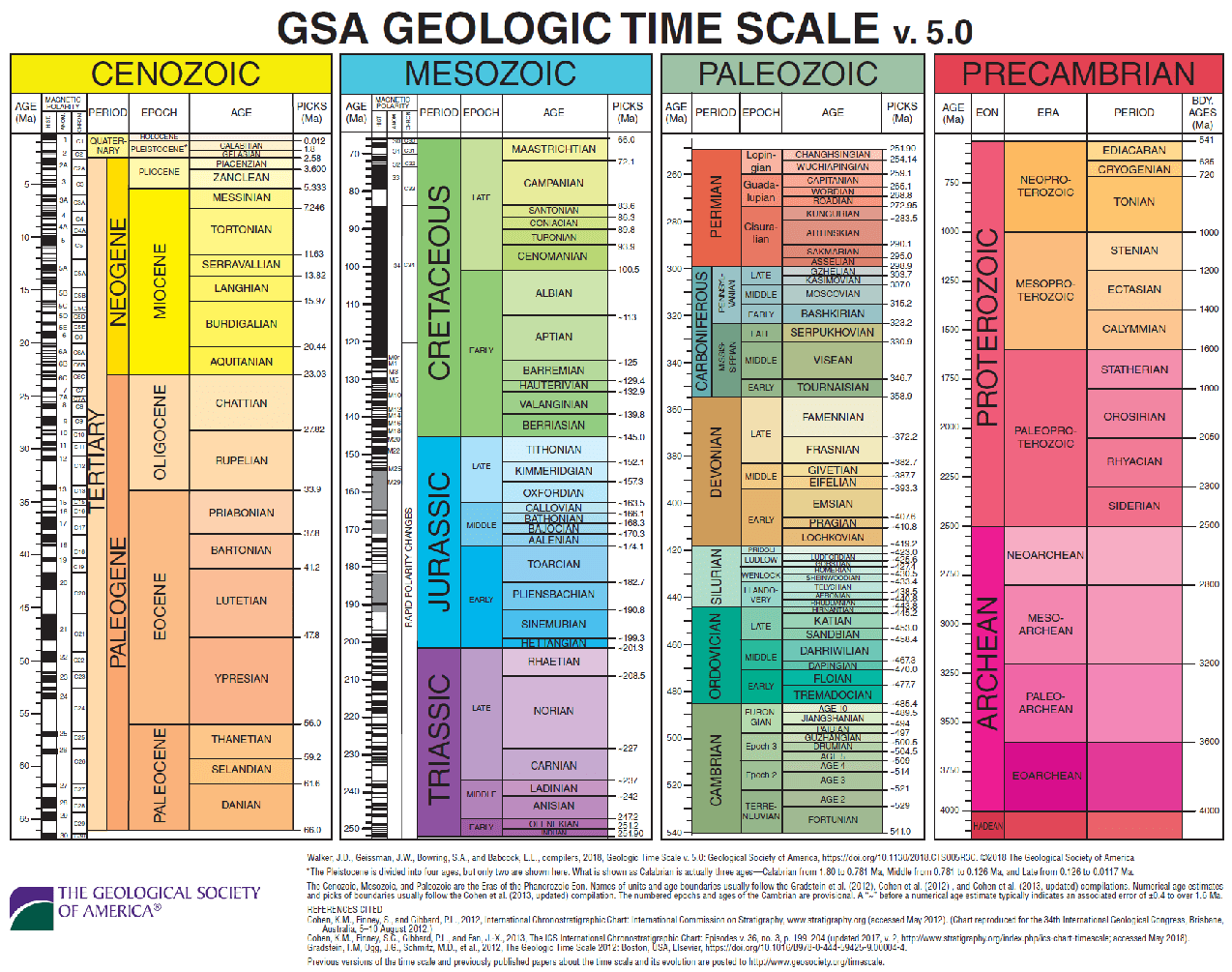
The relationship between the moon and Earth is defined by a constant exchange of energy. As the moon moves further away, the Earth’s rotation slows down, which results in a gradual increase in the length of a day. Scientific consensus, supported by research published by the Geological Society of America, indicates that in the distant past, an Earth day was significantly shorter than the current 24-hour cycle. Roughly 1.4 billion years ago, studies of sedimentary rock layers suggest that a day on Earth lasted approximately 18 hours.

This process does not occur at a constant rate. Tidal friction depends heavily on the configuration of Earth’s continents and the depth of its oceans. Because tectonic plates are constantly shifting, the capacity for the oceans to dissipate energy through tides changes over millions of years. Therefore, while the 3.8-centimeter-per-year measurement is the current average, this rate has fluctuated significantly throughout planetary history.
Geological and Climatic Implications
The gradual increase in the moon’s distance has measurable effects on the stability of Earth’s axial tilt. The moon acts as a stabilizer for Earth, preventing the planet from wobbling excessively on its axis. According to the Planetary Society, this stability is crucial for maintaining the relatively consistent seasonal patterns that have allowed life to flourish for eons. While the moon is moving away, it is not expected to escape Earth’s gravitational influence entirely; instead, it will eventually reach a state of mutual tidal locking, where both the Earth and the moon rotate at the same rate, keeping the same face of the planet pointed toward the moon permanently.
However, this event is billions of years in the future. In the shorter term, the changing lunar distance influences the height and intensity of oceanic tides. As the moon moves further away, its gravitational pull on Earth’s oceans weakens slightly, which would theoretically lead to less extreme tidal fluctuations over extremely long periods. These shifts are so incremental that they remain imperceptible to human observation on a daily or even generational basis.
Monitoring the Lunar Drift
Scientists track the moon’s precise distance using the Lunar Laser Ranging experiment, a project that began during the Apollo missions. By firing lasers at retroreflectors left on the lunar surface by astronauts, researchers can measure the distance between Earth and the moon with millimeter-level precision. These measurements confirm that the moon is indeed spiraling outward, moving away at a rate of 38 millimeters annually.
This monitoring remains essential for modern satellite navigation and global timekeeping. Because the Earth’s rotation is slowing, the length of a day is not perfectly constant. The International Bureau of Weights and Measures (BIPM) must occasionally account for these variations when coordinating Coordinated Universal Time (UTC) to ensure that our mechanical clocks remain synchronized with the planet’s actual rotation. These adjustments, known as leap seconds, are one of the most tangible ways the changing Earth-moon dynamic impacts modern human technology.
What Happens Next?
The moon will continue to recede until it reaches a stable orbit where the Earth’s rotation and the moon’s orbital period match. According to models from the NASA Solar System Exploration program, this equilibrium is expected to occur in roughly 50 billion years, though the Sun’s own evolution into a red giant will likely alter the solar system long before that point is reached. For the foreseeable future, the changes remain a subject of rigorous scientific observation rather than a cause for immediate concern.
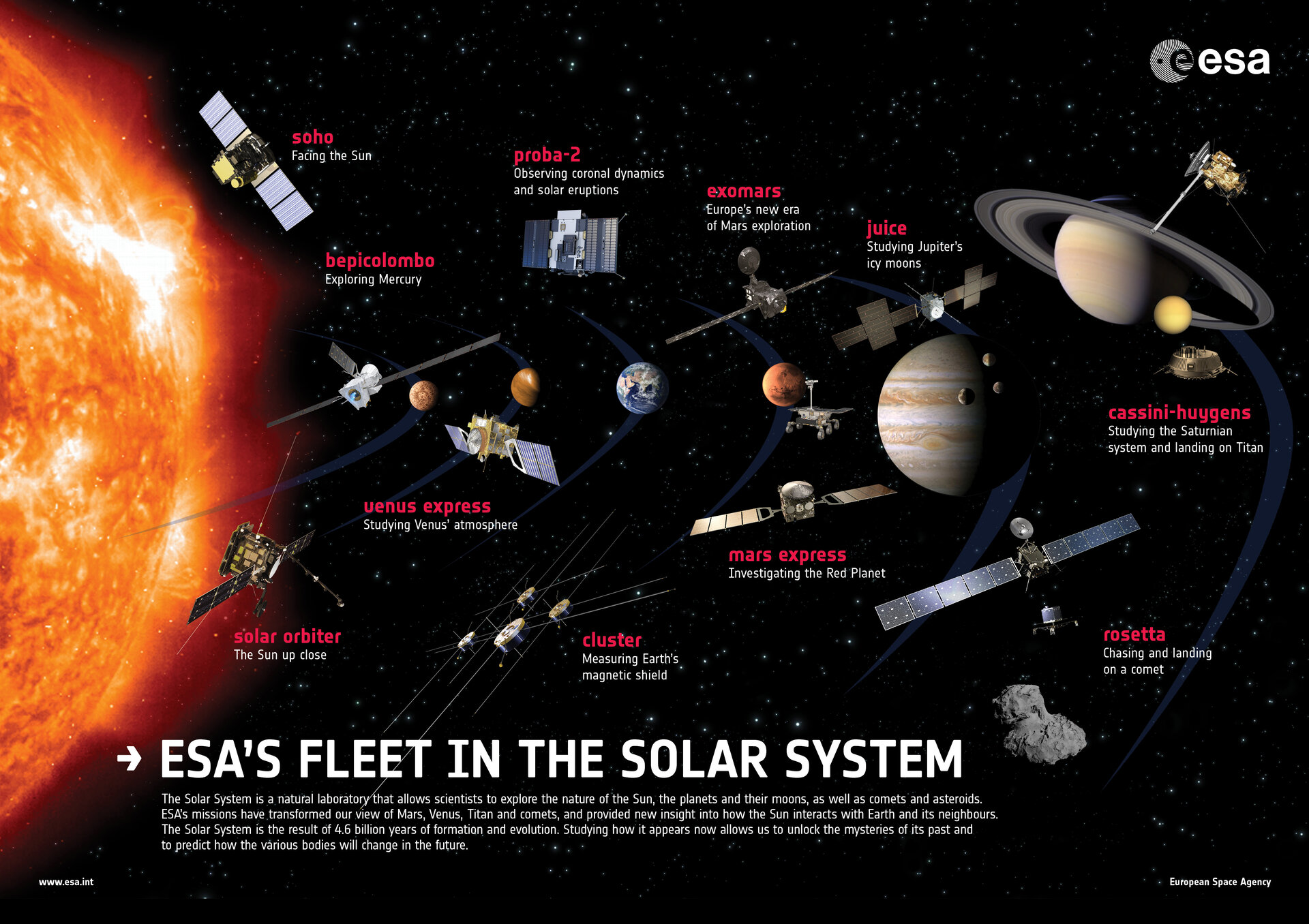
Researchers continue to analyze data from the Lunar Reconnaissance Orbiter to better understand the history of the Earth-moon system. By studying the geological record and current laser-ranging data, geophysicists aim to refine our understanding of how tidal forces have shaped the planet’s climate and rotational history over time. For those interested in the latest updates on lunar science and planetary dynamics, official reports are periodically published through the NASA Science Mission Directorate, which provides the most accurate and verified information regarding our satellite’s orbital evolution.
- LG erlaubt Ads auf Smart-TVs zu deaktivieren – Teil 2Borns IT- und Windows-Blog – BornCity
- Warner Bros. and Paramount Battle for Rights to ‘A Nightmare on Elm Street’ Revival
- Katabatic Winds, Explained: Why Antarctica Is Earth's Windiest Place (daybreakwire.com)
- 6 Things We Already Know About the 2028 iPhone (archyde.com)