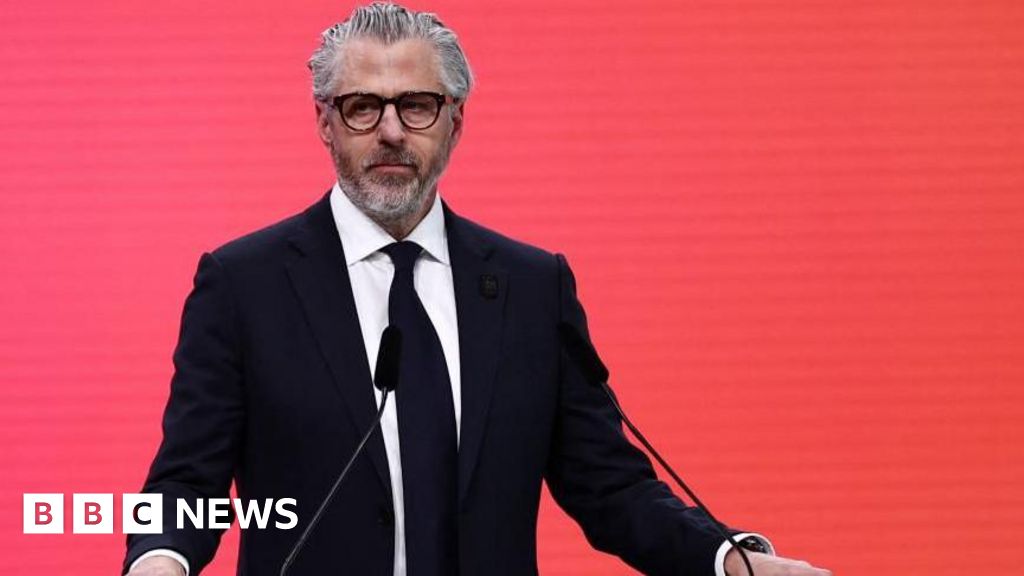
Casey Wasserman, chairman of the Los Angeles 2028 Olympic Organizing Committee and prominent sports talent agent, is reportedly considering the sale of his entertainment agency following renewed scrutiny over decades-old email exchanges with Ghislaine Maxwell, the jailed associate of Jeffrey Epstein. The messages, exchanged in 2003, were among millions of documents released by the U.S. Department of Justice related to its investigation into Epstein’s sex-trafficking network. While Wasserman has not been accused of any criminal wrongdoing, the resurfacing of these communications has intensified public and political pressure on his leadership role in the upcoming Games.
The emails, which include Wasserman writing to Maxwell, “I think of you all the time… So what do I have to do to witness you in a tight leather outfit?” and another where he says, “Where are you, I miss you,” before asking to book a massage, were described by Wasserman as “flirty” and deeply regretted. In a public statement, he emphasized that the correspondence occurred over two decades ago, long before Maxwell’s crimes were known, and reiterated that he “never had a personal or business relationship with Jeffrey Epstein.” He also noted his 2002 humanitarian trip with the Clinton Foundation on a plane previously used by Epstein, stating he is “terribly sorry for having any association with either of them.”
Wasserman founded Wasserman Media Group in 2002, building it into one of the most influential sports and entertainment agencies in the world, representing athletes, coaches, broadcasters, and managing major sports properties, and events. The company has represented high-profile clients across the NBA, NFL, MLB, soccer, and Olympic sports, and has been involved in negotiating broadcast rights, sponsorship deals, and athlete endorsements globally. Industry analysts have long viewed the agency as a potential acquisition target due to its scale and diversified portfolio in sports marketing, media production, and athlete representation.
Although no formal announcement has been made regarding a sale, sources familiar with Wasserman’s thinking indicate that the ongoing controversy has prompted internal discussions about the future of his leadership role at the agency, particularly as he balances his duties as the public face of the LA 2028 Olympics. The organizing committee has stood by Wasserman, with leadership stating they continue to have full confidence in his ability to lead the Games preparations. But, city officials and ethics watchdogs have called for greater transparency, with some urging him to step down from either his Olympic role or his agency leadership to avoid perceived conflicts of interest.
The renewed attention on Wasserman’s past ties comes amid broader scrutiny of individuals connected to Epstein’s network following the DOJ’s release of thousands of pages of documents in early 2026. These files, which include flight logs, contact lists, and correspondence, have reignited public debate about accountability for those who associated with Epstein and Maxwell, even in the absence of evidence of direct involvement in criminal acts. Legal experts note that while possessing or exchanging emails with Maxwell is not illegal, the context of her known role in trafficking minors has led to reputational consequences for several public figures.
Wasserman has maintained that his interactions with Maxwell were limited to brief, personal exchanges in 2003 and that he ceased all contact afterward. He has cooperated with inquiries related to the Epstein investigation when approached, though he has not been subpoenaed or compelled to testify. His legal team has declined to comment on specific details of the DOJ-released materials beyond his public statements, citing privacy and the ongoing sensitivity of the matter.
As the 2028 Olympics draw closer, Wasserman’s dual role as a global sports executive and Olympic organizer continues to be examined through the lens of governance, ethics, and public trust. The LA 2028 Organizing Committee has affirmed its commitment to delivering a Games that upholds the highest standards of integrity, though it has not indicated any plans to revisit Wasserman’s appointment based on the historical nature of the communications. For now, the focus remains on preparations for the Games, including venue construction, athlete qualification pathways, and international partnerships.
Moving forward, stakeholders in both the sports business and Olympic communities will be watching for any official updates regarding Wasserman’s professional engagements. The next confirmed checkpoint is the LA 2028 Organizing Committee’s quarterly progress meeting scheduled for mid-2026, where operational updates on venue readiness, budget, and scheduling are expected to be presented. No changes to leadership have been announced as of this reporting.
We invite our readers to share thoughtful perspectives on the intersection of accountability, leadership in sports, and the lasting impact of past associations. Join the conversation by commenting below and sharing this article with others interested in ethical governance in global sports.
Worth a look