
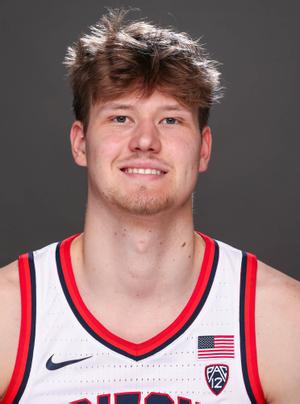
North Carolina’s basketball program faces a significant roster challenge following the announcement that center Henri Veesaar has declared for the 2026 NBA Draft. The 7-foot Tar Heel, who transferred from Arizona prior to the 2025-26 season, informed university officials of his decision to forgo his remaining college eligibility and enter the professional ranks, according to multiple reports confirmed on April 24, 2026.
Veesaar’s departure creates an immediate void in the frontcourt for first-year head coach Michael Malone, who took over the Chapel Hill program after a successful tenure in the NBA. As a second-team All-ACC selection, Veesaar averaged 17.0 points and 8.7 rebounds per game even as shooting 42% from three-point range, making him one of the most versatile big men in college basketball. His decision to test the NBA Draft process comes despite a reported lucrative Name, Image and Likeness (NIL) offer that would have positioned him as a preseason ACC Player of the Year candidate for the 2026-27 season.
The timing of Veesaar’s announcement compounds the challenges for Malone, who inherited a program in transition. With freshman forward Caleb Wilson also expected to declare for the draft as a projected top-five pick, the Tar Heels stand to lose both pillars of their anticipated starting frontcourt. This development forces Malone to rapidly reconfigure his roster plans just months before the 2026-27 season begins.
According to CBS Sports, Veesaar is currently ranked as the 26th-best prospect in their 2026 NBA Draft board, with analysts projecting him as a late first-round selection. Still, recent declarations by other high-profile prospects — including Florida’s Thomas Haugh, Duke’s Patrick Ngongba and UConn’s Braylon Mullins — to return to college basketball have improved Veesaar’s draft stock, potentially elevating him into the top-20 range.
In a statement released through the university, Veesaar expressed gratitude for his time in Chapel Hill: “This journey didn’t happen alone. To my family – thank you for every sacrifice, every late night, every moment you believed in me before anyone else did. To my friends, teammates and coaches – thank you for being part of the grind and helping shape me into who I am today. The University of North Carolina – thank you for the memories, the lessons and the brotherhood. It’s something I’ll carry with me forever. I’m proud to say I’m taking the next step and declaring for the NBA Draft. Thank you to everyone who’s been part of the journey.”
The loss of Veesaar represents more than just a statistical decline. it removes a cultural and leadership figure from a squad still adjusting to Malone’s coaching philosophy. During his lone season in Carolina, Veesaar recorded 15 double-doubles, ranking second in the ACC and 17th nationally. His ability to stretch defenses with perimeter shooting while protecting the rim made him a unique fit for modern pace-and-space offensive schemes that Malone has favored throughout his coaching career.
With the transfer portal already yielding additions such as Virginia Tech’s Neoklis Avdalas, Utah’s Terrence Brown and NC State’s Matt Able, Malone now must pivot to address the center position specifically. Early reports indicate that Arizona State’s Massamba Diop remains the top-rated available big man in the transfer market, though Gonzaga and St. John’s are reportedly pursuing him aggressively. Cincinnati’s Moustapha Thiam, another 7-foot shot-blocking prospect, has also drawn interest after a recent visit to Michigan.
The 2026 NBA Draft is scheduled for June 23-24, giving Veesaar until shortly before the event to withdraw and return to school if he chooses. However, barring a change of heart, his decision appears final, leaving Malone to rebuild on the fly as he looks to establish his first full recruiting class in Chapel Hill.
Impact on ACC Outlook and National Rankings
Veesaar’s departure immediately affects North Carolina’s standing in both conference and national preseason projections. Prior to his announcement, the Tar Heels were widely considered a top-10 team and a contender for the ACC regular-season title, largely due to the expected return of their experienced frontcourt. Now, analysts suggest the program may fall outside the top 25 in early preseason polls, depending on how quickly Malone can integrate new talent.

The Atlantic Coast Conference, already bracing for potential departures of other elite talents, loses one of its most polished interior players. Veesaar’s combination of size, shooting touch and passing ability from the high post represented a rare skill set that few ACC teams possessed. His absence alters the competitive balance in a league that has increasingly valued versatile big men capable of operating in both traditional and spacing-oriented roles.
Nationally, the loss underscores the growing volatility of college basketball rosters in the NIL and transfer portal era. Programs across the country now face annual reinvention, where even returning stars can depart unexpectedly for professional opportunities. For traditional powerhouses like North Carolina, this environment demands greater adaptability from coaching staffs who must balance player development with realistic expectations about retention.
What’s Next for Michael Malone and the Tar Heels
Malone’s immediate priority is securing a replacement capable of providing interior defense and rebounding while fitting into his preferred offensive system. The coach, known for his defensive acumen during his time as an NBA assistant and head coach, will likely emphasize toughness and positioning in his search for a new center.
Beyond the transfer market, Malone may look to develop younger players already on the roster or pursue additional high school commits who can contribute quickly. The spring and summer evaluation periods will be critical, as NCAA rules allow coaches to assess prospects during live events in April and July.
Recruiting nationally ranked prospects remains a long-term solution, but Malone must also address immediate needs through the transfer portal, where the window for undergraduate transfers opens in April and closes in late May. Graduate transfers remain eligible until August, offering another potential avenue for experienced players seeking a final season of eligibility.
As of now, no official timetable has been set for when Malone expects to finalize his frontcourt plans. The coach has declined to speculate publicly on specific targets, focusing instead on evaluating all available options through proper channels. Fans and analysts alike will monitor the situation closely as the summer evaluation period approaches and the transfer market continues to evolve.
Broader Implications for College Basketball
Veesaar’s decision reflects a broader trend in which elite college players weigh immediate professional readiness against the benefits of returning for another season. While NIL deals have increased the financial incentive to stay in school, the allure of NBA contracts — particularly for players viewed as first-round picks — remains powerful.
For mid-major programs, the departures of stars like Veesaar create both challenges and opportunities. Losing talent hurts competitiveness in the short term, but it also opens playing time for younger athletes and can accelerate program rebuilding when managed effectively. Conversely, high-major teams must now plan for greater roster turnover, treating each season as potentially transitional regardless of past success.
The NCAA continues to evaluate its policies surrounding early entry declarations, withdrawal deadlines and agent representation. Current rules allow players to enter the NBA Draft, attend the combine and participate in team workouts while maintaining college eligibility — provided they withdraw before a specified date and do not sign with an agent. These windows aim to deliver athletes more information before making irreversible decisions, though critics argue the process still favors those with guaranteed draft promises.
Veesaar’s case will be watched closely as a potential indicator of how rising draft projections influence late declarations. His improvement from a projected late first/early second-round pick to a possible top-20 selection — contingent on others returning to school — highlights how fluid draft evaluations can be, especially when competing prospects produce surprising choices.
Where to Find Updates
Fans seeking the latest developments on Veesaar’s draft status and North Carolina’s roster moves can follow official updates from the University of North Carolina Athletics Department. The Atlantic Coast Conference also provides regular releases on player movements and eligibility statuses affecting member institutions.
For NBA Draft-specific information, the league’s central headquarters in New York releases official timelines, combine schedules and broadcast details as the event approaches. Reputable sports news outlets continue to track prospect rankings, workout reports and team interests throughout the pre-draft process.
The next key checkpoint in this process is the NBA Draft Combine, typically held in mid-May, where invited prospects undergo athletic testing, interviews and team evaluations. Following that, individual team workouts and private sessions will shape final draft boards before the June 23-24 event.
As the situation develops, World Today Journal will continue to provide verified, timely coverage of how this story impacts college basketball’s evolving landscape.
We invite readers to share their thoughts on how Veesaar’s departure affects the ACC and national title outlook. What adjustments should Michael Malone prioritize as he rebuilds his frontcourt? Join the conversation in the comments below and support us explore what this means for the future of college basketball.