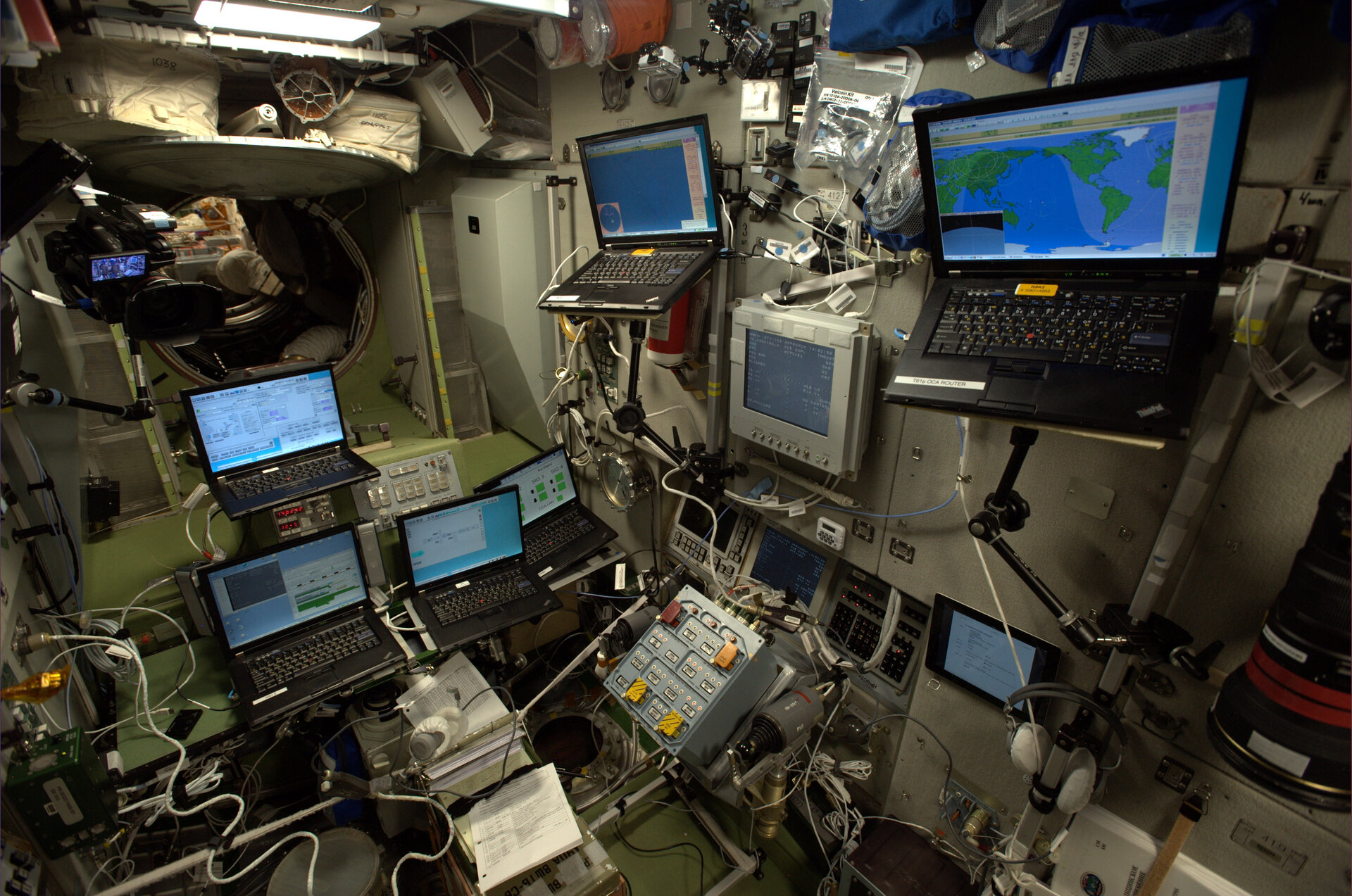
NASA has confirmed that astronauts aboard the International Space Station (ISS) are receiving upgraded computing hardware as part of an ongoing effort to enhance operational efficiency in orbit. The space agency is replacing older laptop systems with newer HP ZBook G9 mobile workstations, marking a significant refresh of the ISS’s onboard computing infrastructure. This upgrade aims to support increasingly complex scientific experiments, system monitoring, and communication tasks performed by crew members in the unique environment of low Earth orbit.
The transition to HP ZBook G9 laptops was first reported by technology news outlets and subsequently verified through official channels. According to multiple sources including The Verge, Digital Trends, and Tech Times, NASA selected the HP ZBook G9 for its performance, reliability, and compatibility with spaceflight-certified software environments. These mobile workstations are designed to handle demanding computational workloads while meeting the stringent safety and operational requirements necessary for use aboard the ISS.
The HP ZBook G9 is part of HP’s mobile workstation line, featuring options for Intel Xeon or Core i7 processors, professional-grade NVIDIA RTX graphics, and up to 64GB of ECC memory—specifications well-suited for data-intensive applications such as Earth observation analysis, 3D modeling of station systems, and running simulation software. While NASA has not disclosed the exact configuration deployed on the ISS, the agency emphasized that all hardware undergoes rigorous testing for radiation tolerance, thermal management, and electromagnetic interference before flight certification.
This upgrade reflects NASA’s broader strategy to maintain and improve the technological capabilities of the ISS as it enters its third decade of continuous human presence. The station relies on a network of laptops and tablets for crew procedures, payload operations, and communication with mission control centers around the world. By standardizing on modern workstations like the ZBook G9, NASA aims to reduce maintenance overhead, improve software compatibility, and ensure that astronauts have access to up-to-date tools for conducting research in microgravity.
The move also highlights the long-standing collaboration between NASA and commercial technology partners. HP has been a supplier of computing equipment to NASA for years, providing hardware that meets the agency’s strict standards for use in spaceflight environments. Previous generations of HP laptops, including the ZBook 15 and ZBook 17 series, have been used on the ISS for various tasks ranging from onboard system maintenance to supporting educational outreach programs.
Officials note that while the laptops themselves are commercial off-the-shelf (COTS) devices, they undergo significant modifications and testing before being cleared for spaceflight. This includes conformal coating to protect against moisture and particulate contamination, custom power adapters to interface with the ISS’s power system, and software hardening to prevent vulnerabilities in the station’s isolated network. All modifications are documented and tracked to ensure traceability and accountability throughout the hardware lifecycle.
The deployment of the ZBook G9 laptops is being carried out via regular resupply missions, with units transported to the ISS aboard SpaceX Dragon or Northrop Grumman Cygnus spacecraft. Once aboard, crew members install and configure the devices under the guidance of ground-based IT support teams at NASA’s Johnson Space Center in Houston. The process includes data migration from legacy systems, validation of critical applications, and integration with the ISS’s wireless local area network (WLAN).
As the ISS continues to serve as a national laboratory for scientific research, technology demonstration, and international cooperation, reliable computing resources remain essential. The upgraded workstations are expected to support a wide range of activities, from analyzing data collected by external Earth science instruments to assisting with the operation of robotic systems like Canadarm2. Improved processing power also enables more sophisticated use of augmented reality tools and procedure visualization software, which facilitate astronauts perform complex tasks with greater accuracy.
Looking ahead, NASA indicates that hardware refresh cycles for ISS computing systems will continue on a periodic basis, aligned with resupply schedules and budgetary planning. The agency routinely evaluates emerging technologies for potential use in space, balancing performance gains against flight safety and certification timelines. While no specific date has been announced for the next major upgrade, the current transition to HP ZBook G9 workstations represents a planned step in maintaining the station’s technological relevance.
For readers interested in following developments related to ISS operations and space-based technology, NASA provides regular updates through its official website, social media channels, and the ISS Research Twitter account (@ISS_Research). These platforms offer insights into ongoing experiments, crew activities, and infrastructure improvements aboard the orbiting laboratory.
The integration of advanced computing hardware like the HP ZBook G9 underscores the importance of terrestrial technology partnerships in enabling long-duration human spaceflight. As NASA prepares for future missions to the Moon under the Artemis program and eventually to Mars, the lessons learned from upgrading systems on the ISS will inform the design of reliable, high-performance computing architectures for deep space exploration.
We welcome your thoughts on this story. How do you think advancements in space-based computing will shape the future of exploration? Share your comments below and help spread the conversation by sharing this article with others interested in technology and space science.