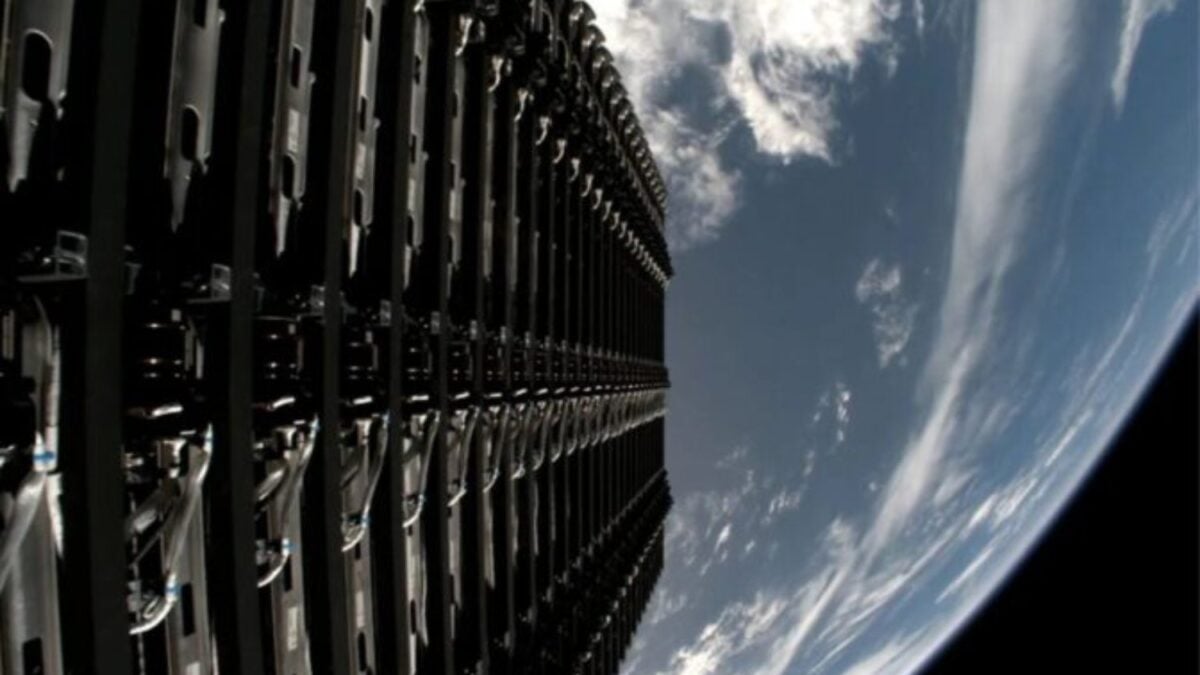
Elon Musk’s vision of moving artificial intelligence data centers into orbit has long captured public imagination, promising limitless solar power and freedom from terrestrial constraints. Although, recent disclosures from SpaceX suggest the company itself is tempering expectations, acknowledging that the technological and economic hurdles may be too great to overcome in the near term. This shift in tone comes as SpaceX prepares for a potential public offering, requiring greater transparency about risks associated with its most ambitious ventures.
The idea of orbital data centers gained traction in early 2026 when Musk announced the merger of SpaceX and his AI venture, xAI, framing it as a strategic step toward building computing infrastructure in space. Proponents argued that the vacuum of space offers unique advantages: uninterrupted solar energy, no demand for land acquisition, and freedom from overburdened terrestrial power grids. Yet, as reported by multiple outlets including La Vanguardia and Xataka, the fundamental challenge lies in thermodynamics. Unlike on Earth, where data centers rely on air or liquid cooling systems to dissipate heat, the absence of convection in space means heat can only be shed through thermal radiation—a far less efficient process requiring massive radiator arrays.
According to a document shared with investors and reported by Reuters, SpaceX has explicitly stated that both orbital data centers for AI and long-term human settlement on the Moon and Mars depend on technologies that “have not yet been developed or proven,” and therefore “may not be viable from a commercial standpoint.” This candid assessment underscores a growing recognition within the company that physics and engineering constraints pose significant barriers. The European Parliament has also weighed in, noting that the radiators needed to manage heat in orbit would need to be comparable in scale to solar panels, dramatically increasing both the size and vulnerability of such systems.
These revelations come at a pivotal moment for SpaceX. The company has been laying groundwork for a potential initial public offering (IPO), with some analysts speculating a valuation as high as $1.5 trillion. Regulatory requirements for such a move demand rigorous disclosure of risks, particularly for ventures that remain speculative. By acknowledging the immaturity of key technologies—such as space-based cooling systems, high-power laser communication links for Starlink V3 satellites, and autonomous orbital assembly—SpaceX is adhering to legal obligations while managing investor expectations.
Elon Musk has historically championed bold timelines, famously declaring “SpaceX is going to do it” in response to predictions about orbital data centers emerging within two decades. Yet even supporters like Jeff Bezos, who has expressed confidence that such facilities will arrive during the next 20 years, concede that realization depends on breakthroughs that have not yet occurred. The gap between vision and feasibility remains wide, particularly when considering the energy density required to power advanced AI chips in an environment where every kilogram launched to orbit carries a steep cost.
Industry experts point out that while the concept is not physically impossible, the current state of materials science, thermal management, and in-space manufacturing makes near-term deployment impractical. Alternatives such as improving energy efficiency on Earth, advancing chip design, or expanding renewable-powered terrestrial data centers may offer more immediate returns on investment. Until significant progress is made in areas like lightweight radiators or nuclear-powered space platforms, orbital AI infrastructure remains more a subject of long-term speculation than imminent reality.
As SpaceX navigates the complex path toward potential public trading, its willingness to confront technical limitations head-on may ultimately strengthen its credibility. Rather than dismissing skepticism, the company is choosing to engage with it—a stance that could prove vital as it seeks to balance visionary ambition with fiscal responsibility in an era of heightened scrutiny over technological hype.
For updates on SpaceX’s regulatory filings and official statements regarding its business strategy and risk disclosures, investors and analysts can refer to the U.S. Securities and Exchange Commission’s EDGAR database, where future IPO-related documents will be made publicly available.
What do you think about the feasibility of space-based data centers? Share your thoughts in the comments below and help spread the conversation by sharing this article.