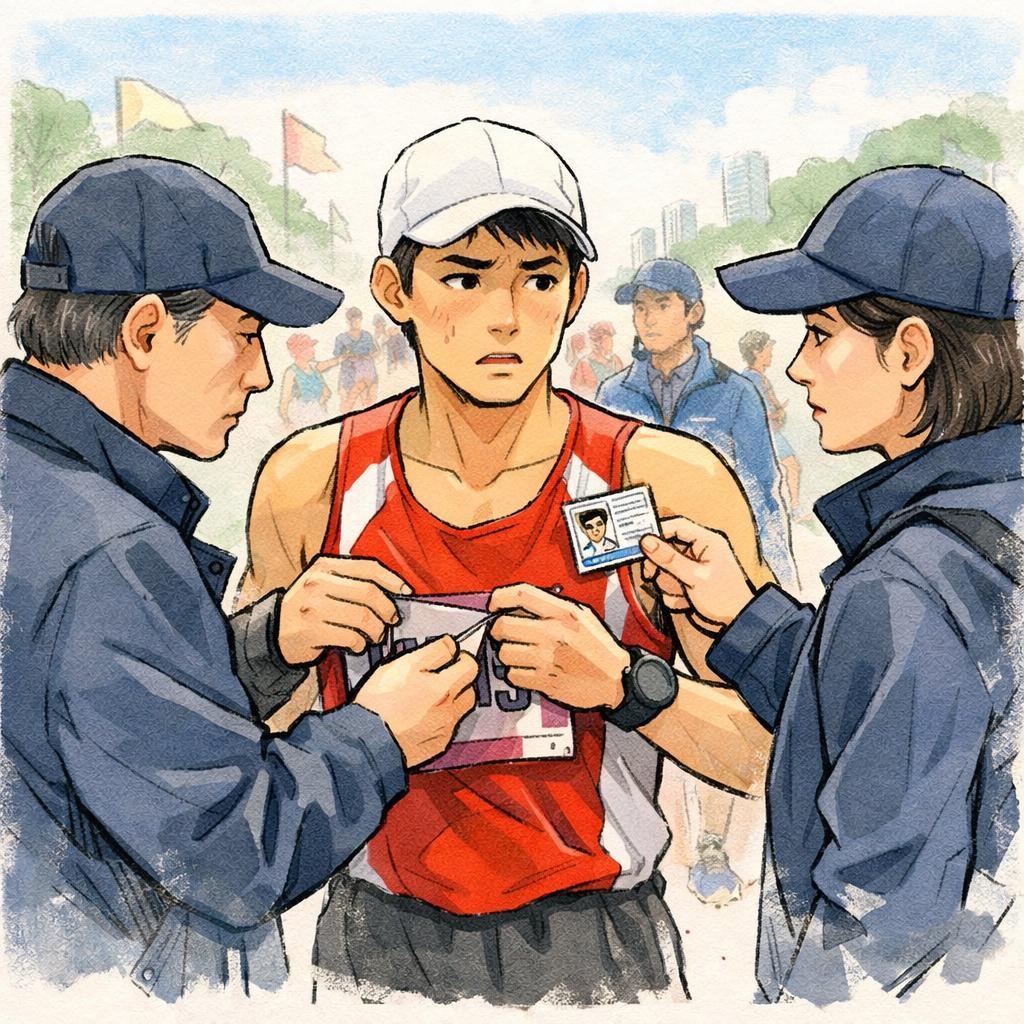
“어쩐지 빠르더라” – a phrase echoing through social media after a startling discovery at a half-marathon in central China. What initially appeared to be a remarkable women’s race victory unraveled into a case of bib-number substitution and gender deception, leading to disqualifications and bans. The incident, which took place in Anyang, Henan Province, has drawn attention not only for its audacity but also for the questions it raises about race integrity and verification processes in mass participation events.
On April 17, 2026, the Anyang Half-Marathon concluded with a surprising result in the women’s citizens’ half-marathon division. The winner, listed as “A 씨” (a placeholder for anonymity in Korean-language reports), completed the course in 1 hour, 29 minutes and 5 seconds, earning a prize of 1,000 yuan (approximately 21,700 South Korean won at current exchange rates). However, within days, doubts emerged online after observers noted inconsistencies in the winner’s physique and gait in publicly shared photos. The athlete’s build and movement appeared markedly masculine, prompting widespread speculation that a man had competed under a woman’s name and bib number.
Race organizers launched an investigation following the surge of public skepticism. Their inquiry confirmed the allegations: the individual who ran the race using A 씨’s bib number was, in fact, male. Further investigation revealed that A 씨 had transferred the bib to another person, enabling the substitute runner to participate in the women’s division. The organizing committee determined that three individuals were involved in the bib-transfer scheme—A 씨 and two others who facilitated the exchange. All three were handed lifetime bans from participating in any future events sanctioned by the committee, and their results were officially voided.
The case gained traction not only because of the deception but also due to the aftermath. Organizers admitted that despite the winner’s photo being used in promotional materials—showing a clearly male-presenting athlete—no one at the event questioned the participant’s eligibility during the race or immediately after. It was only after the results were published and scrutinized by the public that concerns were raised. This delayed detection highlighted potential gaps in on-site verification, particularly in large-scale races where thousands of runners may make visual checks impractical.
In response, the Anyang Marathon Organizing Committee notified the Chinese Athletics Association of the incident and requested additional sanctions against those involved. They emphasized that while the individuals accused of facilitating the bib transfer did not cooperate with the investigation, the fact of male participation in the women’s division was confirmed through photographic evidence and testimonial accounts. The committee stated that penalties were applied in accordance with existing competition regulations, which prohibit the transfer of race bibs and require runners to compete under their own registered identity.
This incident joins a growing list of similar cases worldwide where bib sharing or identity substitution has undermined race results. While most marathons and half-marathons rely on trust and peer monitoring, elite and prize-division races increasingly employ stricter measures such as pre-race ID checks, bib-to-person matching via photography, and post-race photo finish verification. Experts in sports integrity suggest that events offering cash prizes—especially in regions where such sums represent significant income—may be more vulnerable to such fraud, underscoring the need for robust safeguards even in amateur or citizens’ divisions.
The Anyang case also sparked broader conversations about gender verification in sports, though officials and analysts were quick to distinguish this incident from debates surrounding transgender athlete participation. This was not a case of gender identity dispute but rather a clear act of deception involving the deliberate misrepresentation of sex for competitive gain. As such, it falls under the category of fraud rather than eligibility policy, though it has nonetheless prompted calls for clearer protocols to prevent future misuse of bib numbers.
As of now, no further legal actions have been reported beyond the sporting bans issued by the race organizers. The Chinese Athletics Association has not publicly announced additional sanctions, though it retains the authority to suspend licenses or recommend broader penalties under national athletics governance rules. Runners and fans alike are awaiting any official update from the association regarding potential nationwide implications for the individuals involved.
For now, the Anyang Half-Marathon serves as a cautionary tale: in the pursuit of fairness and accuracy in sport, vigilance must extend beyond the finish line. Organizers are encouraged to review their verification procedures, particularly for prize-eligible categories, to ensure that bib numbers remain tied to their rightful holders. Until then, the image of a medal ceremony featuring an unexpected podium will remain a stark reminder of how easily trust can be exploited—and why protecting the integrity of competition requires constant attention.
- What’s next in NBA offseason after LeBron James’ decision? James Harden, Draymond Green, Jalen Duren eye deals
- 中職/羅戈相信隊友守住滿壘危機 平野惠一點出是「關鍵一局」 – Yahoo運動
- China Launches Commercial Space Debris Monitoring Constellation (archyde.com)
- China’s AI Surge: Market Growth, Tech Distillation, and US Tension (archynewsy.com)