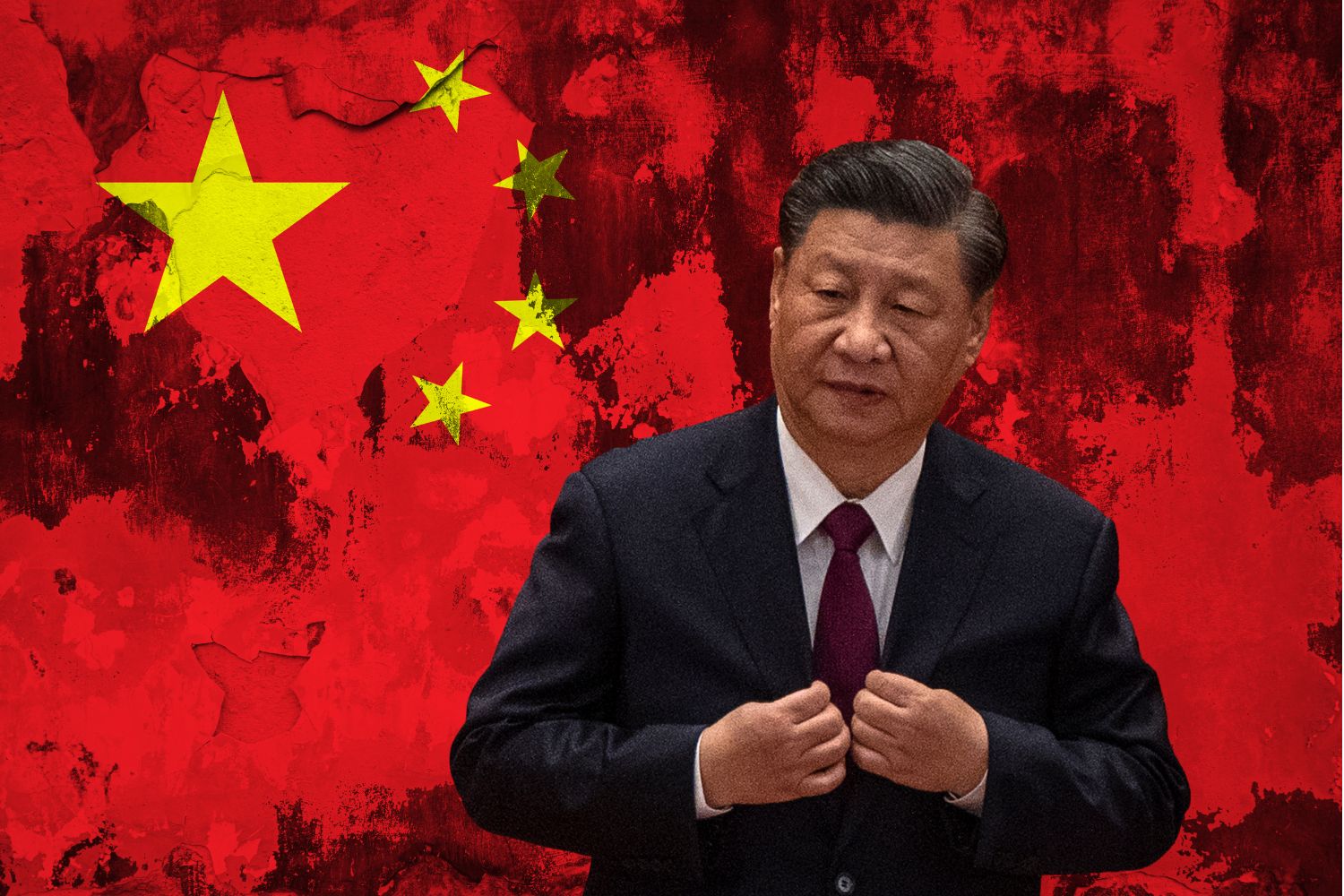
China’s approach to blending military and civilian technological development—known as military-civil fusion—has undergone a notable shift in public discourse, even as the underlying strategy persists. Once openly promoted as a national priority, the term has faded from official statements and state media, prompting analysts to question whether Beijing has abandoned the initiative. Yet, evidence suggests the policy continues under different terminology and through less visible channels, maintaining its role in China’s broader goal of closing the technological gap with the United States.
The concept of military-civil fusion involves integrating advancements from civilian sectors—such as artificial intelligence, semiconductors, and aerospace—into defense applications to accelerate military modernization. For years, Chinese leaders framed it as essential to achieving strategic self-reliance, particularly in high-tech domains where U.S. Export controls have limited access to critical components. The policy gained prominence in the mid-2010s, with the Communist Party Central Committee issuing directives to deepen collaboration between defense industries, universities, and private technology firms.
But as U.S.-China tensions intensified over technology transfer, intellectual property, and national security concerns, the phrase “military-civil fusion” became a diplomatic liability. Washington repeatedly cited the strategy as evidence of Beijing’s effort to exploit open innovation systems for military gain, contributing to sanctions on Chinese entities and tighter scrutiny of academic and corporate partnerships. In response, Chinese officials began avoiding the term in public communications, leading some observers to interpret the silence as a retreat.
Yet a closer examination of procurement patterns, research funding, and institutional reforms indicates that the core objectives remain intact. According to a 2023 testimony before the U.S.-China Economic and Security Review Commission, military-civil fusion continues to drive investment in emerging technologies, with an emphasis on areas where U.S. Technological dominance is not absolute. The report noted that while legacy defense contractors still lead in AI-related military procurement, a growing number of nontraditional vendors—including private tech companies and research institutes—are receiving defense contracts for AI applications, signaling a broadening of the fusion effort beyond traditional state-owned enterprises.
This evolution reflects a tactical adaptation rather than a strategic reversal. By downplaying the terminology, Beijing aims to reduce foreign pushback while sustaining internal coordination mechanisms. Internal party documents and policy speeches from 2022 to 2024 continue to reference the principles of military-civil fusion under alternative phrasing, such as “innovation-driven development” or “self-reliance in science and technology,” suggesting continuity in intent even as the label changes.
The shift in rhetoric coincides with broader changes in how China manages its technological ambitions amid escalating rivalry with the West. Export controls on advanced computing chips and semiconductor manufacturing equipment have compelled Beijing to accelerate indigenous innovation, often through hybrid models that blur the lines between civilian research and military application. Universities affiliated with the defense industry, for example, have expanded AI labs that publish openly in international journals while simultaneously accepting funding from defense-linked programs.
Experts warn that the lack of transparency around these activities complicates risk assessment for foreign governments and businesses. Unlike more overt state-led programs, the diffuse nature of today’s military-civil fusion makes it harder to trace specific outcomes or attribute technological breakthroughs to direct military utilize. This ambiguity, however, may serve Beijing’s purpose by allowing it to pursue dual-use advancements without triggering immediate countermeasures.
Despite the reduced public profile, the strategic importance of integrating civilian innovation into military capabilities remains a cornerstone of China’s long-term defense planning. As highlighted in a 2024 analysis by the Center for Security and Emerging Technology, AI-related defense contracts have increased steadily since 2023, with both established defense firms and emerging private-sector players contributing to a diversified procurement base. The trend underscores that while the language has changed, the underlying effort to leverage national innovation systems for military advantage continues.
Looking ahead, the next key development to watch is the release of China’s 15th Five-Year Plan, expected in late 2025, which may offer further insight into how military-civil fusion is being institutionalized under new nomenclature. Official announcements from the Central Military Commission or the State Council regarding science and technology priorities could confirm whether the strategy is being deepened, adjusted, or merely rebranded.
For readers seeking to understand the evolving dynamics of Sino-American technological competition, monitoring shifts in defense procurement data, university-industry collaboration reports, and official science policy statements provides a more reliable indicator than public rhetoric alone. The story of military-civil fusion is no longer about what Beijing says—it’s about what it does.
Stay informed, share your perspective, and join the conversation below.
Worth a look
- Earthquake in Chile Today, August 13: Magnitude, Epicenter, and Latest CSN Reports
- Belgium Heatwave: Record Temperatures Hit Uccle as Heat Alert Continues
- Goyang City Launches Public Vote for New Civil Administration Slogan (newsdirectory3.com)
- The Antideficiency Act, Explained: The Law Behind Every Shutdown (daybreakwire.com)