
Hamburg Court Hears Testimony from Alleged Getaway Driver in High-Profile Block Family Kidnapping Case
HAMBURG — A dramatic turn unfolded in one of Germany’s most closely watched criminal trials this week as a key witness from Israel testified in the Hamburg courtroom about his alleged role in the New Year’s Eve 2023 kidnapping of two children belonging to prominent German entrepreneur Christina Block. Said B., 35, who is accused of driving one of the escape vehicles during the abduction in Denmark, provided testimony that both corroborated earlier accounts and introduced new details about the night’s events, according to court records and verified reporting from the proceedings.
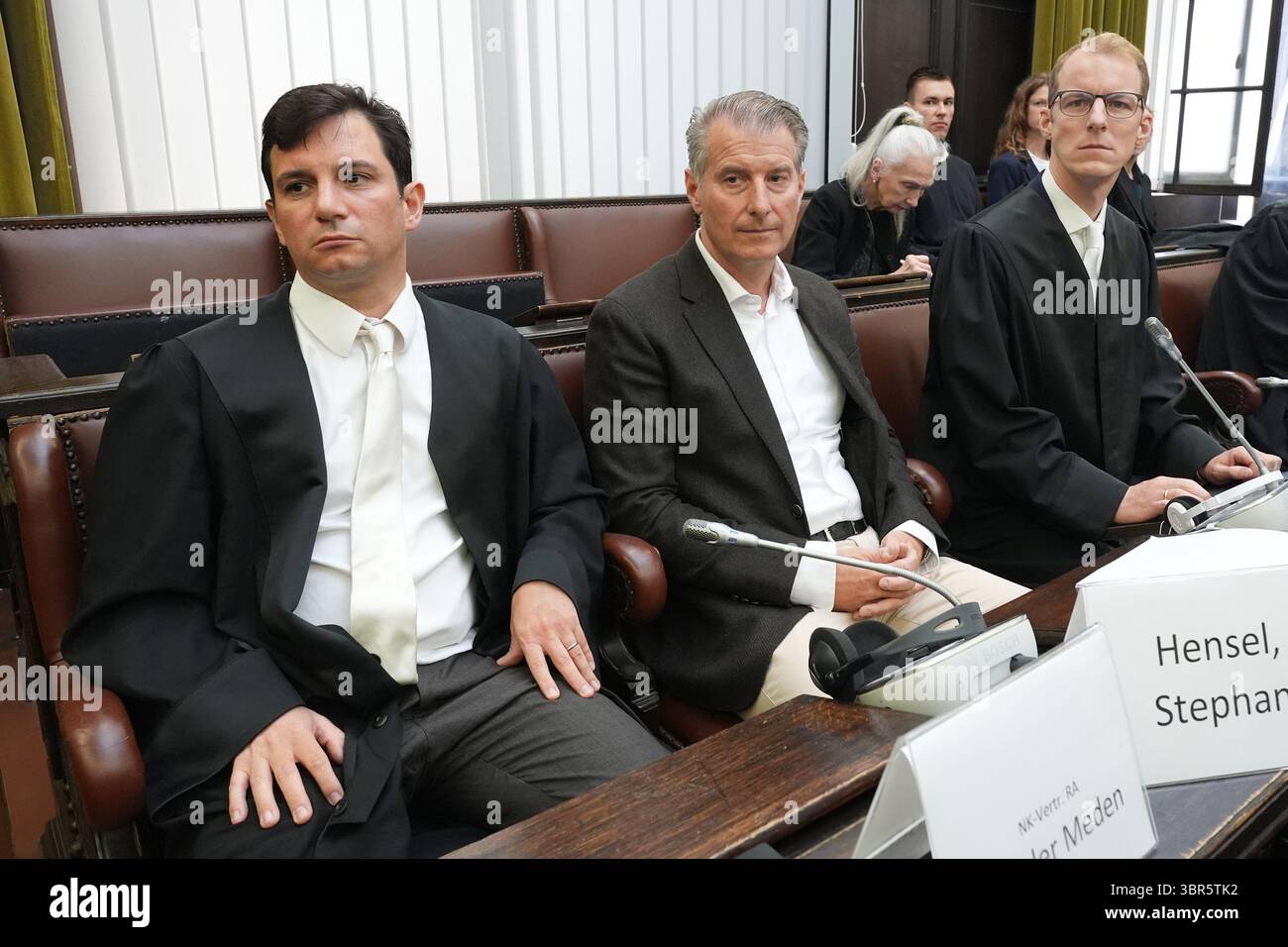
The case, which has captivated public attention due to its ties to a bitter custody battle and allegations of international intrigue, took another step forward on Monday as Said B. Appeared in person before the Hamburg Regional Court. His testimony comes nearly 16 months after the children—then aged 11 and 13—were taken from their father’s home in Denmark in an operation that German prosecutors have described as meticulously planned. Whereas Said B. Is currently testifying as a witness, he remains under investigation in a separate criminal case related to the incident, adding layers of complexity to his appearance.
The trial has already heard from multiple witnesses, including the alleged mastermind, David Bakay, who testified earlier that the operation was framed as a “rescue mission” rather than a kidnapping. However, Said B.’s testimony on Monday offered a rare firsthand account from one of the individuals directly involved in executing the plan, providing new insights into how the children were transported and the level of coordination among those involved.
The Night of the Abduction: What Said B. Told the Court
According to multiple verified reports from the proceedings, Said B. Testified that he was recruited to participate in the operation under the belief that he was helping to “rescue” the children from an unsafe environment. He claimed he was told by organizers that the children were being mistreated by their father, Stephan Hensel, and that the mission was intended to be nonviolent. However, his testimony also revealed discrepancies between his initial statements to police and what he told the court, particularly regarding the use of force during the abduction.
During questioning by presiding Judge Hildebrandt, Said B. Described seeing the children being carried to the waiting vehicles. When asked whether the children resisted, he initially stated that he could not recall specific details, later acknowledging that the children appeared “frightened” and had “shown resistance.” This contradicted his earlier police statement, in which he had described the children as actively trying to free themselves from the situation. The judge confronted him with this inconsistency, prompting Said B. To explain that the events unfolded so quickly—within “one or two seconds”—that his memory of the details was unclear.
Said B. Also provided details about the physical struggle that ensued between the abductors and Stephan Hensel, the children’s father. He testified that he witnessed Hensel being restrained by multiple individuals, though he maintained that he was not directly involved in the altercation. “I saw that on the father, there were three people who were hitting him,” he told the court, according to verified transcripts of the proceedings. His account aligned with earlier testimony from other witnesses, who described a chaotic scene in which the children were swiftly removed from the home while Hensel was overpowered.
The court heard that Said B. Drove one of the two vehicles used in the escape, transporting the children from the scene in Denmark to a safe house in Germany. He claimed that he was unaware of the full extent of the plan until the night of the operation, though prosecutors have argued that the level of coordination—including the use of multiple vehicles, pre-arranged safe houses, and forged documents—suggests a high degree of premeditation. The children were later recovered by German authorities in a Frankfurt hotel room several days after the abduction, where they were found unharmed but visibly distressed.
A Case Rooted in a Bitter Custody Dispute
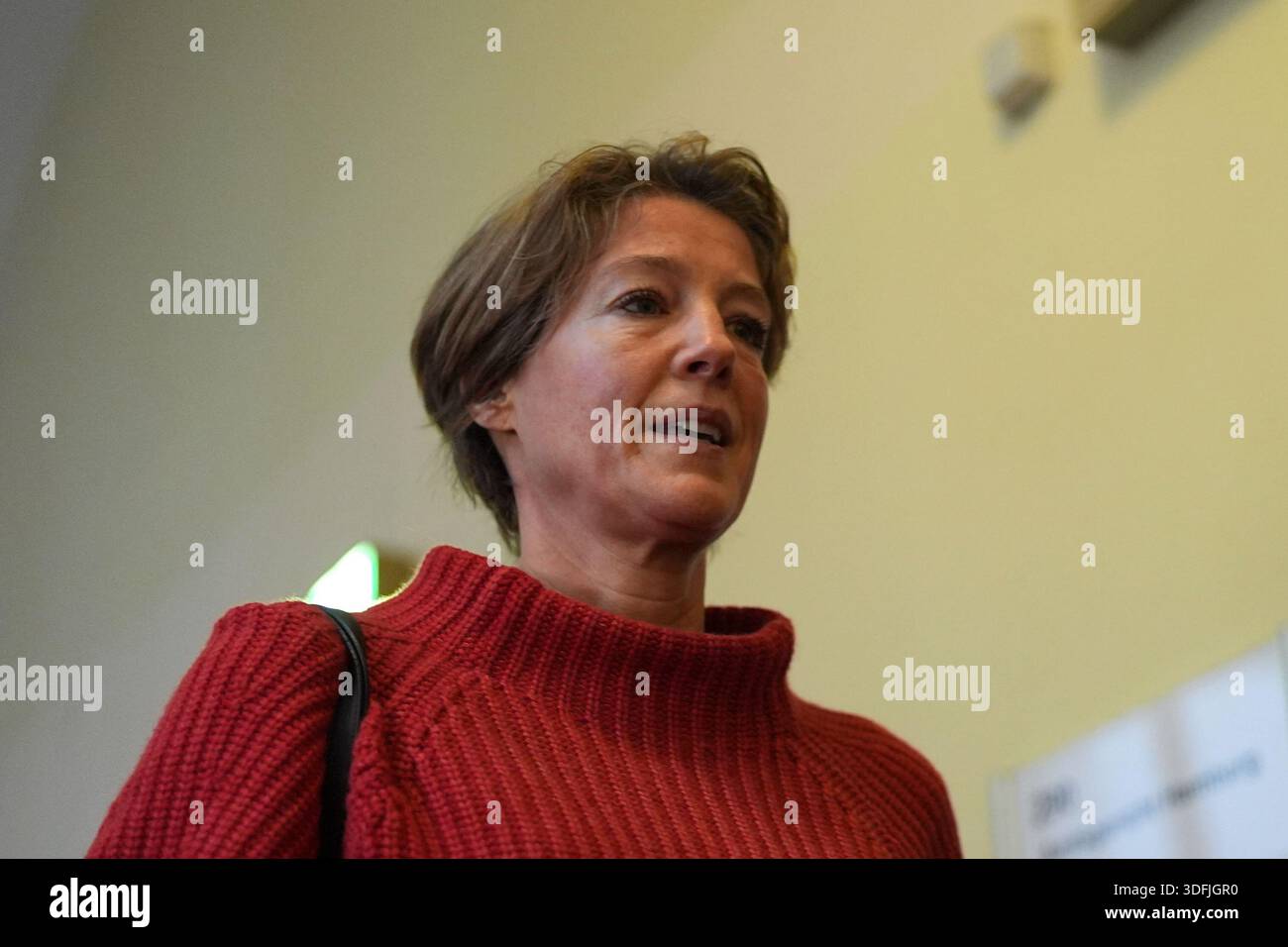
At the heart of the case lies a long-standing and acrimonious custody battle between Christina Block, a well-known figure in Germany’s business and social circles, and her ex-husband, Stephan Hensel. Block, the heiress to the Block House steakhouse empire, has been a polarizing figure in the German media, with her personal life often scrutinized in tabloids and business publications. The couple’s divorce in 2021 was marked by public accusations and legal battles over the custody of their two children, with Block alleging that Hensel was an unfit parent and Hensel countering that Block was attempting to alienate the children from him.
The abduction occurred on the night of December 31, 2023, when the children were staying with Hensel at his home in Denmark. According to court documents, a group of at least six individuals, including Said B. And David Bakay, forced their way into the home, restrained Hensel, and took the children. The operation was allegedly orchestrated by Bakay, an Israeli national with ties to private security firms, who has been described in court as the “mastermind” behind the plan. Bakay, who testified earlier in the trial, claimed that he was acting on behalf of Block to “protect” the children, though prosecutors have dismissed this as a cover for a premeditated kidnapping.
Block herself has vehemently denied any involvement in the abduction, though prosecutors have suggested that she may have had indirect knowledge of the plan. In a statement released through her legal team in January 2024, Block called the allegations “baseless” and accused Hensel of manipulating the children against her. However, court testimony from investigators has painted a more complicated picture. A police investigator testified earlier in the trial that Block had referred to the operation as a “repatriation” in private conversations, a term that prosecutors argue implies her awareness of the plan.
The trial has also heard from a neighbor of Hensel’s in Denmark, who testified that she had observed what she described as “harsh disciplinary methods” used by Hensel against the children. The neighbor, whose identity has been protected, claimed that she reached out to Hensel’s legal team to share her concerns, though Hensel’s attorneys have dismissed her testimony as hearsay. Block’s legal team has not commented on the neighbor’s statements, but the defense has sought to use them to bolster their argument that the abduction was justified as a protective measure.
Legal and Diplomatic Hurdles Complicate the Trial
The trial has been marked by significant legal and diplomatic challenges, particularly due to the involvement of Israeli nationals in the case. Said B.’s appearance in Hamburg was initially in doubt due to the ongoing conflict in the Middle East, which had disrupted travel and raised security concerns. The Hamburg Regional Court had previously announced a contingency plan to conduct remote testimony via video link if in-person appearances were not possible, a measure that underscored the complexities of prosecuting a case with international dimensions.
Said B. Was granted “safe conduct” by German authorities, ensuring that he would not be arrested during his time in the country, despite the outstanding charges against him in a separate case. This arrangement allowed him to testify without fear of immediate detention, though his legal team has not commented on whether he will face further legal action in Germany or Israel. His testimony is expected to play a critical role in the prosecution’s case, particularly in establishing the level of planning and coordination behind the abduction.

The trial has also highlighted the broader implications of cross-border custody disputes and the use of private actors in resolving them. David Bakay, the alleged mastermind, has ties to private security firms, raising questions about the role of such entities in international family law cases. While Bakay has denied any wrongdoing, his involvement has drawn attention to the legal gray areas that can arise when private individuals or organizations turn into involved in custody battles.
Legal experts following the case have noted that the trial could set a precedent for how similar cases are handled in the future, particularly those involving international actors. “This case is a stark reminder of how custody disputes can escalate into criminal matters when third parties become involved,” said Dr. Anna-Maria Müller, a professor of family law at the University of Hamburg, in an interview with Deutsche Welle. “The involvement of private security operatives adds a layer of complexity that courts are still grappling with.”
What Happens Next in the Trial?
The trial is expected to continue for several more weeks, with additional witnesses from Israel scheduled to testify via video link in the coming days. Among those expected to appear is a close associate of Christina Block, whose testimony could provide further insight into the events leading up to the abduction. The court has also indicated that it may call Block herself to testify, though her legal team has not confirmed whether she will appear.
Prosecutors are seeking to establish a clear chain of command in the operation, with a particular focus on determining who authorized the use of force and whether the children were placed in danger during the abduction. The defense, meanwhile, has argued that the operation was a justified intervention to protect the children from an allegedly abusive environment, a claim that has been hotly contested by Hensel’s legal team.
The next major development in the trial is expected to occur on May 5, 2026, when the court will hear testimony from a forensic psychologist who evaluated the children in the aftermath of the abduction. The psychologist’s report, which has been submitted as evidence, is expected to address the emotional and psychological impact of the incident on the children, as well as their statements about the events of that night.
For now, the case remains a focal point of media attention in Germany and beyond, with each day of testimony bringing new revelations about the night of the abduction and the motivations behind it. As the trial progresses, it continues to raise tricky questions about the limits of parental rights, the role of private actors in custody disputes, and the lengths to which some will head to protect—or control—their children.
We will continue to follow this story as it develops. Share your thoughts in the comments below, and follow World Today Journal for the latest updates on this and other major news stories.