
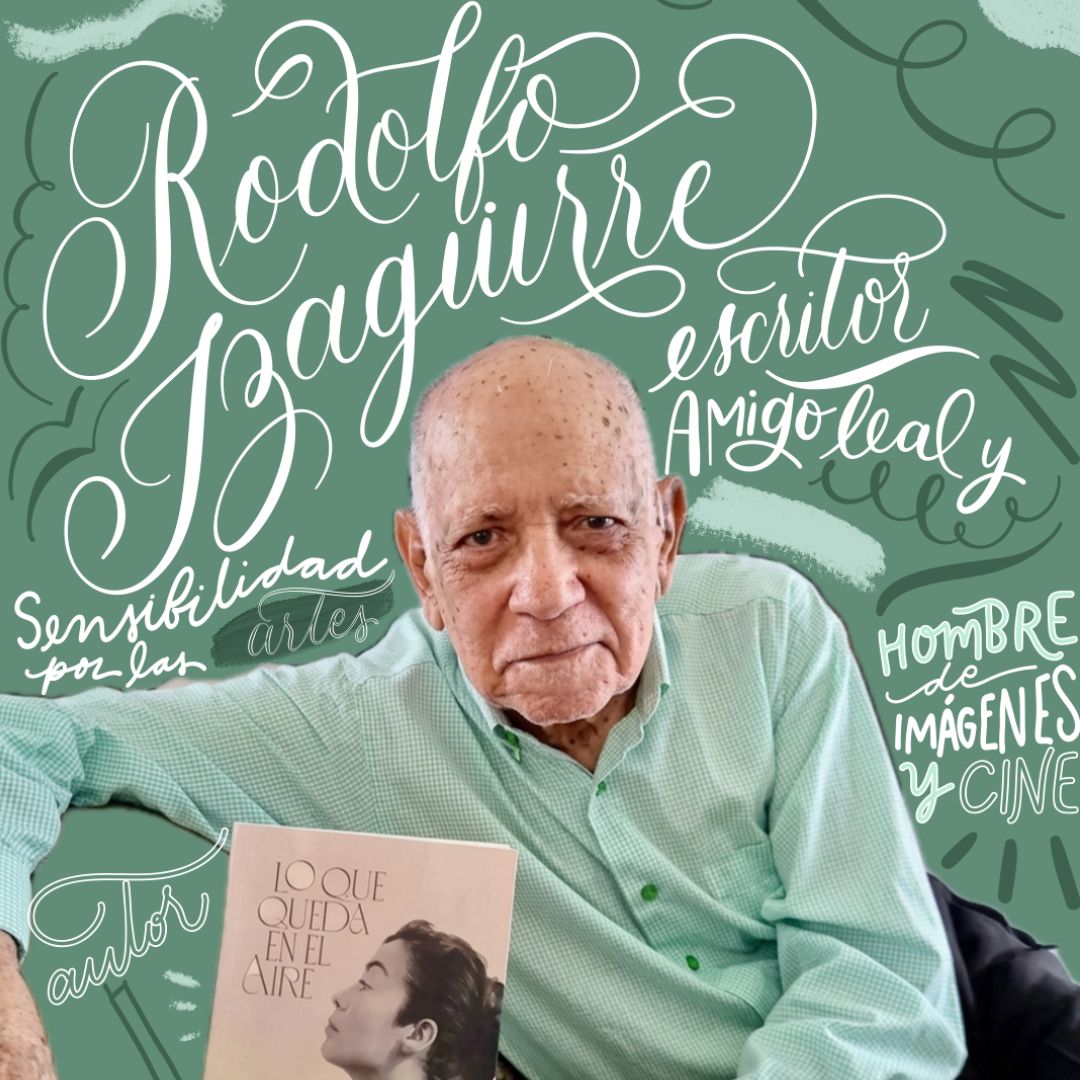
Rodolfo Izaguirre at 95: Venezuela’s Literary Giant Reflects on Art, Politics and the Allergies of a Nation
CARACAS — At 95 years old, Rodolfo Izaguirre remains one of Venezuela’s most incisive cultural voices, a man whose life has spanned dictatorship, revolution, and the quiet resilience of art. Born in 1931 in Caracas, Izaguirre is celebrated as a foundational figure in Venezuelan cinema criticism, a chronicler of the nation’s intellectual history, and a writer whose sharp wit has dissected everything from the absurdities of power to the peculiar allergies—both literal and metaphorical—that afflict individuals and societies alike.
In his recent column for El Nacional, titled simply “Alergias” (“Allergies”), Izaguirre weaves a personal essay that is equal parts memoir, political critique, and meditation on the psychological and physical reactions people develop in response to their environments. The piece, published in early 2026, has resonated deeply in Venezuela, where the intersection of health, identity, and politics has taken on latest urgency amid ongoing social and economic challenges. For Izaguirre, allergies are not merely biological phenomena but powerful metaphors for the ways individuals—and entire nations—react to trauma, oppression, and change.
“We all carry some quirk, some nervous tic, some rash or cough that flares up under stress,” Izaguirre writes in the column, which has been widely shared and discussed in Venezuelan literary circles. His reflections on the late writer Adriano González León—who famously developed a physical allergy to Venezuela itself—have struck a chord with readers who spot in González León’s condition a mirror of their own complicated relationship with their homeland. “the country, before Chávez appeared, did not cough like Adriano,” Izaguirre notes, “but I am certain it was not scratching itself either.”
A Life Between Cinema and Critique
Rodolfo Izaguirre’s career has been defined by his ability to bridge the worlds of art and activism. After studying law at the Sorbonne in Paris during the 1950s—a period when Venezuela’s University Central was closed by the dictatorship of Marcos Pérez Jiménez—he abandoned his legal studies to immerse himself in cinema. His proximity to the Cinémathèque Française in Paris ignited a lifelong passion for film, one that would later shape Venezuela’s cultural landscape.
Upon returning to Venezuela, Izaguirre became a central figure in the country’s avant-garde literary movements of the 1960s, including “El Techo de la Ballena” (“The Roof of the Whale”), a radical collective that sought to challenge political and artistic conventions. The group, which included writers like Adriano González León and Salvador Garmendia, became known for its provocative manifestos and experimental works that critiqued Venezuela’s social and political structures.
Izaguirre’s influence extended beyond literature. From 1968 to 1988, he served as the director of the Cinemateca Nacional de Venezuela, an institution founded by filmmaker Margot Benacerraf in 1966. Under his leadership, the Cinemateca became a hub for film education and preservation, nurturing generations of Venezuelan filmmakers and cinephiles. His weekly radio program, El cine, mitología de lo cotidiano (“Cinema, Mythology of the Everyday”), which aired on Radio Nacional de Venezuela for three decades, further cemented his reputation as a public intellectual who could make complex ideas accessible to a broad audience.
The Allergy as Metaphor
In “Alergias,” Izaguirre’s exploration of physical and psychological reactions to one’s environment serves as a lens through which to examine Venezuela’s recent history. The essay centers on the story of Adriano González León, a fellow writer who, according to Izaguirre, developed a peculiar allergy to Venezuela itself. González León, who served as a cultural attaché at the Venezuelan Embassy in Buenos Aires, reportedly only began coughing and scratching uncontrollably upon re-entering Venezuelan airspace after a trip abroad. His wife, Mary Ferrero, claimed he had never exhibited these symptoms although living outside the country.
For Izaguirre, González León’s allergy is more than a personal idiosyncrasy—it is a metaphor for the collective discomfort many Venezuelans have felt in response to the political and social upheavals of the past three decades. “The Venezuelan began to feel his allergy as soon as the dark paratrooper and bad soldier appeared on the scene, establishing the scourge of 21st-century socialism,” Izaguirre writes, referring to the late President Hugo Chávez, whose rise to power in 1999 marked a turning point in the nation’s history. Chávez’s presidency, which lasted until his death in 2013, was characterized by sweeping political and economic reforms that polarized Venezuelan society and led to widespread social unrest.
The idea of a nation developing an “allergy” to its own political reality is not merely poetic. Research in psychosomatic medicine has long documented the ways in which stress, trauma, and environmental factors can manifest as physical symptoms, including skin rashes, respiratory issues, and other allergic reactions. In Venezuela, where economic collapse, hyperinflation, and mass emigration have created a profound sense of dislocation for millions, Izaguirre’s metaphor resonates as a literal and figurative description of the country’s condition.
A Legacy of Resistance and Reflection
Izaguirre’s work has always been deeply intertwined with Venezuela’s political struggles. As a young man, he was part of a generation of intellectuals who opposed the Pérez Jiménez dictatorship (1948–1958) and later grappled with the complexities of the country’s democratic experiment. His writings from the 1960s and 1970s often critiqued what he saw as the complacency of Venezuela’s cultural elite, even as he celebrated the vibrancy of its artistic movements.
In his 2018 memoir, En el tiempo de mi propia vida (“In the Time of My Own Life”), Izaguirre reflects on his personal and professional journey, offering insights into the challenges of maintaining intellectual independence in a country marked by political turmoil. The book, which has been praised for its lyrical prose and unflinching honesty, serves as a testament to Izaguirre’s belief in the power of art to resist oppression. “I never wanted to succumb to any dictatorial gesture,” he has been quoted as saying, a sentiment that echoes through his body of work.
At 95, Izaguirre continues to write a weekly column for El Nacional, one of Venezuela’s oldest and most respected newspapers. His recent work, including “Alergias,” demonstrates that his voice remains as relevant as ever. In a country where the boundaries between personal and political suffering have often blurred, Izaguirre’s ability to find meaning in the mundane—whether it’s a cough, a rash, or a nation’s collective unease—offers readers a way to make sense of their own experiences.
The Personal and the Political in Venezuelan Literature
Izaguirre’s essay is part of a broader tradition in Venezuelan literature that uses the personal to illuminate the political. Writers like Salvador Garmendia, Guillermo Sucre, and more recently, Rodrigo Blanco Calderón, have explored the ways in which individual lives are shaped—and sometimes distorted—by the larger forces of history. In “Alergias,” Izaguirre adds his own unique perspective to this tradition, using the language of medicine to describe the ways in which Venezuelans have been “sensitized” to their own country.
The essay also touches on the idea of exile, both physical and psychological. González León’s allergy to Venezuela, after all, only manifested when he was within the country’s borders. For millions of Venezuelans who have left the country in recent years—over 7 million since 2015, according to the United Nations—this sense of dislocation is all too familiar. Many report feeling a mix of relief and guilt upon leaving, as well as a deep, often painful connection to a homeland that has turn into unrecognizable.
Izaguirre’s own life has been marked by periods of voluntary and involuntary separation from Venezuela. His time in Paris during the 1950s, where he studied and immersed himself in cinema, was a formative experience that shaped his worldview. Later, as a cultural figure in Venezuela, he navigated the complexities of a country in flux, often finding himself at odds with the political establishment. His ability to maintain his independence—both as a thinker and as a writer—has been a defining feature of his career.
Why Izaguirre’s Work Matters Today
In an era where Venezuela’s political and economic crises continue to dominate headlines, Izaguirre’s work offers a reminder of the importance of cultural memory. His essays, columns, and memoirs serve as a counterpoint to the often reductive narratives that frame Venezuela’s struggles solely in terms of geopolitics or economic statistics. By focusing on the human dimensions of these crises—on the coughs, the rashes, the nervous tics—Izaguirre invites readers to consider the ways in which history is lived, not just recorded.

His recent column, “Alergias,” is particularly relevant in a global context where the boundaries between personal health and public life have become increasingly porous. The COVID-19 pandemic, for example, has highlighted the ways in which individual well-being is inextricably linked to collective action. In Venezuela, where the healthcare system has collapsed under the weight of economic mismanagement and sanctions, the metaphor of a nation “allergic” to its own reality takes on a stark, literal dimension.
Izaguirre’s ability to find humor and humanity in even the darkest of circumstances is another reason his work endures. In “Alergias,” he recounts the story of a cinephile friend who developed an allergy to the actor Charles Laughton, becoming physically ill at the mere mention of his name. The friend, Izaguirre writes, found solace in the thought of Laughton’s wife, Elsa Lanchester, whose performance in The Bride of Frankenstein horrified even the monster himself. It’s a small moment of levity in an otherwise somber essay, a reminder that even in the face of overwhelming challenges, there is room for laughter and absurdity.
Looking Ahead: The Next Chapter for Izaguirre and Venezuela
As Rodolfo Izaguirre enters his 96th year, his legacy as one of Venezuela’s most important cultural figures is secure. His contributions to cinema, literature, and public discourse have left an indelible mark on the country’s intellectual history. Yet, in many ways, his work feels more urgent than ever. In a Venezuela where the future remains uncertain, Izaguirre’s writings offer a way to process the past and imagine a different path forward.
For readers outside Venezuela, Izaguirre’s work provides a window into the complexities of a nation that is often reduced to stereotypes in international media. His essays remind us that Venezuela is not just a story of crisis but also one of resilience, creativity, and enduring cultural vitality. In “Alergias,” he captures the paradox of a country that many of its citizens love deeply but struggle to live in—a place that can inspire both devotion and despair.
As for what comes next, Izaguirre shows no signs of slowing down. His weekly column in El Nacional continues to be a must-read for those who value sharp, independent thinking. And while his reflections on allergies—both personal and national—may seem like a departure from his earlier work, they are, in fact, a continuation of his lifelong project: to explore the ways in which art, politics, and human experience intersect.
For now, readers can look forward to Izaguirre’s next column, which is expected to be published in the coming weeks. In the meantime, his recent work serves as a powerful reminder of the role that literature can play in helping us make sense of the world—and of ourselves.
What do you think? How do personal and political struggles shape our health and well-being? Share your thoughts in the comments below, and don’t forget to share this article with others who might be interested in the intersection of culture, politics, and health in Venezuela.