Florida Governor Ron DeSantis Unveils Controversial Congressional Map Ahead of 2026 Elections
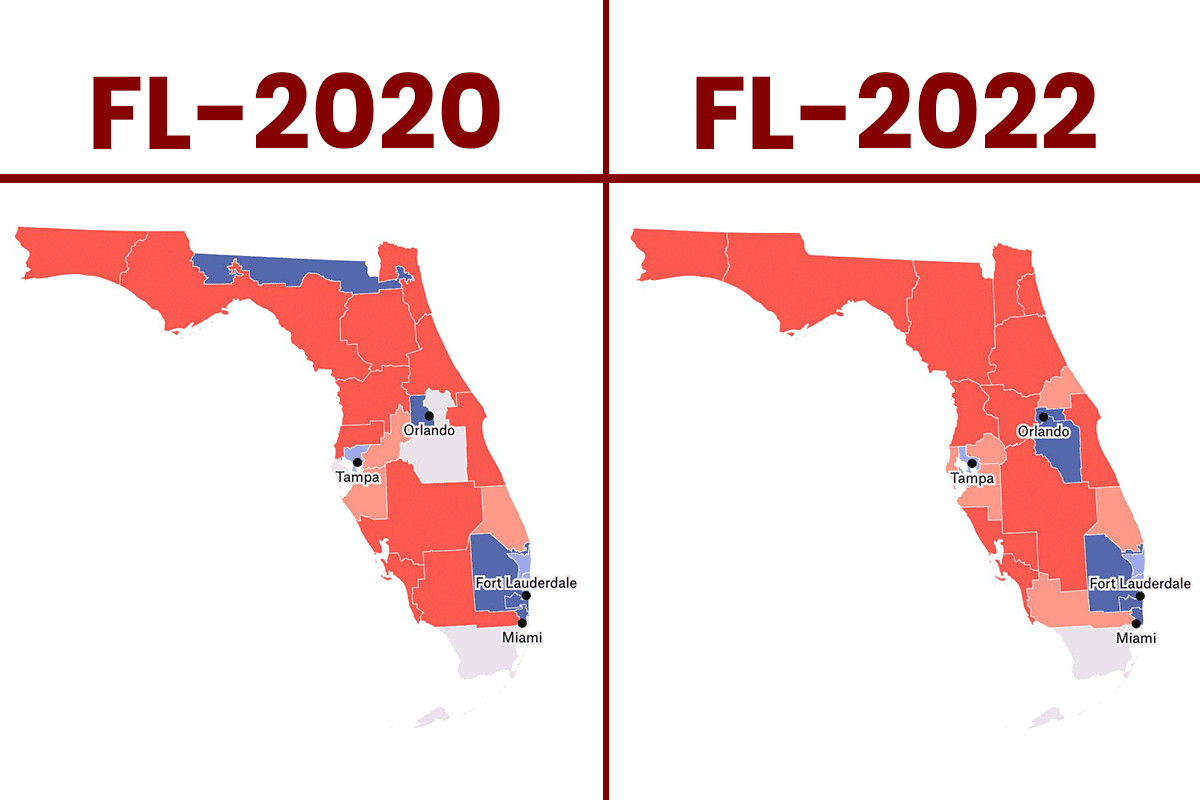
TALLAHASSEE, Florida — Florida Governor Ron DeSantis has submitted a new congressional redistricting map to the state Legislature, a proposal that could reshape the political landscape of the Sunshine State and bolster Republican control of the U.S. House of Representatives. The map, unveiled on Monday, targets several Democratic-leaning districts in Central and South Florida, aiming to flip as many as four seats to Republican control ahead of the November 2026 midterm elections. The move has ignited a fierce debate over partisan gerrymandering, with Democrats accusing DeSantis of orchestrating a “power grab” that could disenfranchise minority voters.
The proposal arrives amid a broader national battle over redistricting, as both major parties seek to redraw congressional lines to their advantage. Florida’s new map, if approved, would mark one of the most significant shifts in the state’s political geography in decades, potentially altering the balance of power in Washington. Legislative committees are set to review the proposal on Tuesday, with a possible floor vote as early as Wednesday, according to a memo from DeSantis’ general counsel, David Axelman.
Critics argue that the map violates Florida’s constitutional ban on partisan gerrymandering, a claim that could lead to protracted legal challenges. Senate President Ben Albritton has urged lawmakers to proceed with caution, reminding them that the state constitution prohibits drawing districts to favor one party over another. Meanwhile, Democrats have vowed to fight the proposal in court, calling it a “dummymander”—a term coined to describe a redistricting plan so aggressively partisan that it backfires on its creators.
The Proposed Map: What Changes and Why It Matters
The new congressional map proposed by DeSantis’ office would redraw boundaries in several key districts, particularly in Central and South Florida. According to an analysis by the Center for Politics at the University of Virginia, the plan could create four additional Republican-leaning seats, potentially flipping control of those districts from Democratic to GOP hands. This shift could prove pivotal in the 2026 elections, where Republicans are fighting to maintain their narrow majority in the U.S. House.
One of the most contentious changes involves the dismantling of Florida’s 5th Congressional District, currently represented by Democrat Al Lawson. The district, which stretches from Jacksonville to Tallahassee, has long been a target for Republicans due to its majority-Black voter base. Under the new map, the 5th District would be split, with its voters dispersed into neighboring districts that lean Republican. DeSantis’ office has argued that the current district violates the U.S. Constitution by prioritizing race over other factors, citing a pending U.S. Supreme Court decision that could weaken provisions of the Voting Rights Act.

In a memo to lawmakers, Axelman contended that the legal foundation for race-based redistricting is likely to change, pointing to a 2025 ruling by the Florida Supreme Court that struck down part of the state’s Fair Districts amendments. “The race-based requirements of the FDA too cannot be severed from the other requirements of the FDA,” Axelman wrote, arguing that voters approved the amendments as a single package and that the entire framework should be invalidated.
Democrats, yet, witness the move as a blatant attempt to dilute the voting power of minority communities. “Here’s a direct attack on Black and brown voters,” said State Senator Shevrin Jones, a Democrat from Miami Gardens. “The governor is using the courts as a smokescreen to push through a map that benefits his party at the expense of fair representation.”
Legal and Political Fallout: A Battle Over Fair Representation
The proposed map has already sparked a wave of legal and political backlash. Florida’s Fair Districts amendments, approved by voters in 2010, explicitly prohibit lawmakers from drawing districts that favor or disfavor a political party or incumbent. However, DeSantis’ office has argued that these amendments are unconstitutional, citing the 2025 Florida Supreme Court ruling that invalidated parts of the law.
Legal experts say the battle over the map is likely to conclude up in court, with Democrats and voting rights groups preparing to challenge its legality. “This is a clear violation of Florida’s constitution,” said Michael Li, senior counsel for the Brennan Center for Justice’s Democracy Program. “The Fair Districts amendments were designed to prevent exactly this kind of partisan manipulation, and the courts have repeatedly upheld them.”
Republicans, however, argue that the map is a necessary correction to what they describe as an overreach by the courts in previous redistricting cycles. “The governor’s proposal is about restoring balance and ensuring that Florida’s congressional districts reflect the will of the voters, not the whims of activist judges,” said State Representative Randy Fine, a Republican from Palm Bay.
The political stakes are high. Florida is one of the most competitive states in the nation, with a growing population that has made it a key battleground in recent elections. The state’s congressional delegation currently consists of 16 Republicans and 11 Democrats, but the new map could shift that balance further in the GOP’s favor. If approved, the proposal could help Republicans secure a more comfortable majority in the U.S. House, where they currently hold a slim 221-213 advantage over Democrats.
National Implications: Florida as a Redistricting Battleground
Florida’s redistricting battle is part of a broader national struggle over congressional maps, as both parties seek to gain an edge ahead of the 2026 midterm elections. With control of the U.S. House hanging in the balance, states like Florida, Texas, and New York have become critical battlegrounds in the fight over redistricting.

In Florida, the redistricting process has been particularly contentious. The state’s population growth—driven in large part by migration from other states—has given it two additional congressional seats since the last census. This growth has also made Florida a microcosm of the nation’s political divisions, with urban areas like Miami and Orlando trending Democratic, while rural and suburban regions remain solidly Republican.
DeSantis’ proposal comes as former President Donald Trump, a close ally of the governor, has made redistricting a key priority for the Republican Party. Trump has publicly urged GOP-led states to redraw congressional maps to maximize their advantage, and Florida is seen as one of the last remaining opportunities for Republicans to gain ground. “All eyes are on Ron DeSantis,” said a Republican strategist close to the former president. “If Florida flips four seats, it could be the difference between a Republican majority and a Democratic one.”
Democrats, however, are not backing down. They argue that the proposed map is a blatant attempt to gerrymander the state in favor of Republicans, and they have vowed to challenge it in court. “This is not about fair representation—it’s about raw political power,” said U.S. Representative Debbie Wasserman Schultz, a Democrat from Weston. “We will fight this map every step of the way, in the Legislature and in the courts.”
What Happens Next: A Timeline of Key Events
The proposed map is set to undergo a rapid review process in the Florida Legislature. Here’s what to expect in the coming days and weeks:
- Tuesday, April 28, 2026: House and Senate committees will review the proposed map in a special session. Lawmakers will have the opportunity to propose amendments, though significant changes are unlikely given the Republican majority in both chambers.
- Wednesday, April 29, 2026: A possible floor vote could take place in both the House and Senate. If approved, the map would move to DeSantis’ desk for his signature.
- Early May 2026: If signed into law, the map is expected to face immediate legal challenges. Democrats and voting rights groups have already signaled their intention to sue, arguing that the proposal violates Florida’s constitution.
- Summer 2026: Legal proceedings could move quickly, with a potential court ruling on the map’s legality before the November elections. If the map is struck down, the state could be forced to redraw its districts again, potentially delaying the primary elections.
For now, the fate of Florida’s congressional map remains uncertain. What is clear, however, is that the proposal has reignited a fierce debate over the role of partisanship in redistricting, and the outcome could have far-reaching implications for the 2026 elections and beyond.
Key Takeaways: What You Need to Know
- Four Seats at Stake: The proposed map could flip as many as four Democratic-leaning congressional seats to Republican control, potentially shifting the balance of power in the U.S. House.
- Legal Challenges Expected: Democrats and voting rights groups have vowed to sue, arguing that the map violates Florida’s constitutional ban on partisan gerrymandering.
- Race and Redistricting: The proposal targets districts with majority-Black and Hispanic populations, raising concerns about the dilution of minority voting power.
- National Implications: Florida’s redistricting battle is part of a broader national struggle over congressional maps, with control of the U.S. House hanging in the balance.
- Rapid Timeline: The Legislature could approve the map as early as Wednesday, with legal challenges likely to follow immediately.
What’s Next?
The next critical step in this process is the legislative review and potential vote on the proposed map, which could take place as early as Wednesday. If approved, the map will almost certainly face legal challenges, with courts likely to weigh in on its constitutionality before the November elections. For now, Floridians—and the nation—are watching closely to see how this redistricting battle will unfold.
What are your thoughts on Florida’s proposed congressional map? Do you believe it represents a fair redrawing of districts, or is it an example of partisan gerrymandering? Share your views in the comments below, and don’t forget to share this article with others who may be interested in the future of Florida’s political landscape.
Keep reading