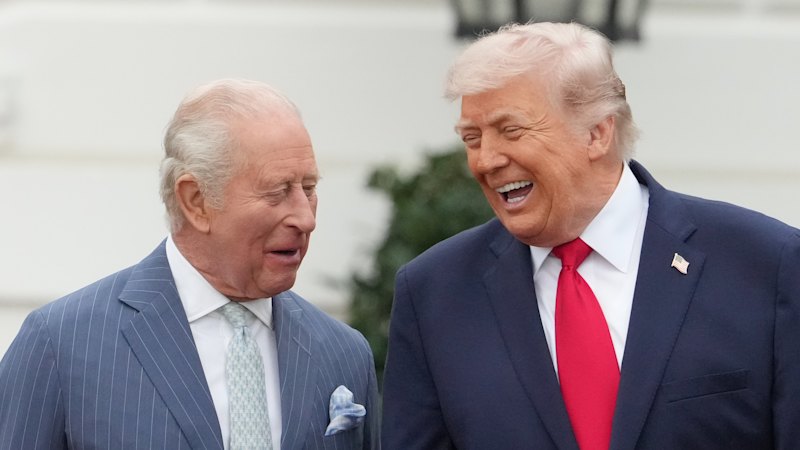
Trump Reaffirms “No Closer Friend” Than Britain as King Charles Visits White House Amid Diplomatic Tensions
WASHINGTON — President Donald Trump on Tuesday welcomed King Charles III to the White House with a public declaration that the United States has “no closer friend” than Britain, a statement that carried added weight as reports emerged of private remarks by the UK’s ambassador to Washington questioning the depth of the so-called “special relationship.” The diplomatic ceremony unfolded against a backdrop of growing scrutiny over the UK’s strategic alliances and the future of transatlantic ties under Trump’s second term.
Speaking alongside the British monarch during a state visit designed to underscore bilateral unity, Trump praised the “cherished bond” between the two nations, calling it “unbreakable” and “a cornerstone of global peace and security.” His remarks came just hours after The Financial Times published details of a private conversation in which UK Ambassador Sir Christian Turner told a group of British students in February that America’s only “special relationship” was “probably Israel,” not the United Kingdom. The timing of the leak — during the first state visit by a British monarch to the U.S. In nearly a decade — has sparked debate about the health of the transatlantic partnership and the shifting priorities of Washington’s foreign policy.
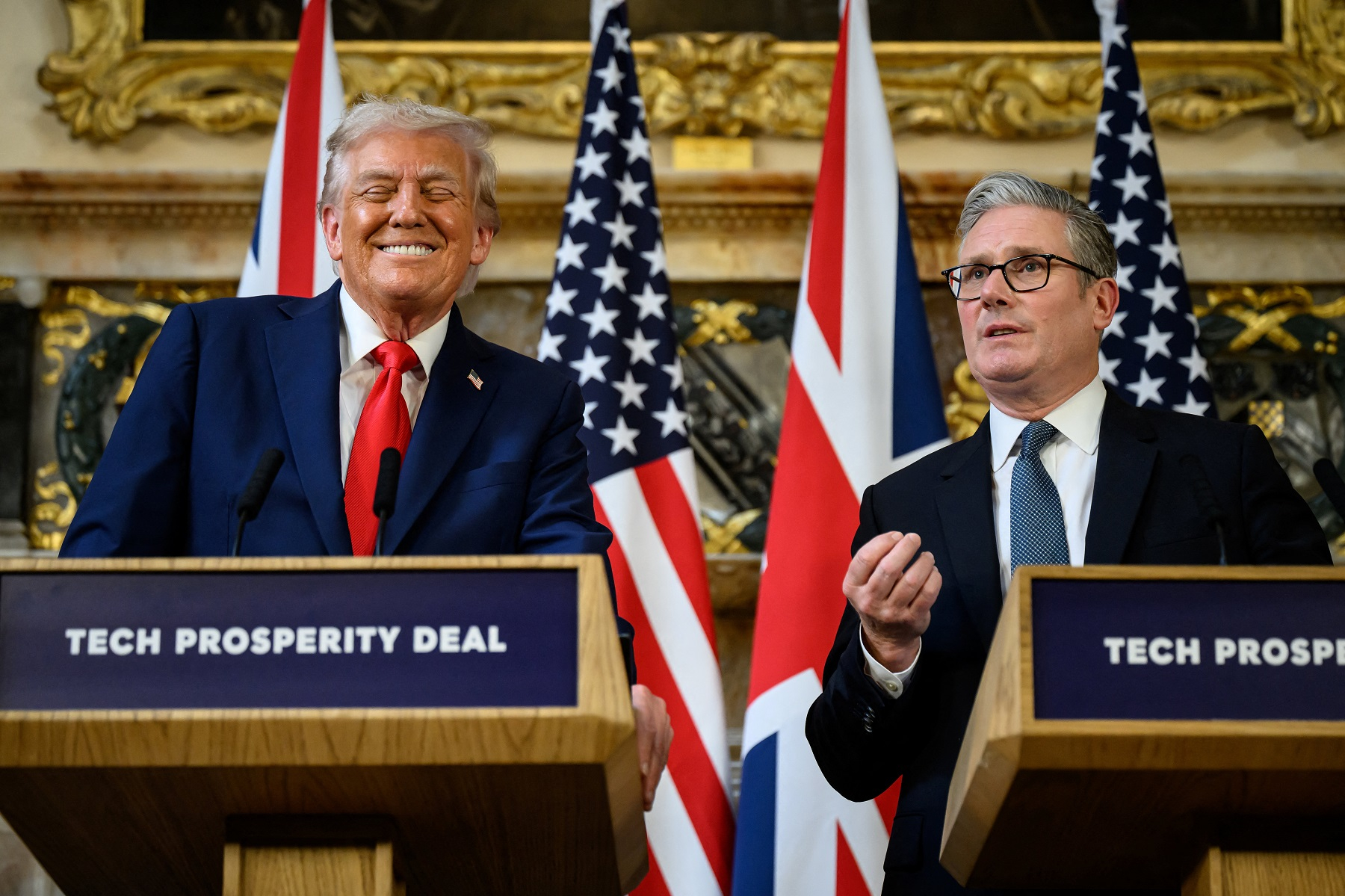
The White House ceremony, attended by senior officials from both governments, included a 21-gun salute and a joint appearance by Trump and King Charles on the South Lawn. The president’s emphasis on the strength of U.S.-UK relations contrasted sharply with Turner’s reported comments, which were made to students from the University of Oxford and King’s College London during a mid-February briefing in Washington. According to the Financial Times, Turner described the “special relationship” as “quite nostalgic” and “backwards-looking,” suggesting that Britain and Europe must “perform to redefine” their ties with the U.S. In a post-Brexit world.
The “Special Relationship” Under Scrutiny
The phrase “special relationship” has long been used to describe the close political, cultural, and military ties between the U.S. And the UK, dating back to the World War II era and the partnership between Winston Churchill and Franklin D. Roosevelt. Still, Turner’s remarks — which were not disputed by the UK government — suggest a growing recognition among British diplomats that the dynamics of the alliance may be evolving. In his February comments, Turner acknowledged that the U.S.-UK relationship remains “so strong,” particularly in defense and security, but added that the term itself carries “a lot of baggage.”
The ambassador’s appointment in February 2026 came after the abrupt dismissal of his predecessor, Peter Mandelson, over his ties to the late financier Jeffrey Epstein. Turner told the students that it was “extraordinary” that the Epstein scandal had not “brought down” any notable figures in the U.S., although it had led to Mandelson’s ouster and placed then-Prime Minister Keir Starmer “on the ropes.” The Financial Times reported that Turner suggested Starmer’s political future could be at risk if Labour performed poorly in the UK’s May 2026 local elections, though the ambassador did not elaborate on what specific outcomes might threaten the prime minister’s position.
Turner’s remarks about Israel — particularly his assertion that it is “probably” the only country with a “special relationship” with the U.S. — reflect a broader shift in Washington’s foreign policy priorities under Trump. Since returning to office in January 2025, Trump has deepened U.S. Support for Israel, including the relocation of the U.S. Embassy to Jerusalem in his first term and the recent brokering of a series of normalization agreements between Israel and Arab states. The administration has also taken a harder line on Iran, which Turner referenced in his comments, noting that his remarks came “in the weeks running up to the launch of the US-Israeli war on Iran on 28 February.” The U.S. And Israel conducted joint military strikes against Iranian nuclear and military facilities in late February 2026, a campaign that has drawn criticism from some European allies, including the UK, for its potential to escalate regional tensions.
Diplomatic Fallout and the Future of Transatlantic Ties
The leak of Turner’s comments has sparked a debate in London and Washington about the future of the U.S.-UK alliance. While the British government has not publicly responded to the ambassador’s remarks, officials in Downing Street privately expressed discomfort over the timing of the report, which overshadowed King Charles’s state visit. The monarch’s trip, which includes meetings with U.S. Lawmakers, business leaders, and climate advocates, is widely seen as an effort to reinforce the symbolic importance of the transatlantic partnership at a time of geopolitical uncertainty.
Trump’s reaffirmation of the “no closer friend” rhetoric during the White House ceremony suggests that the administration is keen to project continuity in the U.S.-UK relationship, despite the ambassador’s reported skepticism. In his remarks, Trump highlighted shared values, historical ties, and cooperation on issues ranging from counterterrorism to artificial intelligence. “Our alliance has stood the test of time, and it will continue to stand strong,” he said. “Together, we are a force for good in the world.”
However, analysts note that the substance of the relationship may be changing. The UK’s departure from the European Union in 2020 has left it more reliant on bilateral ties with the U.S., even as Washington’s focus shifts toward the Indo-Pacific and the Middle East. Turner’s comments about redefining the relationship reflect a recognition that the UK may need to adapt to a new geopolitical reality, one in which its influence is no longer automatically aligned with Washington’s priorities.
For his part, King Charles used his visit to emphasize the importance of climate action and sustainable development, areas where the U.S. And UK have historically collaborated but where progress has been uneven under Trump’s leadership. In a speech at the White House, the monarch called for “urgent and united action” to address the climate crisis, a message that resonated with environmental advocates but drew muted applause from the Trump administration, which has rolled back several climate regulations since 2025.
What Comes Next for the U.S.-UK Alliance?
The diplomatic tensions highlighted by Turner’s remarks and Trump’s public reaffirmation of the “special relationship” underscore the complexities of modern transatlantic diplomacy. While the symbolic ties between the two nations remain strong, the practical realities of global politics — including the rise of China, the war in Ukraine, and the shifting dynamics of the Middle East — are forcing both countries to reassess their priorities.
For the UK, the challenge will be to navigate a relationship with the U.S. That is no longer defined by the post-World War II era but by the demands of a multipolar world. Turner’s call to “redefine” the alliance suggests that British diplomats are already grappling with this reality, even as the government seeks to maintain the appearance of continuity. For the U.S., the question is whether the “special relationship” remains a cornerstone of its foreign policy or whether it is being eclipsed by newer partnerships, particularly with Israel and emerging economies in Asia.
The next major test of the U.S.-UK relationship will likely come in the form of joint responses to global crises, including the ongoing conflict in Ukraine and the fallout from the U.S.-Israeli strikes on Iran. The UK has traditionally been one of the strongest supporters of Ukraine in Europe, providing military aid and diplomatic backing since Russia’s full-scale invasion in 2022. However, Trump’s transactional approach to foreign policy — including his recent suggestion that NATO allies should increase their defense spending or risk reduced U.S. Support — has raised questions about the future of Western unity.
In the meantime, the White House and Downing Street are expected to continue emphasizing the strength of the U.S.-UK partnership, even as behind-the-scenes discussions about its future take place. King Charles’s state visit, which concludes on Friday, will include a meeting with members of Congress and a speech at the United Nations in New York, where the monarch is expected to reiterate the importance of international cooperation.
Key Takeaways
- The “Special Relationship” in Question: UK Ambassador Sir Christian Turner privately told students in February that America’s only “special relationship” is “probably Israel,” not the UK, describing the term as “nostalgic” and “backwards-looking.” His remarks were leaked as King Charles III began a state visit to the U.S.
- Trump Reaffirms Ties: President Donald Trump publicly declared that the U.S. Has “no closer friend” than Britain during the White House ceremony, calling the bond “unbreakable” and a “cornerstone of global peace.”
- Diplomatic Tensions: Turner’s comments, reported by the Financial Times, have sparked debate about the future of the U.S.-UK alliance, particularly as Washington’s focus shifts toward the Middle East and the Indo-Pacific.
- Shifting Priorities: The UK’s departure from the EU and the Trump administration’s emphasis on Israel and Asia have led some British diplomats to call for a redefinition of the transatlantic partnership.
- Next Steps: The U.S. And UK will face tests of their alliance in the coming months, including responses to the war in Ukraine, the fallout from U.S.-Israeli strikes on Iran, and negotiations over defense spending and NATO commitments.
What Readers Can Do
For those interested in following the developments in U.S.-UK relations, official updates can be found on the websites of the UK Foreign, Commonwealth & Development Office and the U.S. Department of State. King Charles’s state visit itinerary is available on the Royal Family’s official website.
The next major diplomatic event involving the U.S. And UK will be the NATO summit in July 2026, where leaders are expected to discuss defense spending, support for Ukraine, and the alliance’s strategic priorities. Readers can stay informed by following live updates from the summit on the NATO website.
What are your thoughts on the future of the U.S.-UK “special relationship”? Do you think the alliance remains as strong as it once was, or is it time for a redefinition? Share your views in the comments below and join the conversation on social media.
Worth a look