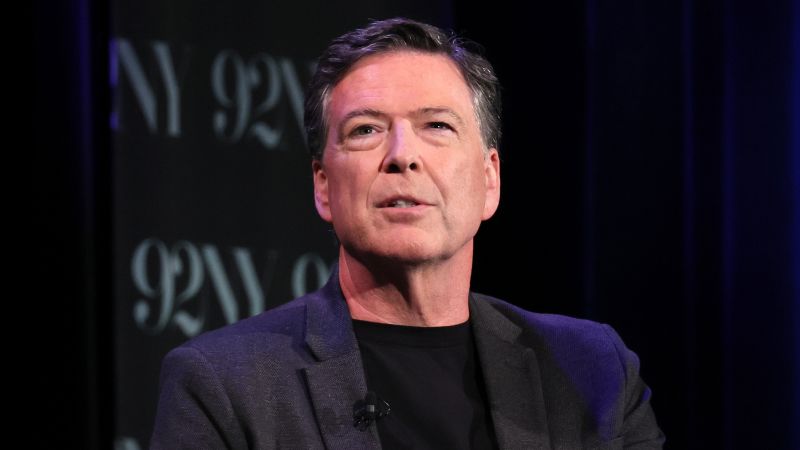
Justice Department Indicts Former FBI Director James Comey for a Second Time
In a dramatic escalation of a long-running legal battle, the U.S. Department of Justice (DOJ) has filed a second indictment against former FBI Director James Comey, marking a rare and contentious chapter in American legal and political history. The new charges, filed in the U.S. District Court for the Eastern District of Virginia, stem from allegations related to Comey’s handling of classified information during his tenure as the nation’s top law enforcement official. The indictment, unsealed on Monday, April 27, 2026, has reignited debates over the politicization of the DOJ and the broader implications for government accountability under the administration of President Donald Trump.
Comey, who led the FBI from 2013 to 2017, has been a polarizing figure in U.S. Politics, particularly following his role in investigations into Russian interference in the 2016 presidential election and the Hillary Clinton email controversy. This latest indictment arrives nearly a year after a federal judge dismissed an earlier set of charges against Comey in a separate case, a decision the DOJ has since appealed. The new charges are part of a broader investigation led by U.S. Attorney Jason A. Reding Quiñones, a Trump appointee, into what allies of the former president have described as a “grand conspiracy” involving officials from the Obama administration and the FBI.
The DOJ has not publicly released the full indictment, but sources familiar with the matter told The New York Times that the charges center on allegations that Comey mishandled sensitive government documents, including memos detailing his interactions with President Trump during the early months of his administration. These memos, which Comey later shared with the media, were at the heart of his 2017 firing and subsequent testimony before Congress, where he accused Trump of pressuring him to drop an investigation into former National Security Adviser Michael Flynn.
The Charges: What We Know So Far
The indictment against Comey, filed under seal on April 25, 2026, and unsealed two days later, includes multiple counts related to the unauthorized retention and disclosure of classified information. According to a DOJ court filing obtained by CNN, the charges allege that Comey violated federal laws governing the handling of national security secrets, including the Espionage Act, a statute historically reserved for cases involving spies or individuals accused of passing classified information to foreign adversaries.
Specifically, the indictment focuses on Comey’s decision to draft and retain memos documenting his private conversations with Trump in early 2017. Comey has previously stated that he created the memos out of concern that Trump might later misrepresent their interactions, particularly regarding the president’s request for “loyalty” and his alleged directive to drop the FBI’s investigation into Flynn. Comey shared some of these memos with a friend, Columbia University law professor Daniel Richman, who later provided them to The New York Times, sparking a firestorm of controversy and ultimately leading to the appointment of Special Counsel Robert Mueller.

The DOJ’s decision to pursue a second indictment against Comey is unusual, particularly given that a federal judge dismissed a previous set of charges in December 2025. In that case, U.S. District Judge Michael S. Nachmanoff ruled that the government had failed to demonstrate that Comey’s actions met the legal threshold for prosecution under the Espionage Act. The DOJ appealed the dismissal, and the case remains pending before the U.S. Court of Appeals for the Fourth Circuit. The new indictment appears to address some of the judge’s concerns, though legal experts say it remains unclear whether the government can secure a conviction.
A Legal and Political Firestorm
The indictment has drawn sharp reactions from both sides of the political aisle, with Trump allies hailing it as a long-overdue reckoning for what they describe as a “deep-state conspiracy” against the former president. Meanwhile, Comey’s supporters, including many former FBI officials and Democratic lawmakers, have condemned the charges as politically motivated, arguing that they are part of a broader campaign by the Trump administration to target perceived enemies.
In a statement released shortly after the indictment was unsealed, Comey’s attorney, David Kelley, called the charges “baseless” and accused the DOJ of weaponizing the legal system for political purposes. “This is yet another attempt by the Trump administration to retaliate against Director Comey for his role in exposing the president’s efforts to obstruct justice,” Kelley said. “We will vigorously defend against these charges and are confident that the truth will prevail.”
The DOJ, for its part, has denied any political motivation behind the indictment. In a brief statement, a spokesperson for the department said the charges were the result of a “thorough and independent investigation” and that the DOJ remains committed to upholding the rule of law. However, the timing of the indictment—coming just months before the 2026 midterm elections—has fueled speculation about its potential impact on the political landscape.
The Broader Investigation: A “Grand Conspiracy” Probe
The new indictment against Comey is part of a sprawling investigation led by U.S. Attorney Jason A. Reding Quiñones, who was appointed to his role in 2025 after serving as a federal prosecutor in Florida. The probe, which has been dubbed a “grand conspiracy” investigation by Trump allies, focuses on the FBI’s handling of the Russia investigation and other matters related to the former president. According to NBC News, more than 130 subpoenas have been issued in connection with the investigation, targeting current and former government officials, as well as private individuals.
The investigation has raised eyebrows among legal experts, particularly given the statute of limitations for many of the alleged offenses. While federal law typically bars prosecutions for actions that occurred more than five years ago, Trump allies have argued that officials involved in the Russia investigation took steps within the statute of limitations to further what they describe as a conspiracy against the former president. This legal theory, known as the “continuing conspiracy” doctrine, has been used in other high-profile cases but remains controversial.
Comey is not the only high-profile figure to face legal scrutiny in connection with the investigation. In March 2026, he was subpoenaed to testify before a federal grand jury in Florida, though it remains unclear whether he has complied with the subpoena. Other targets of the investigation include former FBI officials Andrew McCabe and Peter Strzok, as well as former Deputy Attorney General Rod Rosenstein, all of whom played key roles in the Russia probe.
Legal Precedents and Potential Outcomes
The charges against Comey are not without precedent, but they are rare. The Espionage Act, enacted in 1917, has historically been used to prosecute individuals accused of spying for foreign governments or leaking classified information to the media. However, the law has also been invoked in cases involving government officials who mishandled sensitive documents, most notably in the prosecution of former CIA officer Jeffrey Sterling and former National Security Agency contractor Reality Winner.
Legal experts say the case against Comey presents unique challenges, particularly given his status as a former high-ranking government official. Unlike typical Espionage Act cases, which involve individuals accused of leaking information to foreign adversaries or the media, Comey’s actions were motivated by a desire to document his interactions with the president, a practice he has defended as necessary to protect the integrity of the FBI. This distinction could complicate the government’s efforts to secure a conviction.
the case is likely to hinge on whether Comey’s memos were properly classified at the time he created them. Comey has argued that the memos were not classified when he wrote them, though the DOJ has disputed this claim. The classification status of the memos could be a key factor in determining whether Comey violated the law by retaining and sharing them.
If convicted, Comey could face significant penalties, including fines and imprisonment. However, legal analysts say a plea deal remains a possibility, particularly given the complexities of the case and the potential for a lengthy and contentious trial. Comey, who has maintained his innocence throughout the legal proceedings, has vowed to fight the charges, setting the stage for a high-stakes legal battle that could have far-reaching implications for government accountability and the rule of law.
What Happens Next?
Comey is expected to make his first court appearance in the Eastern District of Virginia on May 5, 2026, where he will be formally arraigned on the new charges. His legal team is likely to file motions to dismiss the indictment, arguing that the charges are politically motivated and lack legal merit. If the case proceeds to trial, it could take months or even years to resolve, given the complexity of the legal issues involved and the high-profile nature of the defendant.
In the meantime, the case is likely to remain a focal point of political debate, particularly as the 2026 midterm elections approach. Trump allies have already seized on the indictment as evidence of what they describe as a “deep-state” effort to undermine the former president, while Comey’s supporters have framed the charges as an attempt to silence dissent and intimidate government officials.
For now, the legal battle between Comey and the DOJ is far from over. As the case unfolds, it will test the limits of government accountability, the independence of the justice system, and the broader implications of prosecuting former officials for actions taken in the course of their duties.
Key Takeaways
- Second Indictment Filed: The DOJ has filed a second indictment against former FBI Director James Comey, alleging he mishandled classified information related to memos documenting his interactions with President Trump.
- Charges Under Espionage Act: The indictment includes multiple counts under the Espionage Act, a statute typically used to prosecute spies or individuals accused of leaking classified information to foreign adversaries.
- Political Fallout: The indictment has reignited debates over the politicization of the DOJ, with Trump allies hailing it as a reckoning for the “deep state” and Comey’s supporters condemning it as politically motivated.
- Broader Investigation: The charges are part of a wider probe led by U.S. Attorney Jason A. Reding Quiñones into the FBI’s handling of the Russia investigation and other matters related to Trump.
- Legal Challenges Ahead: Comey’s legal team is expected to file motions to dismiss the indictment, setting the stage for a lengthy and contentious legal battle.
As this story develops, we will continue to provide updates on the legal proceedings and their broader implications. For the latest information, follow World Today Journal and share your thoughts in the comments below.
Worth a look