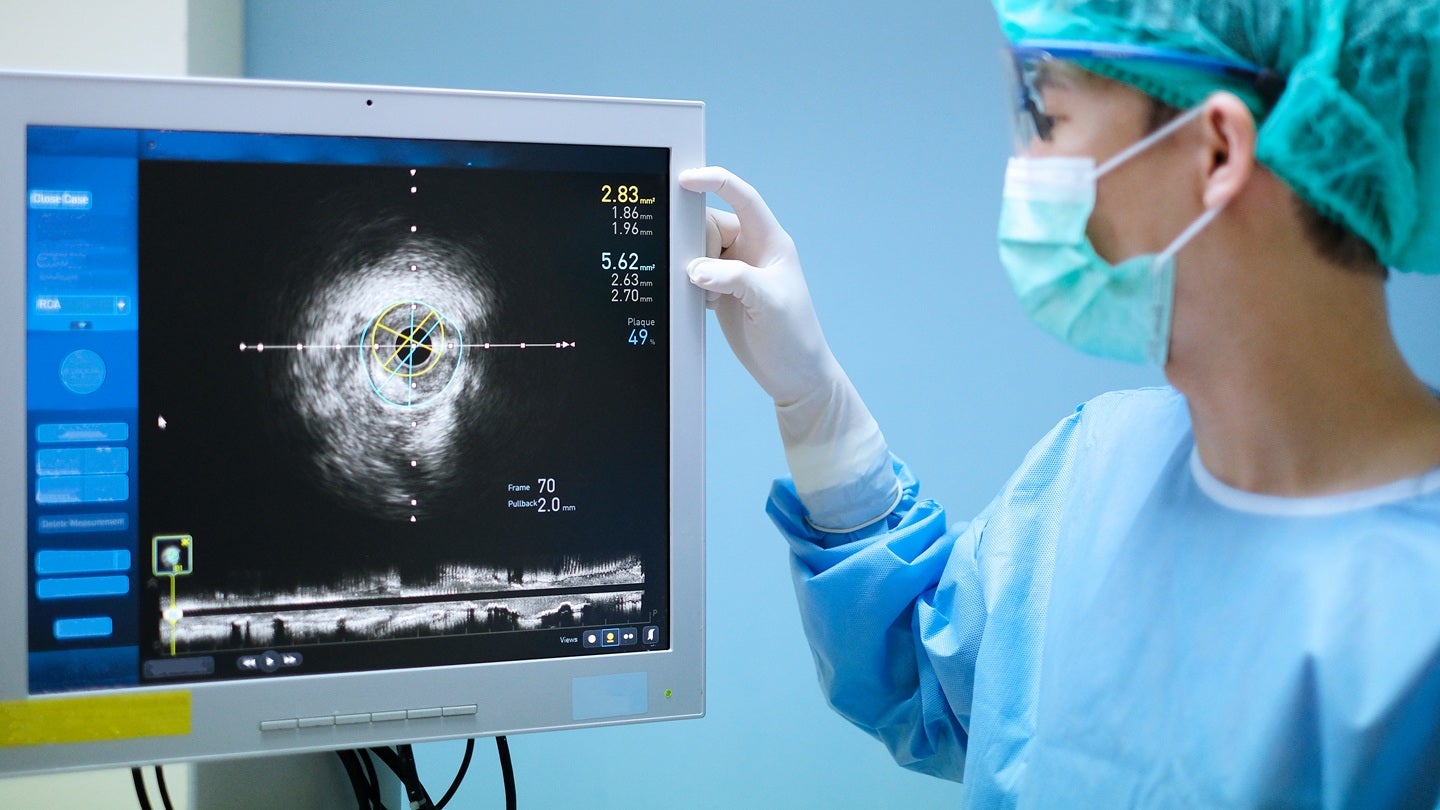
Abbott Receives FDA Clearance and CE Mark for Next-Generation Ultreon™ 3.0 Coronary Imaging Platform
In a significant advancement for cardiovascular imaging, Abbott has announced that it has received both U.S. Food and Drug Administration (FDA) clearance and CE Mark approval for its Ultreon™ 3.0 platform. This next-generation system utilizes artificial intelligence (AI) to enhance optical coherence tomography (OCT) imaging, offering clinicians a more detailed and efficient way to assess coronary artery disease. The Ultreon 3.0 is designed to provide real-time guidance during percutaneous coronary intervention (PCI) procedures, potentially improving patient outcomes.
The new platform builds upon Abbott’s existing Ultreon technology, integrating high-resolution coronary plaque images with AI-automated insights. This combination aims to simplify and accelerate decision-making for complex cases, ultimately leading to more precise and effective treatments. The ability to visualize plaque characteristics and assess vessel physiology with greater clarity is expected to be a valuable tool for interventional cardiologists.
What is Optical Coherence Tomography (OCT)?
Optical coherence tomography is an imaging technique that uses light waves to create high-resolution cross-sectional images of the inside of blood vessels. Unlike traditional angiography, which relies on X-rays, OCT provides detailed visualization of plaque composition and vessel wall structure. This allows physicians to identify vulnerable plaques that are at higher risk of rupture and cause heart attacks. Abbott’s Ultreon 3.0 aims to further refine this technology with the addition of AI-powered analysis.
AI-Powered Insights for Enhanced Precision
A key feature of the Ultreon 3.0 platform is its integration of AI algorithms. These algorithms automatically detect and measure key features within the coronary arteries, such as calcium arc thickness and lipid deposits. This automation streamlines the workflow for clinicians, reducing the time required to analyze images and make critical decisions. The system likewise highlights endothelial lined lesions (EEL) automatically, providing a quick assessment of vessel health.
According to Abbott, the Ultreon 3.0 platform delivers low-to-zero contrast OCT imaging at a higher resolution than intravascular ultrasound (IVUS). This is particularly beneficial for patients at risk of contrast-induced nephropathy, a kidney condition that can be exacerbated by the leverage of contrast agents during imaging procedures. The platform’s saline compatibility allows for safe imaging in these vulnerable patients.
FFROCT: Optimizing PCI Outcomes
The Ultreon 3.0 platform incorporates a feature called Fractional Flow Reserve OCT (FFROCT), which combines OCT imaging with physiological assessment. FFROCT allows clinicians to evaluate the degree of ischemia (reduced blood flow) in each lesion and predict the impact of different treatment plans. This can help optimize PCI outcomes by ensuring that only significant blockages are treated, minimizing unnecessary interventions.
Data presented by Abbott indicates that FFROCT demonstrates high accuracy compared to wire-based Fractional Flow Reserve (FFR). A Fusion Study showed 82% accuracy, while an Illumien IV Substudy revealed a hazard ratio of 0.70 (p=0.021) for FFROCT per 0.1 mm Hg/mm Hg. Post-PCI FFROCT assessment has been shown to be predictive of 2-year clinical outcomes independent of minimal stent area (MSA).
Streamlined Workflow and Enhanced Efficiency
The Ultreon 3.0 platform is designed to streamline the workflow for interventional cardiologists. Its one-second pullback speed and automated insights simplify the imaging process, allowing for faster and more efficient procedures. The tri-registration of angiography, OCT, and physiology data enables users to pinpoint the precise location of calcium, lipid, and FFROCT findings, further enhancing diagnostic accuracy.
The system’s ability to quickly identify lipid-free landing zones – areas suitable for stent placement – is another significant advantage. Automatic detection of lipid deposits (highlighted in blue) helps clinicians avoid placing stents in areas prone to future complications. This feature contributes to improved long-term stent patency and reduced risk of restenosis.
Regulatory Approvals and Market Availability
The FDA clearance and CE Mark approval for Ultreon 3.0 represent a significant milestone for Abbott. These approvals allow the company to market and sell the platform in both the United States and Europe, expanding access to this advanced imaging technology. The company announced the approvals on April 28, 2026. Abbott’s press release details the regulatory pathway and the platform’s key features.

Implications for Cardiovascular Care
The introduction of the Ultreon 3.0 platform has the potential to significantly impact the field of cardiovascular care. By providing clinicians with more detailed and accurate information about coronary artery disease, the platform can help optimize treatment decisions and improve patient outcomes. The integration of AI-powered insights promises to enhance efficiency and reduce the time required for complex procedures.
The ability to perform low-to-zero contrast OCT imaging is particularly important for patients with renal impairment, who are at increased risk of complications from contrast agents. The Ultreon 3.0 platform offers a safer and more effective imaging option for this vulnerable population. The platform’s FFROCT functionality also has the potential to reduce unnecessary PCI procedures, lowering healthcare costs and minimizing patient risk.
Looking Ahead
Abbott plans to continue investing in the development of advanced cardiovascular imaging technologies. The company is committed to providing clinicians with the tools they need to deliver the best possible care to their patients. Further research and development efforts will likely focus on expanding the capabilities of AI-powered image analysis and improving the integration of OCT with other diagnostic modalities.
The next step for Abbott will be the full-scale rollout of the Ultreon 3.0 platform to hospitals and cardiac centers across the United States and Europe. Clinicians will begin to incorporate the platform into their routine practice, and further clinical data will be collected to assess its long-term impact on patient outcomes. Interested healthcare professionals can request an Abbott sales representative or sign up for news and updates on the company’s website.
Disclaimer: As a health journalist, I strive to provide accurate and up-to-date information. However, medical technology is constantly evolving, and individual patient outcomes may vary. This article is for informational purposes only and should not be considered medical advice. Always consult with a qualified healthcare professional for any health concerns or before making any decisions related to your health or treatment.