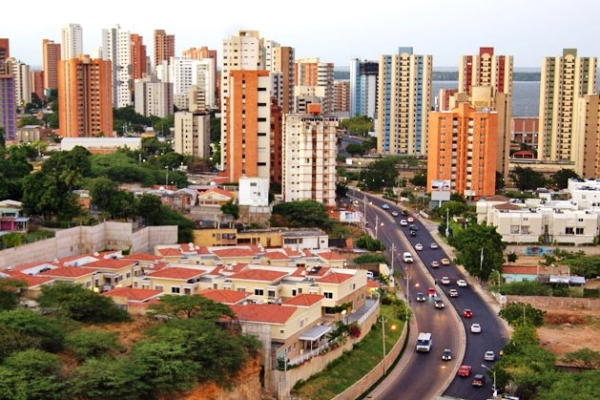
In the industrial heartland of Zulia, Venezuela, a stark economic dichotomy has emerged, reflecting the broader systemic volatility of the nation’s economy. While the region continues to serve as a critical hub for oil, agriculture, and commerce, the labor market has fractured into two distinct realities: a struggling working class and a highly compensated managerial elite.
Recent data highlighting the Zulia labor market salaries reveals a cavernous wage gap that underscores the challenges of operating in a hyperinflationary environment. In the private sector, laborers are reportedly earning up to $280 per month, while top-tier managers in the same region can command salaries reaching as high as $5,500. This disparity is not merely a reflection of seniority or skill, but a symptom of a “dollarized” economy where the official currency has largely been abandoned in favor of the U.S. Dollar to preserve purchasing power.
For those with PhDs in economics or years of experience in global markets, this trend is a classic example of labor market fragmentation. When a national currency loses its function as a store of value, the market creates an informal, dual-track system. In Zulia, this has resulted in a scenario where the “floor” for survival is barely maintained for the general workforce, while the “ceiling” for specialized talent has risen sharply as companies compete for a dwindling pool of qualified executives.
The Great Divide: Salary Disparity in Zulia’s Private Sector
The reported figures—topping out at $280 for laborers and $5,500 for managers—illustrate a widening social and economic chasm. For the average worker in Zulia, a monthly income of $280 is often the result of a combination of a nominal base salary in bolívars and “bonuses” paid in U.S. Dollars. This hybrid payment structure allows companies to avoid some of the legal complexities of the official minimum wage while providing workers with a means to afford basic necessities.

However, the purchasing power of $280 remains precarious. In a region where the cost of living has been driven upward by the same dollarization affecting wages, basic food baskets and utility costs often consume the majority of a laborer’s income. This creates a cycle of “working poverty,” where employees are employed in full-time roles but remain vulnerable to any fluctuation in the exchange rate or a sudden increase in the price of imported goods.
Conversely, the $5,500 upper limit for managerial roles reflects a desperate scramble for talent. Venezuela has experienced one of the largest migratory crises in recent history, leading to a massive “brain drain” of skilled professionals. As experienced managers, engineers, and accountants emigrated to neighboring countries or the West, the remaining talent in Zulia became a scarce commodity. Companies are now forced to offer highly competitive, dollar-denominated salaries to retain the few individuals capable of navigating the complexities of the Venezuelan regulatory and economic landscape.
Dollarization as a Survival Strategy
The shift toward U.S. Dollar payments in Zulia is not an official government policy but a grassroots survival mechanism. For years, hyperinflation rendered the Venezuelan bolívar virtually useless for long-term planning or significant purchases. According to data from the International Monetary Fund (IMF), Venezuela has faced one of the most severe economic contractions in modern history, characterized by a collapse in GDP and astronomical inflation rates.

In this environment, “dollarization” serves two primary purposes:
- Value Preservation: Both employers and employees prefer the U.S. Dollar because it maintains its value, unlike the bolívar, which can lose significant percentages of its worth in a matter of days.
- Talent Retention: By paying in USD, companies can offer a level of stability that prevents their most critical staff from migrating.
This transition has created a “dual economy.” Those with access to dollars—primarily managers and those working for export-oriented firms—can access a wide array of imported goods and services. Those relying on bolívars or low-level dollar bonuses are restricted to a much more limited and often lower-quality market. This stratification is particularly evident in Zulia, where the industrial sector’s reliance on imported machinery and specialized parts further ties the local economy to the U.S. Dollar.
The Cost of Talent and the ‘Brain Drain’
The extreme compensation for managers in Zulia is a direct response to the scarcity of human capital. When a significant portion of the professional class leaves a region, the “replacement cost” for a skilled manager skyrockets. The $5,500 salary ceiling is an attempt to make staying in Venezuela more attractive than emigrating to Colombia, Spain, or the United States.
This creates a paradoxical labor market. While there is high unemployment or underemployment among the general workforce, there is a critical shortage of middle and upper management. This imbalance forces companies to either overpay for the remaining talent or operate with significant leadership gaps, which can hinder long-term growth and operational efficiency.
this disparity impacts the internal morale of organizations. When the gap between a frontline worker and a manager is nearly 20-fold, it can erode organizational cohesion. Laborers may perceive that the benefits of the region’s economic “stabilization” (via dollarization) are being captured exclusively by the elite, while the working class merely manages to avoid starvation.
Economic Implications for the Region
From a macroeconomic perspective, the labor market in Zulia is a microcosm of the broader Venezuelan struggle. The reliance on the U.S. Dollar has provided a temporary reprieve from the total collapse of commerce, but it has also institutionalized inequality. Because not every sector can generate dollar revenue—especially those relying on local consumers with low purchasing power—the wage gap is likely to persist and perhaps even widen.
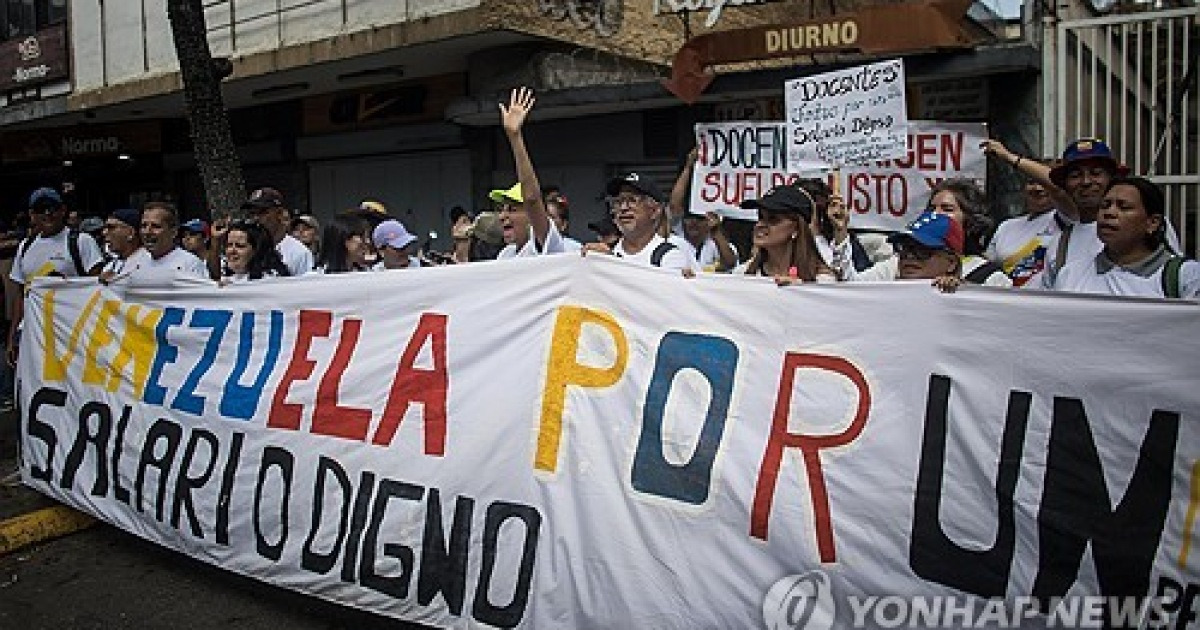
For investors and businesses looking at the region, these trends signal both risk and opportunity. The high cost of management is a significant overhead expense, but the availability of a large, lower-cost workforce remains a draw for certain types of industrial production. However, the sustainability of this model is questionable if the “floor” for laborers does not rise to a level that allows for a stable, healthy, and productive workforce.
The long-term health of Zulia’s economy will depend on whether the region can move beyond “survival dollarization” toward a structured economic recovery. This would require not only currency stability but also a reinvestment in education and professional training to fill the gaps left by the migratory crisis.
Key Takeaways on Zulia’s Labor Market
- Extreme Wage Gap: Laborers earn up to $280/month, while managers can earn up to $5,500/month.
- Dollarization: The U.S. Dollar has become the primary medium for salary payments to combat hyperinflation.
- Talent Scarcity: High managerial salaries are driven by a severe “brain drain” and the need to retain skilled professionals.
- Economic Stratification: A dual economy has emerged, separating those with dollar access from those reliant on the volatile local currency.
The next critical indicator for the region will be the upcoming quarterly reports from local business chambers, which are expected to provide updated data on inflation adjustments and salary trends for the second half of the year. These reports will reveal whether the current wage ceilings are shifting in response to new economic pressures or if the gap is continuing to expand.
Do you believe dollarization is a sustainable solution for emerging markets facing hyperinflation, or does it inevitably lead to unsustainable social inequality? Share your thoughts in the comments below.
Keep reading