
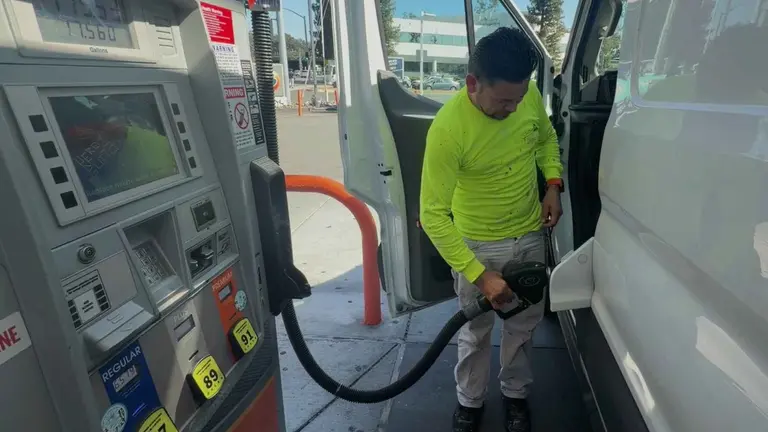
For many working-class families in California, the daily commute has transformed from a routine necessity into a source of severe financial distress. As gasoline prices in certain regions have surged, the resulting economic pressure is forcing a growing number of residents—particularly within the Hispanic community—to make impossible choices between fueling their vehicles and putting food on the table.
The volatility of gasoline prices in California
has created a ripple effect that extends far beyond the gas pump. For low-income workers who rely on older, less fuel-efficient vehicles to reach jobs in agriculture, construction, and service industries, the cost of transportation is no longer a manageable expense but a primary driver of household instability. In some areas, prices have reached levels that consume a disproportionate share of weekly wages, leading some families to sell their only means of transport to avoid deeper debt.
This crisis highlights a systemic vulnerability in the state’s infrastructure, where a reliance on car-centric commutes intersects with a volatile energy market. While California often leads the nation in environmental policy, the immediate economic reality for the state’s most vulnerable populations is a struggle for basic survival in the face of soaring overhead costs.
The Economic Toll on Hispanic Households
The impact of high fuel costs is not distributed evenly across the population. Hispanic households, which often comprise a significant portion of the essential workforce in California’s Central Valley and inland regions, are disproportionately affected. Many of these workers operate in roles where public transportation is non-existent or impractical, making a personal vehicle a non-negotiable requirement for employment.
When fuel prices spike, the immediate result is a reallocation of limited funds. Reports from community organizers and social services indicate that families are increasingly cutting back on nutritional staples to afford the gasoline required to get to work. This trade-off creates a precarious cycle where financial stress is compounded by food insecurity, affecting the health and productivity of the workforce.
Beyond the grocery budget, the desperation has led to a trend of asset liquidation. Some residents have reported selling their vehicles—often their most valuable possession—to cover immediate debts or living expenses, effectively cutting off their own access to employment opportunities. This creates a secondary crisis: a workforce that is willing and able to work but lacks the physical means to reach the job site.
Understanding the Drivers of California’s Fuel Costs
California consistently maintains some of the highest gasoline prices in the United States. This is not the result of a single factor, but rather a combination of regulatory, geographic, and market-driven variables. One of the primary drivers is the state’s unique blend of gasoline. To reduce smog and air pollution, California requires a specific, cleaner-burning fuel blend that is more expensive to produce than the standard blends used in other states.

the state imposes some of the highest fuel taxes in the country. According to data from the Tax Foundation, these taxes are intended to fund road repairs and transition the state toward green energy, but they add a significant per-gallon cost that is passed directly to the consumer.
The geography of the state also plays a role. California relies heavily on imports of refined gasoline from other states and countries as it has limited refining capacity within its own borders. When global oil prices fluctuate or refinery outages occur on the West Coast, the local market experiences immediate and often exaggerated price swings.
The ‘Price Gap’ and Market Volatility
The disparity between California’s prices and the national average often creates a “price gap” that puts the state’s low-income earners at a severe disadvantage. While wealthier residents may transition to electric vehicles (EVs) to escape these costs, the high entry price of EVs remains a barrier for the very people most harmed by gas price spikes.
Market volatility is further exacerbated by “price gouging” concerns. While oil companies often cite global crude prices as the reason for increases, consumer advocacy groups have frequently pointed to high profit margins at the retail level, suggesting that the pain at the pump is not always a direct reflection of production costs.
The Human Cost: From Food Insecurity to Job Loss
The transition from “expensive gas” to “sacrificing food” is a short and brutal one for those living paycheck to paycheck. In the Central Valley, where agriculture is the economic backbone, the distance between home and the fields can be dozens of miles. When a gallon of gas reaches a certain threshold, the cost of the commute can begin to outweigh the daily earnings of a seasonal worker.
Food insecurity, defined as the lack of consistent access to enough food for an active, healthy life, is rising in tandem with energy costs. When a family must choose between a full tank of gas and a week of groceries, the immediate necessitate to maintain employment usually wins, leaving the nutritional needs of children and elderly family members unmet.
The decision to sell a vehicle is often the final act of desperation. Without a car, workers are forced to rely on unreliable ride-sharing services or expensive taxis, which further erode their meager earnings. In some cases, this leads to total job loss, as employers are less likely to tolerate the instability of a worker who lacks reliable transportation.
Potential Solutions and Community Support
Addressing the crisis requires a multi-pronged approach that combines immediate relief with long-term structural changes. Some community organizations have stepped in to provide emergency fuel vouchers or food assistance to bridge the gap for the most affected families. However, these are temporary fixes for a systemic problem.
- Expansion of Public Transit: Increasing the reach of bus and rail services into rural and agricultural hubs would reduce the absolute dependency on personal vehicles.
- EV Incentives for Low-Income Earners: Expanding subsidies for used electric vehicles or providing “scrap-and-replace” grants could aid workers transition away from gasoline.
- Fuel Price Monitoring: Increased transparency and regulatory oversight of retail gasoline pricing could help mitigate the effects of opportunistic price hikes.
- Wage Adjustments: As the cost of living rises, the need for a living wage that accounts for transportation overhead becomes critical to prevent workforce attrition.
Where to Find Assistance
For those currently struggling with fuel and food costs in California, several resources are available. The State of California provides information on various social safety net programs, including CalFresh (SNAP), which helps low-income individuals and families purchase nutritious food.
Local non-profits and food banks often provide the most immediate relief. Residents are encouraged to contact their county’s social services agency to determine eligibility for energy assistance programs or emergency food distributions.
Key Takeaways
- Disproportionate Impact: High fuel prices in California severely affect low-income Hispanic families who rely on cars for essential work.
- Critical Trade-offs: Many residents are forced to choose between paying for gasoline and purchasing food, leading to increased food insecurity.
- Asset Loss: Extreme financial pressure has led some to sell their vehicles, further limiting their employment opportunities.
- Systemic Causes: California’s high costs are driven by unique fuel blends, high taxes, and limited local refining capacity.
- Need for Intervention: Long-term solutions include expanded rural transit and more accessible green energy transitions for low-income workers.
What Happens Next
The trajectory of gasoline prices remains tied to global crude oil markets and regional refinery stability. However, the state’s legislative focus continues to shift toward the 2035 goal of phasing out new internal combustion engine vehicle sales. While this is a long-term environmental goal, the immediate challenge remains protecting the current workforce from economic collapse due to energy volatility.
Observers will be watching for any new state-level interventions regarding fuel tax rebates or emergency transportation subsidies that may be introduced in upcoming legislative sessions to protect vulnerable populations during price surges.
Do you have a story about how rising costs are affecting your community? We invite our readers to share their experiences and perspectives in the comments below.