
For decades, asbestos was hailed as a “magic mineral” for its heat resistance and durability, becoming a staple in global construction and shipbuilding. However, the medical community now recognizes it as a silent, devastating catalyst for chronic respiratory failure and aggressive cancers. Because these diseases often remain dormant for twenty to fifty years after the initial exposure, the battle against asbestos is not fought in the moment of contact, but in the decades of vigilance that follow.
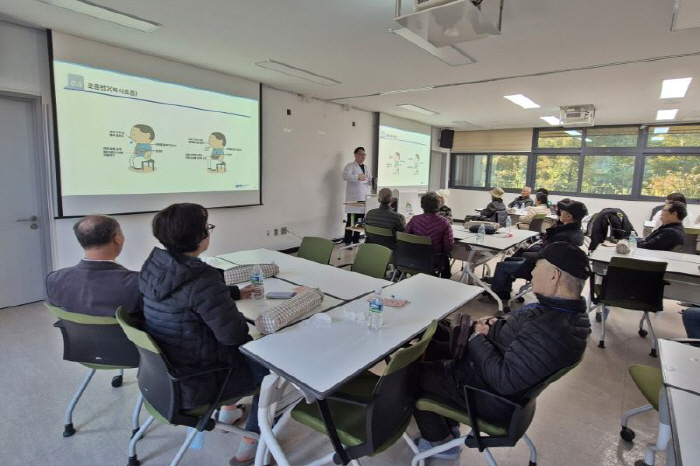
In a critical effort to bridge the gap between specialized urban medicine and vulnerable rural populations, the Asbestos Environmental Health Center at Soonchunhyang University Cheonan Hospital has expanded its outreach to Hongseong-gun, Chungcheongnam-do. By bringing asbestos-related disease prevention
and screening services directly to residents in Gwangcheon-eup, the institution is targeting a demographic that often lacks the mobility or awareness to seek early intervention for occupational lung diseases.
As a physician and journalist, I have seen how the latency period of asbestos-related illnesses creates a false sense of security. Many workers who handled these materials in the 1970s and 80s may feel healthy today, only to face a rapid decline in lung function or a diagnosis of mesothelioma in their senior years. The initiative by Soonchunhyang University Cheonan Hospital is not merely a medical check-up; This proves a race against time to identify pathology before it becomes terminal.
The Outreach Mission in Hongseong-gun
The visiting services provided by the Soonchunhyang University Cheonan Hospital Asbestos Environmental Health Center are designed to dismantle the barriers to healthcare in rural South Korea. Residents of Gwangcheon-eup, many of whom may have worked in legacy industrial roles or lived near aged construction sites, are provided with specialized consultations and screenings that would otherwise require a journey to a major city.
These outreach programs typically focus on high-risk groups, including former construction workers, shipbuilders, and residents of areas with historical asbestos contamination. The center provides health education to facilitate citizens recognize early warning signs—such as shortness of breath and persistent coughing—and facilitates referrals for high-resolution computed tomography (HRCT) scans, which are the gold standard for detecting early-stage asbestosis and pleural plaques.
This proactive approach is essential because asbestos fibers are microscopic and needle-like; once inhaled, they lodge deep within the lung tissue (parenchyma) or the lining of the lungs (pleura), causing chronic inflammation and genetic mutations. By the time a patient presents with severe symptoms, the window for effective management has often closed.
Understanding the Pathology of Asbestos-Related Diseases
To understand why these screening efforts are so vital, one must understand the three primary clinical manifestations of asbestos exposure. As an internal medicine specialist, I categorize these by their impact on the respiratory system:
- Asbestosis: This is a chronic inflammatory condition where asbestos fibers cause scarring (fibrosis) of the lung tissue. This scarring makes the lungs stiff, making it increasingly difficult for the patient to breathe and reducing the blood’s oxygen saturation levels.
- Malignant Mesothelioma: A rare and aggressive cancer that develops in the lining of the lungs (pleura) or the abdomen (peritoneum). Mesothelioma is almost exclusively linked to asbestos exposure and is characterized by a high mortality rate due to its late-stage detection.
- Lung Cancer: Whereas smoking is the primary cause of lung cancer, asbestos exposure acts as a powerful synergist. When a person both smokes and has been exposed to asbestos, their risk of developing lung cancer increases exponentially compared to those with only one risk factor.
The World Health Organization (WHO) has classified all types of asbestos as carcinogenic to humans. The primary challenge remains the latency period—the gap between exposure and the appearance of symptoms—which can span several decades, making lifelong monitoring a necessity for exposed individuals.
The Role of Nationally Designated Specialized Centers
Soonchunhyang University Cheonan Hospital operates as a nationally designated center for asbestos environmental health. This designation is not merely an honorary title; it signifies a mandate to integrate environmental monitoring with clinical treatment. These centers serve as the primary infrastructure for the South Korean government’s effort to manage the long-term health impacts of industrialization.
The center’s multidisciplinary approach involves several key pillars:
- Early Detection: Utilizing advanced imaging to find pleural thickening or minor nodules before they evolve into malignancies.
- Medical Management: Providing palliative care and aggressive treatment options for those diagnosed with mesothelioma or asbestosis.
- Psychological Support: Managing the distress and anxiety that accompany a diagnosis of a chronic, asbestos-related illness.
- Environmental Advocacy: Educating the public on the dangers of “hidden asbestos” in older buildings and ensuring safe removal protocols.
By decentralizing these services and moving them into communities like Hongseong-gun, the hospital ensures that the “national” aspect of its designation reaches the most marginalized citizens, rather than remaining confined to the hospital’s walls in Cheonan.
Global Context and the Legacy of Asbestos
South Korea’s struggle with asbestos mirrors a global pattern. Many industrialized nations used asbestos extensively until the late 20th century. While South Korea implemented a comprehensive ban on the use of asbestos around 2009, the “toxic legacy” remains in the form of old infrastructure and the aging workforce that installed it.
International health standards now emphasize a “zero-exposure” goal. However, for the generation that worked during the peak of asbestos use, the focus has shifted from prevention of exposure to prevention of undetected disease. The model employed by Soonchunhyang University Cheonan Hospital—combining specialized clinical expertise with rural outreach—is a blueprint for how nations can manage the long-tail health risks of industrial pollutants.
Key Takeaways for At-Risk Individuals
- Know Your History: If you worked in construction, shipbuilding, or automotive repair between 1960 and 2000, you may have been exposed to asbestos.
- Don’t Wait for Symptoms: Because of the long latency period, feeling “fine” does not mean your lungs are clear.
- Seek Specialized Screening: Standard chest X-rays may miss early asbestos-related changes; ask your provider about high-resolution CT (HRCT) scans.
- Utilize Community Programs: Seize advantage of visiting health services and nationally designated centers for subsidized or accessible screenings.
What Happens Next?
The outreach in Hongseong-gun is part of a broader, ongoing strategy to map and monitor asbestos-exposed populations across the Chungcheong region. Following the initial screenings in Gwangcheon-eup, the Asbestos Environmental Health Center will continue to provide follow-up care for those identified as high-risk, integrating them into a long-term surveillance registry.
Public health officials are expected to release updated guidelines on environmental asbestos management in rural districts later this year to further reduce the risk of secondary exposure during the renovation of old community structures. We will continue to monitor these developments as the center expands its reach to other underserved areas.
Do you or a family member have a history of industrial function in construction or shipbuilding? Share your experiences in the comments or let us know if you have questions about finding a certified screening center.
Keep reading