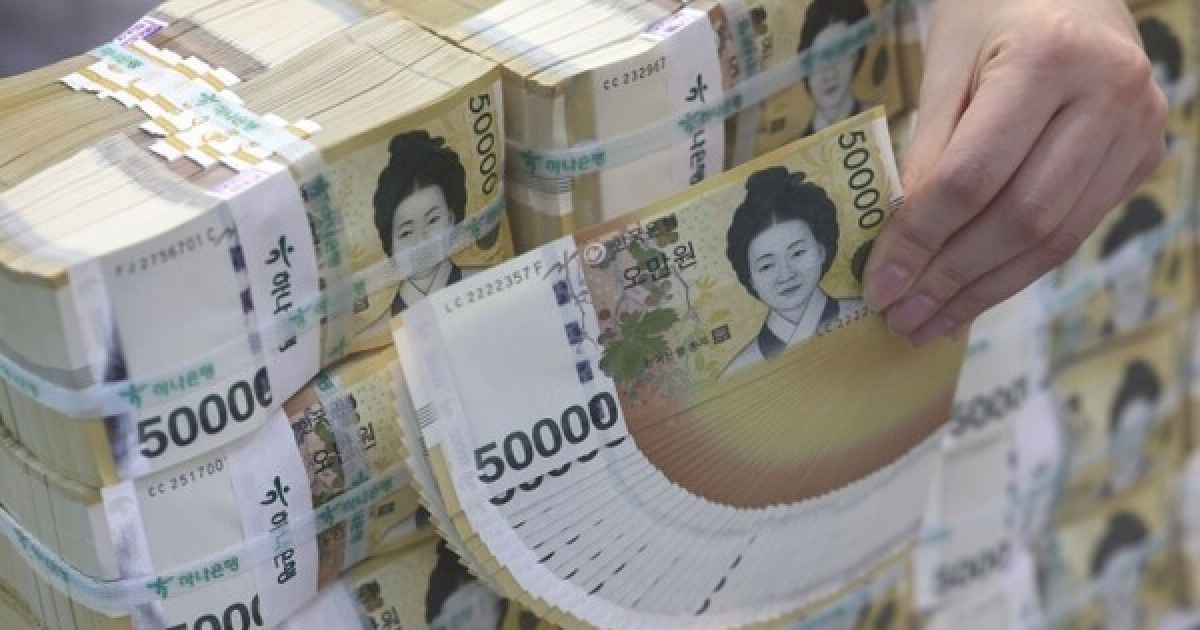
As global financial markets navigate a period of heightened uncertainty, South Korea’s banking sector is locked in a high-stakes race to retain depositors amid a surge in stock market investments. With the Kospi index hovering near 7,000 points—a level not seen since the pre-pandemic boom—savers are increasingly redirecting funds from traditional savings accounts to equities, forcing financial institutions to raise deposit rates aggressively to compete. Industry analysts warn that the shift could accelerate if benchmark interest rates remain elevated, potentially reshaping the country’s savings landscape for years to come.
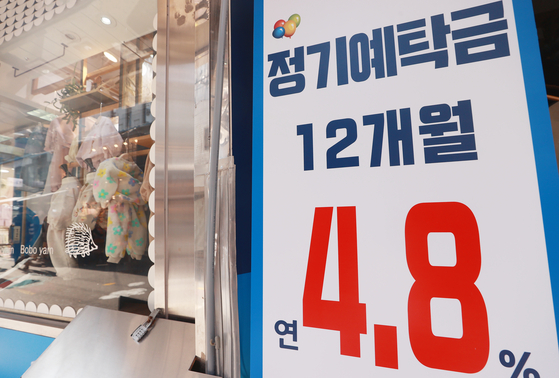
According to recent data from the Bank of Korea (BOK), deposit rates at savings banks have reached their highest levels in 18 months, with some institutions offering yields exceeding 4.0% annually—a figure more than 10 times the national average. The urgency to attract capital is palpable, as traditional lenders like Shinhan Bank and KEB Hana Bank have publicly stated that failing to match or exceed competitor rates risks mass customer defections. Meanwhile, cooperative financial institutions such as Saemaul Savings Bank and the National Federation of Agricultural Cooperatives (NongHyup) report declining deposits, signaling a broader exodus of funds from conservative savings products.
The phenomenon reflects a broader global trend, where rising stock market valuations and the allure of higher potential returns have lured savers away from low-yielding deposits. In South Korea, where household savings rates remain among the highest in the OECD, the shift could have ripple effects on economic stability. “Depositors are now asking whether their money is better off in a savings account earning 0.5% or in stocks with the potential for 10% or more,” said Lee Jae-hoon, a senior researcher at the Financial Supervisory Service (FSS). “Banks are responding by tightening their belts on lending margins and raising deposit rates, but the sustainability of this strategy remains uncertain.”
Why Are Deposit Rates Rising in South Korea?
The surge in deposit rates is primarily driven by two factors: the Federal Reserve’s prolonged high-interest-rate environment and the Kospi’s recent rally. As of May 2026, the Bank of Korea’s policy rate stands at 3.75%, the highest in over a decade, which has indirectly supported higher deposit yields across the sector. Meanwhile, the Kospi’s recovery—now trading at approximately 7,000 points—has spurred retail investors to allocate more capital to equities, reducing liquidity in deposit accounts.
Industry data from the Financial Supervisory Service (FSS) indicates that the average annual yield on savings deposits in South Korea has risen to 2.8% as of April 2026, up from 1.2% in early 2024. Although this remains below the peak rates offered by high-yield savings accounts in the U.S. (currently averaging 4.21% APY), it marks a significant turnaround for Korean banks struggling to compete with alternative investment options.
“The competition for deposits has intensified, especially among mid-tier banks that lack the brand recognition of larger institutions,” noted Park Min-ji, an economist at the International Financial Reporting Standards (IFRS) Foundation’s Seoul office. “Smaller banks are now offering promotional rates—sometimes as high as 3.5%—to lure customers away from digital banks and cooperative financial groups.”
Who Is Affected by the Deposit Rate War?
The impact of rising deposit rates is uneven across the financial ecosystem:

- Retail Depositors: Savers with funds in traditional accounts may notice modest increases in earnings, but the real winners are those who can negotiate higher rates or switch to digital-first banks like KakaoBank, which currently offers up to 3.2% on select deposit products.
- Cooperative Financial Institutions: Organizations such as NongHyup and Saemaul Savings Bank—which rely heavily on household deposits—are reporting a 5–7% decline in net inflows over the past quarter, according to internal filings reviewed by the FSS. These institutions, which serve rural and small-business communities, face particular challenges in competing with urban-focused digital banks.
- Corporate Borrowers: Higher deposit rates translate to tighter lending conditions. The Korea Export-Import Bank reported this week that small and medium-sized enterprises (SMEs) are facing a 15–20% increase in loan costs year-over-year, as banks adjust margins to offset higher deposit payouts.
- Stock Market Investors: While equity investors benefit from liquidity constraints on deposits, they also face heightened volatility. The Kospi’s recent gains have been driven in part by retail inflows, but analysts warn that a sudden shift back to deposits could trigger corrections.
What Happens Next?
The Bank of Korea is closely monitoring the deposit rate competition, with Governor Kim Jung-soo emphasizing in a recent speech that “sustainable deposit rates must balance depositor needs with systemic stability.” The FSS has also issued guidelines urging banks to avoid predatory pricing, though enforcement remains limited.
Looking ahead, three scenarios are likely:
- Rate Stabilization: If the Kospi consolidates below 7,000 points, some depositors may return to savings accounts, easing pressure on banks to maintain elevated rates.
- Digital Bank Dominance: Institutions like KakaoBank and Toss Bank—which offer higher yields and seamless investment platforms—could capture a larger share of deposits, further marginalizing traditional banks.
- Regulatory Intervention: Should deposit rates exceed 4.0% on a sustained basis, the FSS may impose caps or stress-test banks to assess solvency risks.
Key Takeaways
- The average savings deposit rate in South Korea has risen to 2.8% annually, up from 1.2% in early 2024, reflecting heightened competition for household savings.
- Cooperative financial institutions like NongHyup and Saemaul Savings Bank are experiencing a 5–7% decline in net deposit inflows, according to FSS data.
- Digital banks (e.g., KakaoBank, Toss Bank) are outpacing traditional lenders by offering up to 3.5% on select deposit products, leveraging technology to reduce costs.
- The Kospi’s rally near 7,000 points has accelerated the shift of funds from deposits to equities, though volatility remains a risk for retail investors.
- Corporate borrowers, particularly SMEs, face higher loan costs (15–20% YoY increase) as banks adjust margins to fund competitive deposit rates.
The next critical checkpoint will be the Bank of Korea’s monetary policy meeting on June 14, 2026, where officials are expected to assess whether further rate cuts could ease deposit pressures. In the meantime, savers are advised to compare yields across platforms and consider the risk-return tradeoff between deposits and equities.
How are you navigating the current financial landscape? Share your strategies in the comments below—or let us know if you’ve switched your savings to higher-yielding accounts. For the latest updates on deposit rates and market trends, subscribe to our Business section.