
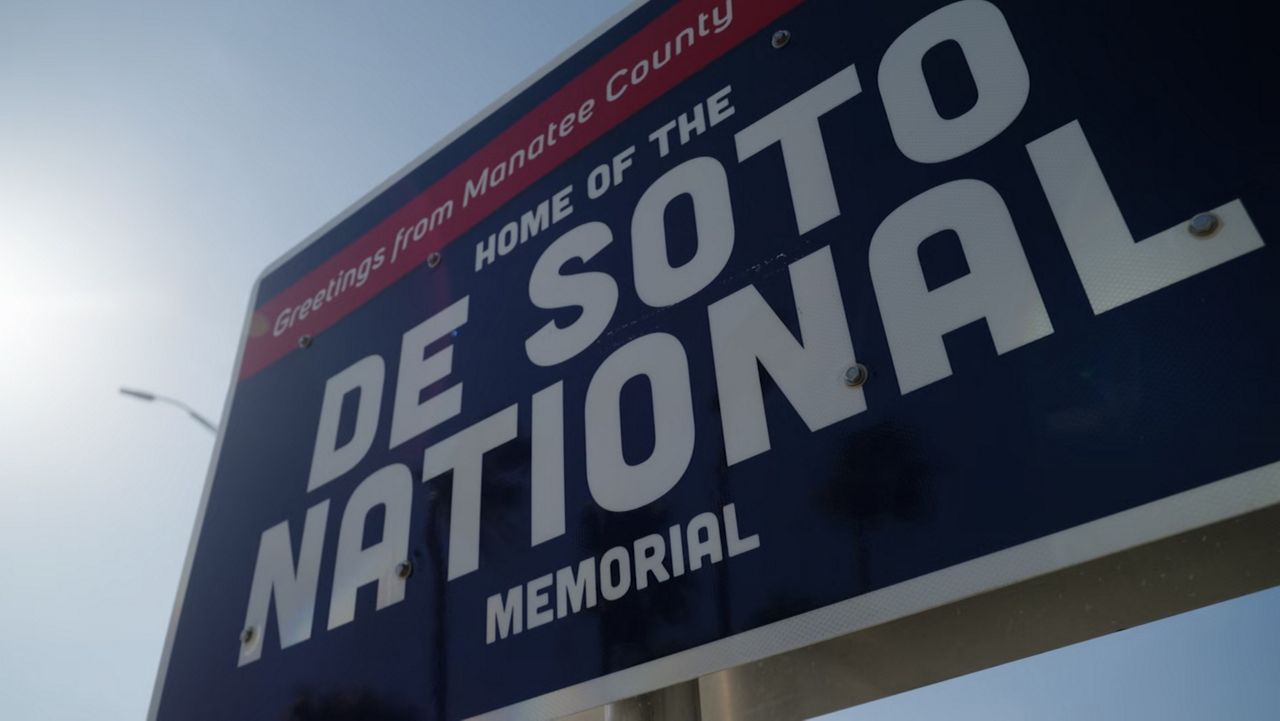
As the United States prepares to mark its 250th anniversary in 2026, a sweeping effort is underway to redefine how the nation’s origin story is told and experienced. Central to this celebration is the “America 250 Road Trip,” a curated initiative designed to guide visitors through the diverse landscapes and complex histories that shaped the North American continent long before the signing of the Declaration of Independence.
Among the highlighted destinations is the De Soto National Memorial in Bradenton, Florida. The site serves as a poignant reminder of the early European incursions into the Southeast and the profound, often violent, collisions between Spanish explorers and the Indigenous populations of the region. By incorporating this memorial into the celebratory road trip, organizers are signaling a commitment to a more comprehensive historical narrative—one that acknowledges the Spanish colonial footprint as a foundational element of American history.
The memorial marks the approximate location where Hernando de Soto, a Spanish conquistador, first landed in 1539. De Soto’s expedition was not merely a voyage of discovery but a mission of conquest and wealth-seeking, reflecting the broader geopolitical ambitions of the Spanish Empire in the 16th century. His journey through the interior of the Southeast provided some of the first European descriptions of the region’s geography and its complex chiefdoms.
For modern visitors, the inclusion of the De Soto National Memorial in the America 250 itinerary offers a chance to engage with the “pre-history” of the United States. It shifts the focus away from the 13 colonies and toward the earlier, often overlooked, Spanish influence that established the first European permanent settlements in what is now the U.S. Mainland.
The Strategic Importance of the 1539 Expedition
Hernando de Soto’s arrival in Florida was part of a larger Spanish strategy to secure the Gulf Coast and locate sources of gold and silver. Unlike earlier explorers who hugged the coastlines, de Soto led a massive military force inland, traversing thousands of miles across present-day Florida, Georgia, Alabama, Mississippi, and Arkansas. This movement was critical for the European understanding of the continent’s interior.
The mapping of the region was a primary byproduct of this expedition. While de Soto’s primary goal was treasure, the detailed records kept by his chroniclers allowed the Spanish Crown to visualize the terrain and the distribution of Indigenous peoples. “He’s very important for Florida history because he was one of those Spanish conquistadors that allowed us to map Florida,” noted park representative Arbesu, emphasizing that the expedition’s legacy is etched into the very maps that first defined the peninsula for the Western world.
This process of mapping was not a neutral act; it was the first step in the colonial administration of the land. By documenting rivers, mountains, and settlements, the Spanish were creating a blueprint for future colonization and control. The De Soto National Memorial, managed by the National Park Service, preserves this specific point of entry, allowing visitors to contemplate the scale of the expedition and its lasting impact on the geography of the American South.
The America 250 Road Trip: Context and Goals
The “America 250 Road Trip” is a component of the broader celebrations surrounding the United States Semiquincentennial. The goal of the initiative is to encourage citizens and international tourists to explore the “complete” American story. Rather than focusing solely on the political events of 1776, the road trip emphasizes the intersection of various cultures, the struggle for human rights, and the early colonial encounters that set the stage for the American experiment.

By linking sites like the De Soto National Memorial with other historic landmarks, the U.S. Semiquincentennial Commission aims to foster a deeper understanding of the nation’s multifaceted identity. This approach recognizes that the American story began centuries before the Revolution, involving a tapestry of Indigenous civilizations and European empires—Spanish, French, and Dutch—that competed for dominance in the New World.
The road trip encourages a slow, immersive form of tourism. Instead of visiting a single city, travelers are urged to move across state lines, witnessing how the environment influenced the settlement patterns and the conflicts of the era. In Florida, In other words recognizing that the state’s identity was forged in the crucible of Spanish exploration and the resilience of the Indigenous peoples who resisted it.
A Complex Legacy: Exploration vs. Conquest
From a global perspective, the story of Hernando de Soto is a case study in the contradictions of the Age of Discovery. While historians acknowledge the bravery and navigational skill required to lead an expedition into an unknown wilderness, the human cost was staggering. De Soto’s methods were characterized by brutality, including the kidnapping of Indigenous leaders and the use of war dogs to terrorize local populations.
The expedition introduced European diseases to the Southeast, which devastated Indigenous populations long before permanent settlers arrived. This biological catastrophe fundamentally altered the social and political structures of the region, creating a vacuum that later European powers would exploit. The De Soto National Memorial does not shy away from these realities, presenting a balanced view of the explorer as both a pioneer of geography and an agent of colonial violence.
This nuanced framing is essential for a modern audience. As the world reflects on the legacies of colonialism, the America 250 Road Trip provides a platform to discuss how the pursuit of “discovery” often came at the expense of existing civilizations. The memorial serves as a place of reflection, where the triumph of mapping a new world is weighed against the tragedy of those who were mapped and subsequently displaced.
Visiting the De Soto National Memorial
Located in Bradenton, Florida, the memorial consists of a museum and a landscaped area that commemorates the landing site. The museum provides detailed exhibits on the 1539 expedition, the equipment used by the conquistadors, and the Indigenous cultures they encountered. Visitors can explore the tactical challenges de Soto faced and the logistical nightmare of maintaining a military force in the subtropical swamps of Florida.
The site is designed to be accessible and educational, offering a tangible connection to the 16th century. For those following the America 250 Road Trip, the memorial offers a quiet contrast to the more bustling urban centers of the East Coast, providing a space to consider the vastness of the continent and the audacity of the early explorers.
Practical information for visitors includes:
- Location: Bradenton, Florida.
- Primary Focus: The 1539 landing of Hernando de Soto.
- Key Exhibits: Spanish colonial military gear, maps of the Southeast, and Indigenous artifacts.
- Context: Part of the official America 250 celebratory itinerary.
The Broader Impact on Florida’s Identity
Florida’s history is unique among the U.S. States due to its prolonged period under Spanish rule. This influence is evident in the state’s architecture, its legal traditions, and its cultural demographics. The landing of de Soto was the catalyst for a century of Spanish exploration that eventually led to the establishment of St. Augustine in 1565—the oldest continuously inhabited European-established settlement in the contiguous United States.
By highlighting de Soto’s role in mapping the region, the America 250 Road Trip reinforces the idea that Florida was a strategic frontier of the Spanish Empire. This perspective is vital for understanding the geopolitical tensions that existed between Spain, France, and Great Britain in the race for North American territory. The maps created by de Soto and his successors were not just navigational tools; they were claims of ownership and instruments of empire.
Today, this history manifests in the diverse cultural fabric of Florida. The recognition of the Spanish era allows the state to connect its current identity to a global narrative of migration and empire, bridging the gap between the Americas and Europe.
Key Takeaways for the America 250 Traveler
- Historical Depth: The road trip expands the U.S. Origin story beyond 1776 to include the Spanish colonial era.
- Geographic Insight: De Soto’s expedition was instrumental in the first European mapping of the American Southeast.
- Critical Reflection: The memorial balances the achievements of exploration with the realities of colonial conquest and its impact on Indigenous peoples.
- Cultural Connection: Visiting the site helps travelers understand Florida’s unique Spanish roots.
As the countdown to 2026 continues, the America 250 Road Trip will likely expand to include more sites that challenge and enrich the traditional American narrative. The inclusion of the De Soto National Memorial is a significant step in this direction, ensuring that the story of the United States is told with all its complexities, contradictions, and diverse origins.
The next major milestone for the Semiquincentennial celebrations will be the release of the full, expanded itinerary of the America 250 Road Trip, which is expected to include updated site guides and interactive digital maps for travelers. We encourage readers to share their thoughts on how the U.S. Should commemorate its 250th anniversary in the comments below.