
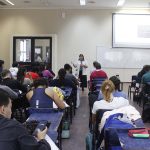
The intersection of public health and academic instruction is shifting from a parallel existence to a fully integrated partnership. In a strategic move to combat the rising tide of sedentary lifestyles and non-communicable diseases, health authorities and academic institutions are increasingly collaborating to redefine the role of the physical education professional. This evolution is most evident in recent initiatives where health ministries and faculties of sports sciences are coordinating curricula to ensure that those teaching movement are also equipped with critical health-intervention tools.
At the center of this movement is the recognition that physical education teachers are often the first point of contact for youth health screening and wellness guidance. By establishing “coordinated work” between health departments and faculties of physical education, governments are attempting to transform the gym and the playing field into primary sites of preventive medicine. This integrated health and physical education approach aims to move beyond simple athletic training toward a holistic model of community wellness.
For the global economy, this shift is not merely a pedagogical preference but a fiscal necessity. As a specialist in economic policy, I view these partnerships as high-yield investments in human capital. The long-term cost of treating obesity, type 2 diabetes, and cardiovascular diseases far outweighs the initial investment in interdisciplinary teacher training. When health authorities provide the clinical framework and universities provide the pedagogical expertise, the result is a workforce capable of identifying health risks early and implementing evidence-based activity protocols.
The Strategic Integration of Health and Sports Science
The core of this collaborative effort involves a “cycle of talks” and workshops designed to bridge the gap between clinical health knowledge and practical physical application. These sessions typically focus on the “areas of influence” where a physical education teacher can most effectively impact public health. This includes the early detection of metabolic syndromes, the psychological impact of physical activity on adolescent mental health, and the creation of inclusive movement programs for diverse populations.
By aligning the Faculty of Physical Education with health ministries, the objective is to create a feedback loop. Health professionals provide the latest data on community health trends—such as rising hypertension rates in youth—and the faculty translates that data into actionable lesson plans. This ensures that the instruction provided in schools is not static but is instead responsive to the actual health crises facing the population. This model reflects the World Health Organization’s guidelines on physical activity, which emphasize the need for systemic changes across educational and health sectors to reduce global morbidity.
Expanding the Scope of the Physical Education Professional
Traditionally, the role of the physical education teacher was viewed through the lens of sports performance and motor skills. However, the current coordinated work with health faculties is expanding this professional identity. Teachers are now being trained to understand the physiological biomarkers of health and the socio-economic determinants that prevent certain students from engaging in physical activity.

This expansion into “health influence” means that the modern educator is increasingly acting as a community health liaison. By understanding the clinical implications of sedentary behavior, these professionals can better advocate for policy changes within their school districts, such as improved nutrition in cafeterias or the implementation of “active breaks” during academic hours. This multidisciplinary approach ensures that physical activity is treated as a medical necessity rather than an extracurricular luxury.
Economic Implications of Preventive Health Education
From an economic perspective, the collaboration between health ministries and educational faculties represents a shift toward “upstream” intervention. In traditional healthcare models, spending is concentrated on the “downstream” conclude—treating the disease after it has manifested. By integrating health expertise into the Faculty of Physical Education, the state is investing in the prevention phase.
The economic burden of non-communicable diseases (NCDs) is staggering. According to global health data, NCDs are responsible for the majority of deaths worldwide and place an immense strain on public health budgets. When a physical education teacher is trained to mitigate these risks through coordinated health strategies, they are effectively reducing future state expenditures on chronic care. This creates a more productive workforce and reduces the disability-adjusted life years (DALYs) lost to preventable conditions.
Bridging the Gap Between Theory and Practice
One of the primary challenges in public health is the “implementation gap”—the space between knowing that exercise is beneficial and actually getting a population to move. The coordinated work between faculties and health departments addresses this by focusing on the *how* of delivery. While a doctor can prescribe exercise, a trained physical education professional knows how to make that exercise engaging, sustainable, and accessible for a child or a teenager.
The “cycle of talks” mentioned in these initiatives serves as the mechanism for this translation. By bringing clinical experts into the university setting, the program ensures that the next generation of teachers does not graduate with an outdated understanding of health. Instead, they enter the workforce as practitioners of “integrated wellness,” capable of navigating both the gymnasium and the clinic.
Global Trends in Academic-Government Health Partnerships
While specific initiatives may vary by region, the trend of linking health ministries with sports science faculties is a global phenomenon. In many developed economies, this is manifesting as “School-Based Health Centers” (SBHCs), where clinicians and educators share the same physical space. The Latin American model of “coordinated work” often emphasizes the social aspect of health, recognizing that physical education is a powerful tool for social integration and equity.
These partnerships are particularly crucial in underserved areas where access to primary healthcare is limited. In such contexts, the school becomes the primary health hub. A physical education teacher who has been trained through a coordinated health program can identify signs of malnutrition or stunted growth and refer students to the appropriate health services, effectively acting as a sentinel for the public health system.
The Role of Evidence-Based Pedagogy
For these collaborations to be successful, they must be rooted in evidence-based pedagogy. This means that the “talks” and training sessions are not merely anecdotal but are based on peer-reviewed research in kinesiology and epidemiology. When the Faculty of Physical Education adopts a clinical standard of evidence, it elevates the status of the profession, moving it from “gym class” to a critical component of the public health infrastructure.
This professionalization of the field encourages more rigorous standards for certification and continuing education. As health ministries become more involved in the training process, there is a greater push for teachers to maintain certifications in first aid, nutrition, and chronic disease management, further blurring the line between the educator and the health provider.
Key Takeaways for Stakeholders
- For Educators: The role of the PE teacher is evolving into a health liaison, requiring a deeper understanding of clinical health markers and preventive medicine.
- For Health Administrators: Partnering with educational faculties provides a scalable way to implement preventive health measures across the entire youth population.
- For Policy Makers: Investing in interdisciplinary training for physical educators reduces long-term public healthcare costs by addressing NCDs at the root.
- For Students: Integrated programs ensure that physical activity is tailored to individual health needs, improving both academic performance and long-term wellness.
Looking Ahead: The Future of Integrated Wellness
The movement toward “coordinated work” is only the beginning. The next phase of this evolution likely involves the use of health technology—such as wearable fitness trackers and digital health records—integrated directly into the physical education curriculum. This would allow for real-time health monitoring and data-driven adjustments to physical activity protocols, further tightening the bond between the faculty and the health ministry.
As we move toward 2030, the goal is a seamless integration where the “Faculty of Physical Education” and the “Department of Public Health” operate as two arms of the same body. The success of these initiatives will be measured not by the number of talks given, but by the measurable decline in youth obesity and the increase in lifelong physical literacy.
The next confirmed checkpoint for these types of interdisciplinary programs typically involves the formal integration of health-certification modules into the official university degree requirements, a move that would codify the “coordinated work” into a permanent academic standard.
Do you believe physical education teachers should be formally trained as health providers? We invite you to share your thoughts and experiences with integrated health programs in your community in the comments below.