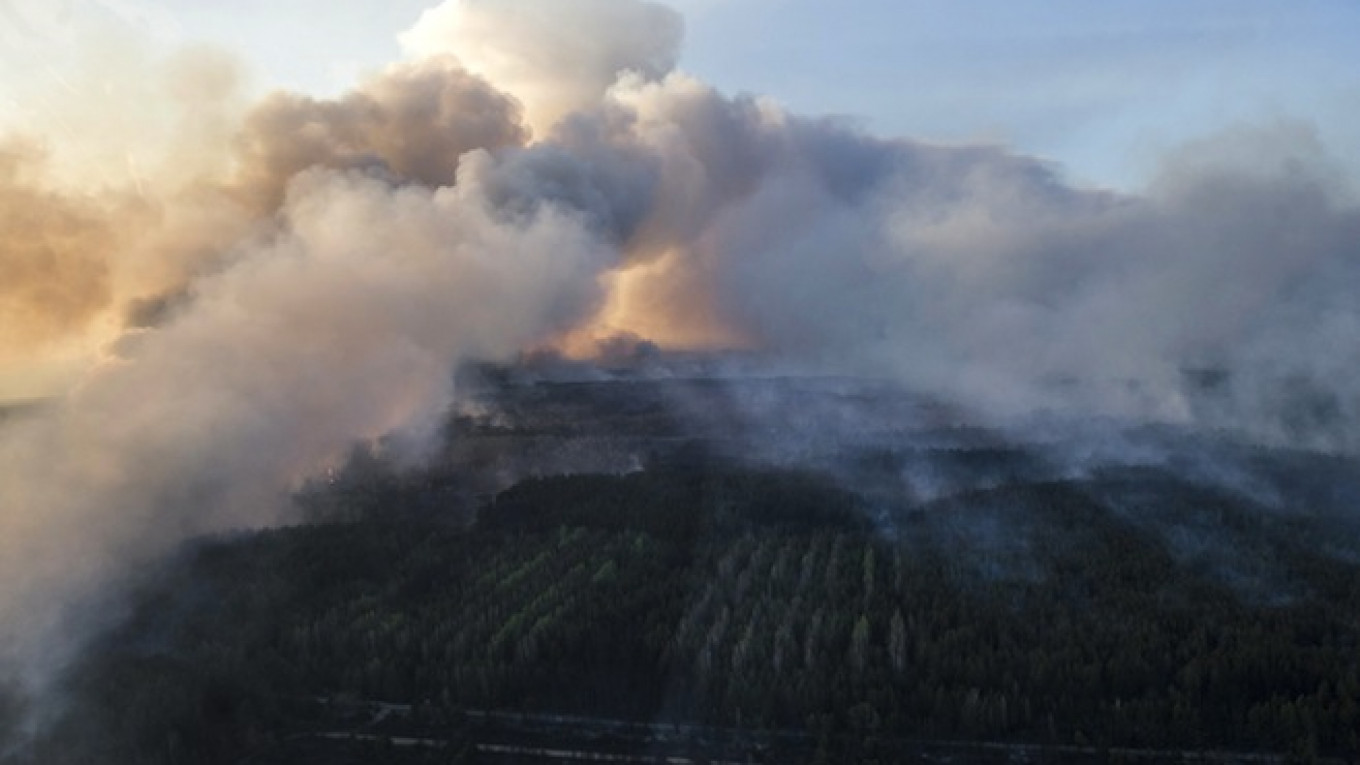
A large forest fire is currently tearing through the Chernobyl exclusion zone, sparked by a drone crash that has raised fresh alarms about the stability and security of one of the world’s most radioactive sites. Ukrainian authorities confirmed Friday that the blaze, which broke out on Thursday, is spreading rapidly across the deserted landscape, complicating containment efforts in an area already fraught with geopolitical tension.
The fire has carved a path through the dense forests surrounding the defunct nuclear plant, where nature has reclaimed the land since the catastrophic meltdown in 1986. As of 10 a.m. On May 8, the Chernobyl nature reserve, which manages the site, reported that the approximate area of the fire had reached about 1,100 hectares (11 square kilometres).
While the scale of the blaze is significant, officials have attempted to calm international fears regarding the release of radioactive isotopes. Authorities reported that radiation levels at the site have remained within “normal limits” as firefighters battle to prevent the flames from reaching critical infrastructure.
Containment Efforts Amid Adverse Weather
The response to the wildfire has been hampered by volatile weather conditions. Ukraine’s state emergency service indicated that rescuers are working urgently to prevent the fire from expanding further into the exclusion zone. However, the service warned that “due to strong gusts of wind, the fire is rapidly spreading across the territory, covering new sections of the forest.”
Images released by the state emergency service depict massive columns of white smoke billowing into the sky, visible from the surrounding regions. The area remains largely closed to the public due to high levels of radioactivity, making the logistics of firefighting particularly hazardous for the personnel deployed to the scene.
The Chernobyl exclusion zone forest fire underscores the ongoing vulnerability of the site, where the intersection of environmental hazards and modern conflict creates a precarious situation for regional safety.
Security Concerns and Geopolitical Tensions
The cause of the fire—a drone crash—adds a layer of political volatility to the environmental crisis. While the Chernobyl nature reserve confirmed the crash as the trigger for the blaze, it did not specify the origin or ownership of the drone. However, the incident occurs against a backdrop of repeated accusations from Kyiv that Moscow has recklessly targeted Ukrainian nuclear sites.
This latest event follows a previous security breach that highlighted the fragility of the site’s containment. According to reports, a Russian drone last year punctured a hole in one of the radiation shells covering the reactor unit that exploded during the 1986 disaster. That incident served as a stark reminder that the physical barriers protecting the remaining radioactive material can be compromised by external military activity.
The presence of drones over the exclusion zone, whether for surveillance or as part of ongoing hostilities, introduces a persistent risk of ignition in a region where the soil and vegetation remain contaminated. The potential for wildfires to loft radioactive particles into the atmosphere remains a primary concern for environmental monitors, even when ground-level radiation is reported as stable.
The Fragile Balance of the Exclusion Zone
The Chernobyl exclusion zone has evolved into a strange sanctuary where wildlife thrives in the absence of humans, yet the land remains a ticking clock of radioactive decay. The management of this territory by the Chernobyl nature reserve involves a delicate balance of maintaining security and monitoring the slow degradation of the site’s infrastructure.
For the international community, the stability of the Chernobyl site is not merely a local Ukrainian concern but a global safety priority. The risk of a “dirty” wildfire—where fire carries radioactive isotopes into the air—could potentially affect air quality and safety far beyond the boundaries of the exclusion zone, depending on wind patterns and the specific areas of the forest ignited.
As the state emergency service continues its operations, the focus remains on creating firebreaks and suppressing the blaze before it can threaten the defunct plant’s core facilities or other sensitive installations within the zone.
Official updates on the containment status and current radiation readings are expected as the state emergency service provides further briefings on the progress of the firefighting operations.
We invite our readers to share their thoughts on the security of global nuclear sites in the comments below and share this report to keep others informed on this developing situation.