
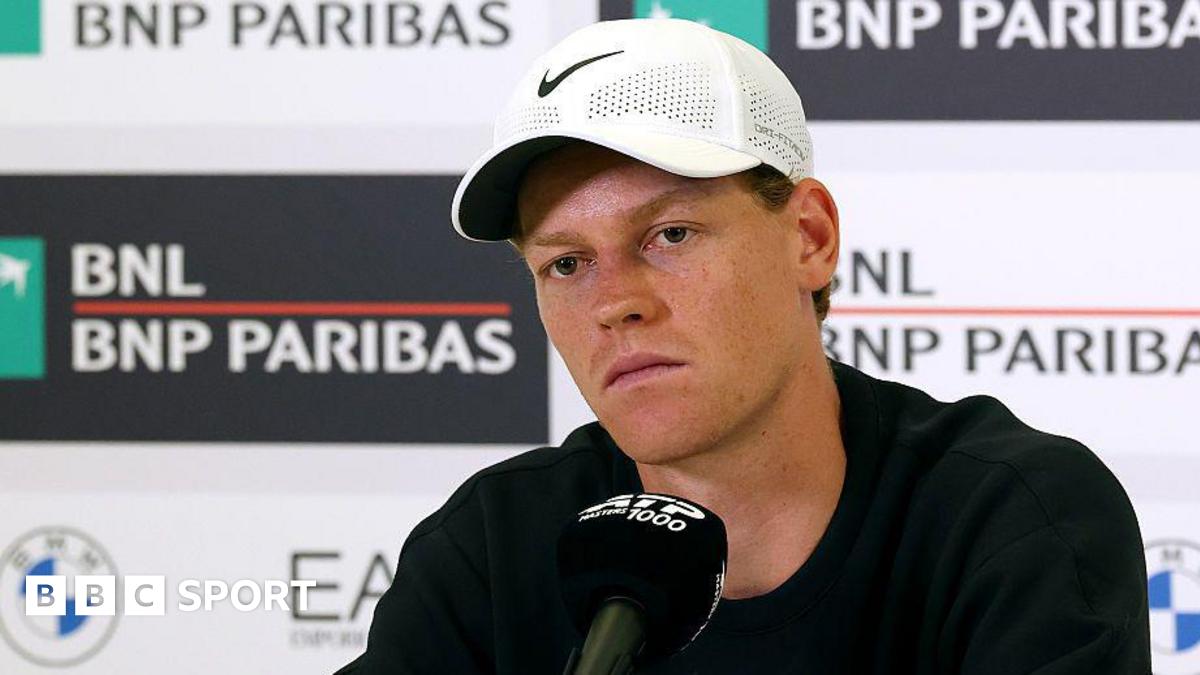
Jannik Sinner Joins ATP Stars in Demanding Respect and Fair Treatment Amid Grand Slam Boycott Threats
ATP World No. 1 Jannik Sinner has become the latest high-profile voice in a growing rebellion among professional tennis players, who are increasingly vocal about feeling disrespected and undercompensated by the sport’s governing bodies. Speaking out amid escalating tensions over prize money disparities and perceived favoritism, Sinner’s comments have added weight to calls for structural changes—including potential boycotts of Grand Slam tournaments if demands are not met.
The 23-year-old Italian, who has dominated the ATP rankings since his historic 2024 rise to No. 1, told reporters this week that the current system “lacks respect for the athletes who make the sport what it is.” His remarks come as players like Coco Gauff and Aryna Sabalenka have publicly threatened to pull out of major tournaments unless significant reforms are implemented. The situation has reached a boiling point, with even the Italian Open—one of the sport’s most prestigious events—expressing solidarity with players’ demands and exploring ways to become a fifth Grand Slam to address the prize money imbalance.
What began as frustration over the French Open’s prize pool—where women’s singles champion Iga Świątek earned a record $2.3 million while men’s champion Novak Djokovic took home $2.5 million—has snowballed into a broader critique of how the sport’s elite are treated. Players argue that the disparity in earnings, combined with what they see as a lack of transparency and fairness in tournament management, is unsustainable.
The Prize Money Divide: Why Players Are Fighting Back
The core of the players’ frustration centers on the stark differences in prize money between the men’s and women’s tours, as well as the perceived lack of growth in payouts at the Grand Slams. While the Wimbledon and US Open have made incremental increases in recent years, the French Open—long criticized for its conservative approach—has lagged behind. For context, the 2026 French Open men’s singles champion will earn $2.5 million, while the women’s champion takes home $2.3 million. In contrast, the Italian Open, which has been pushing for Grand Slam recognition, offers $1.8 million to its men’s champion and $1.5 million to the women’s champion—but organizers have signaled they may align their prize structures more closely with player demands if granted fifth Grand Slam status.

Sinner, who has won two Masters 1000 titles this season and remains undefeated in Grand Slam finals, highlighted another point of contention: the treatment of players by tournament officials. “We’re not just athletes; we’re ambassadors for the sport,” he said. “When we’re spoken to like we’re second-class citizens, it affects our performance. The Grand Slams need to recognize that.”
Who Stands to Gain—or Lose—in This Battle?
The potential fallout from a player boycott would ripple across tennis, affecting fans, broadcasters, sponsors, and even the sport’s commercial viability. Here’s how the key stakeholders are positioned:

- Players: A boycott could force the Grand Slams to negotiate better contracts, including higher prize money, improved working conditions, and greater transparency in decision-making. Players like Sinner, Djokovic, and Naomi Osaka have already signaled they would support coordinated action if their demands aren’t met.
- Grand Slam organizers: The Australian Open, French Open, Wimbledon, and US Open would face significant backlash if they fail to address the issues. The French Open, in particular, has been under scrutiny for its slow pace of change, with critics arguing it’s out of touch with modern tennis.
- Fans and broadcasters: A boycott could lead to lower-quality fields, fewer high-profile matches, and potential drops in viewership—directly impacting revenue for networks like ESPN, BBC, and Eurosport.
- Sponsors and brands: Companies like Rolex, Bridgestone, and IBM, which have long-term partnerships with the Grand Slams, could face pressure to advocate for player-friendly reforms if the disputes escalate.
- The ATP and WTA: The two governing bodies have historically taken different approaches to player advocacy. The WTA has been more proactive in pushing for equality, while the ATP has often prioritized market-driven solutions. This conflict could force both organizations to unite—or risk further alienating their athletes.
The Road Ahead: What’s Next for Tennis?
The next critical checkpoint is the ITF and ATP/WTA meetings in June 2026, where the governing bodies are expected to discuss structural reforms. Players have indicated they will use these discussions as a litmus test for whether their concerns are being taken seriously.
In the meantime, the Italian Open is pushing aggressively to become the fifth Grand Slam, with organizers arguing that their event—already a major draw—could offer a more progressive model for prize money and player treatment. If granted, it would create a counterbalance to the traditional Grand Slams and give players more leverage in negotiations.
Sinner, for his part, has avoided outright threats of boycott but has made it clear he will not remain silent. “We’re not asking for the moon,” he said. “We’re asking for basic respect and fair compensation for the work we do. If that’s not possible, then we have to consider other options.”
Key Takeaways
- Player power: Sinner’s voice adds significant weight to the growing movement, as he is both a dominant force on the court and a respected figure off it.
- Prize money disparities: The gap between men’s and women’s earnings at Grand Slams remains a major point of contention, with the French Open under particular scrutiny.
- Potential boycott: While no formal boycott has been announced, players like Gauff, Sabalenka, and now Sinner are signaling they will take coordinated action if reforms are not implemented.
- Italian Open’s role: The event’s push for fifth Grand Slam status could serve as a catalyst for change, offering players an alternative platform with potentially better terms.
- Stakes for tennis: A prolonged dispute could harm the sport’s commercial interests, including broadcasting deals, sponsorships, and fan engagement.
- Next steps: The ITF and ATP/WTA meetings in June 2026 will be critical in determining whether the sport can avoid a crisis—or if it’s heading toward one.
Frequently Asked Questions
Q: Could a player boycott actually happen?

A: While no formal boycott has been announced, the rhetoric from top players suggests it’s a real possibility. The ATP and WTA have historically avoided such confrontations, but the frustration appears to be at a tipping point. A coordinated withdrawal from the French Open or another Grand Slam could force immediate negotiations.
Q: How would a boycott affect fans?
A: Fans would likely see fewer high-profile matches, potential reductions in prize money for lower-ranked players, and possibly shorter tournaments. The commercial appeal of Grand Slams could also diminish if star players stay away, impacting ticket sales and merchandise revenue.
Q: What are the chances the Italian Open becomes the fifth Grand Slam?
A: The Italian Open has been pushing for this status for years, and recent developments suggest momentum is building. If the ATP and WTA see value in adding a more progressive event to the calendar, it could happen as early as 2027. The event’s strong field, global appeal, and willingness to align with player demands make it a strong candidate.
Q: How have other sports handled similar disputes?
A: Sports like football (soccer), basketball, and golf have seen player-led movements for better wages, working conditions, and respect. For example, the NFL players’ union has successfully negotiated improved contracts through collective action, while tennis players have historically been more fragmented. The current situation in tennis mirrors past conflicts in other sports where athletes united to demand change.
What do you think? Should tennis players take bolder action to demand respect and fair treatment? Share your thoughts in the comments below or join the conversation on X/Twitter using #TennisReform.
For the latest updates on this developing story, follow World Today Journal’s Sports section and stay tuned for our next report on the ATP/WTA meetings in June.