A Dutch-flagged cruise ship currently positioned off the coast of West Africa is the center of an international health investigation following a cluster of severe respiratory illnesses. The World Health Organization (WHO) has stepped in to monitor the situation after several passengers and crew members fell ill with symptoms consistent with hantavirus, a rare but potentially deadly zoonotic disease.
As of early May 2026, the outbreak has resulted in three deaths and left one patient in critical condition. While the sudden nature of the illnesses aboard a confined vessel has sparked concern, health authorities are moving quickly to contain the spread. The World Health Organization has officially assessed the risk to the global population from this event as low, emphasizing that the situation is being managed through a coordinated international response.
The incident highlights the complexities of managing rare infectious diseases in transit. With 147 passengers and crew on board, the ship has become a focal point for medical evacuations and laboratory investigations, stretching from the waters near Cape Verde to testing facilities in South Africa. For those following the news, the primary focus remains on whether the virus was contracted through traditional rodent exposure or if a rarer form of transmission occurred.
The current hantavirus cruise ship outbreak serves as a reminder of how environmental factors and animal vectors can intersect with human travel, creating unique challenges for global health surveillance. As investigations continue, the priority remains the care of the remaining passengers and the definitive identification of the virus strain involved.
Timeline of the Outbreak and Case Count
The cluster of illness began to emerge in late April. According to the World Health Organization, the onset of illness for the affected individuals occurred between 6 and 28 April 2026. The nature of the symptoms was aggressive, characterized by fever and gastrointestinal issues that progressed rapidly to pneumonia, shock, and acute respiratory distress syndrome (ARDS).

The international community was alerted on 2 May 2026, when the National International Health Regulations (2005) Focal Point of the United Kingdom notified the WHO regarding the cluster of severe acute respiratory illness aboard the Dutch-flagged vessel. At that time, the report highlighted two deaths and one critically ill passenger.
By 4 May 2026, the total number of identified cases reached seven. This group consists of two laboratory-confirmed cases of hantavirus and five suspected cases. The outcomes of these seven cases are as follows:
- Three deaths.
- One patient remains critically ill in intensive care.
- Three individuals reported experiencing mild symptoms.
Verification of the virus required international cooperation. On 2 May 2026, laboratory testing conducted in South Africa confirmed a hantavirus infection in the critically ill patient. A third death was subsequently reported on 3 May, further underscoring the severity of the illness for certain patients.
Understanding Hantavirus: Symptoms and Progression
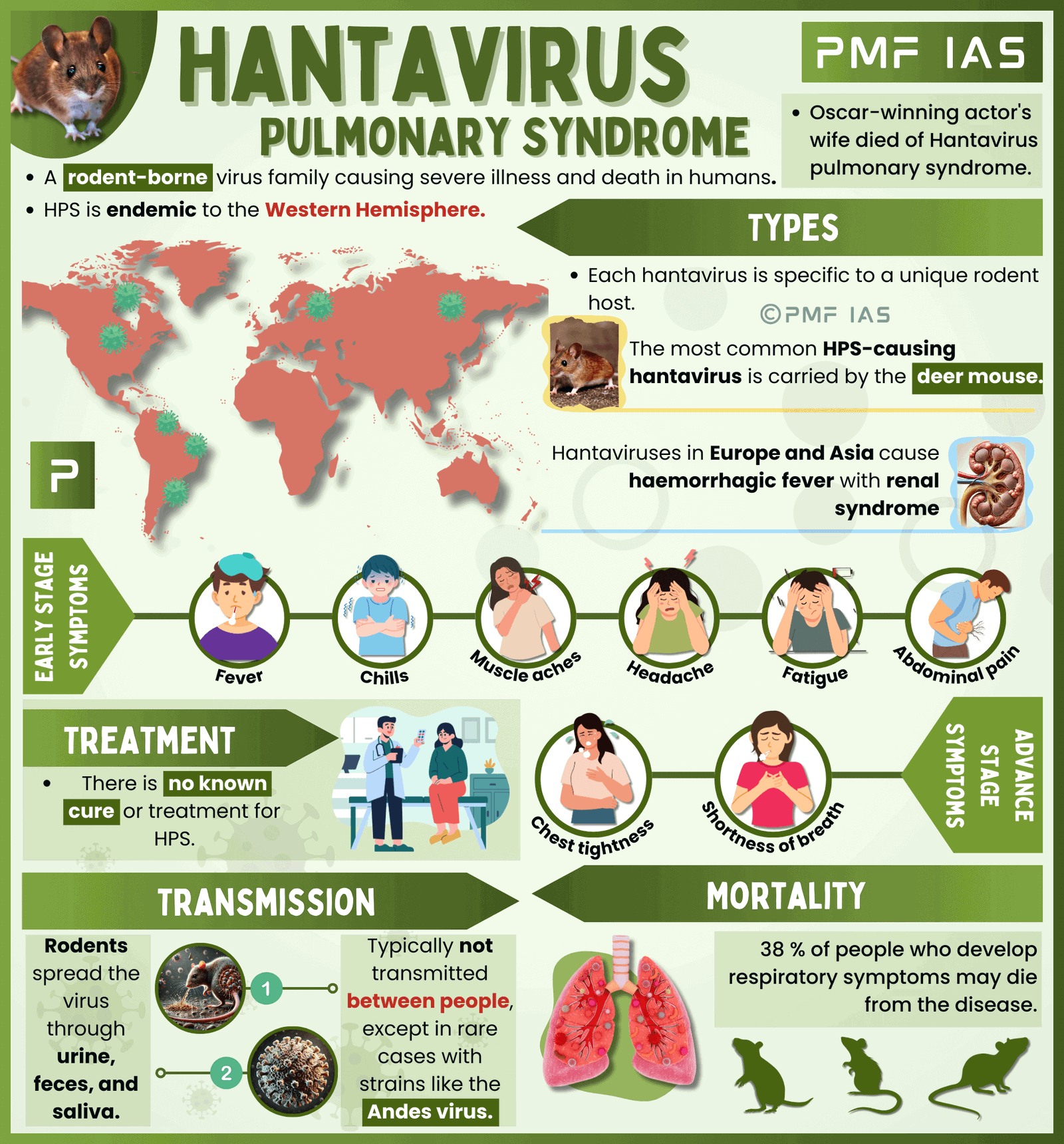
Hantaviruses are a family of viruses primarily spread by rodents. In the Western Hemisphere, including the United States, these viruses often cause Hantavirus Pulmonary Syndrome (HPS), a severe respiratory disease. As detailed by the Centers for Disease Control and Prevention (CDC), HPS is potentially deadly and specifically targets the lungs.
The progression of HPS typically occurs in two distinct phases. The first phase begins anywhere from one to eight weeks after a person comes into contact with an infected rodent. Early symptoms are often non-specific and can be mistaken for the flu, including:
- Fatigue and fever.
- Muscle aches, particularly in the large muscle groups such as the thighs, hips, back, and sometimes the shoulders.
- Headaches, dizziness, and chills (experienced by about half of all patients).
- Abdominal problems, including nausea, vomiting, diarrhea, and abdominal pain.
The second, more dangerous phase occurs four to 10 days after the initial symptoms. During this window, patients typically develop a cough and shortness of breath. This happens as the lungs begin to fill with fluid, leading to tightness in the chest and severe respiratory distress. The Harvard Health Publishing review notes that the disease is particularly deadly if it involves the lungs, heart, or kidneys.
Transmission: Rodents and the Question of Person-to-Person Spread
Under normal circumstances, humans contract hantavirus through contact with infected rodents—such as rats and mice—specifically through exposure to their urine, droppings, and saliva. While rare, infection can also occur through a rodent bite or scratch. The most common vector for HPS in the United States, for example, is the deer mouse.
A critical point of concern in the cruise ship outbreak is the possibility of human-to-human transmission. Generally, hantavirus is not spread between people. However, the CDC identifies the Andes virus as the only type of hantavirus known to spread from person to person. This type of transmission is typically limited to individuals who have had close contact with an ill person.
The WHO has acknowledged that limited human-to-human transmission has been reported in previous outbreaks of the Andes virus. Given the confined environment of a cruise ship, investigators are working to determine if this specific strain is involved or if the passengers were exposed to a common rodent source on the vessel.
Global Risk Assessment and Management
Despite the fatalities and the alarming nature of the symptoms, the global health community is not treating this as a widespread threat. The WHO’s current assessment is that the risk to the general global population remains low. The organization has clarified that this event is being handled as a localized cluster rather than a broad epidemiological threat.
The response to the outbreak is a multifaceted international effort involving several nations and agencies. The management strategy includes:
- Case Isolation and Care: Ensuring that those infected are isolated to prevent potential spread and provided with intensive medical support.
- Medical Evacuation: Transporting critically ill patients to specialized facilities capable of treating severe respiratory failure.
- Laboratory Investigations: Using high-authority labs, such as those in South Africa, to pinpoint the exact strain of the virus.
- Epidemiological Monitoring: The WHO continues to monitor the situation to update its risk assessment as more data becomes available.
The ship’s current status—stranded or positioned off the coast of West Africa near Cape Verde—has necessitated careful coordination between the flag state (the Netherlands), the reporting state (the United Kingdom), and the regional authorities where the ship is located.
Quick Reference: Hantavirus Summary
| Feature | Details |
|---|---|
| Primary Vector | Rodents (urine, saliva, feces) |
| Major Syndromes | Hantavirus Pulmonary Syndrome (HPS) and Hemorrhagic Fever with Renal Syndrome (HFRS) |
| Incubation Period | Usually 2–3 weeks. can be up to 8 weeks |
| Key Early Symptoms | Fever, fatigue, muscle aches (thighs, hips, back) |
| Critical Phase | Shortness of breath and fluid in lungs (4–10 days after onset) |
| Human-to-Human | Extremely rare; associated specifically with Andes virus |
As the investigation continues, the primary goal is to determine the source of the infection. If the virus was introduced via rodents on the ship, it points to a failure in pest control and sanitation. If human-to-human transmission is confirmed, it would represent a more significant clinical finding for this particular outbreak, though still unlikely to trigger a global pandemic given the known characteristics of the virus.

For travelers and the general public, the best defense remains avoiding contact with rodent-infested areas and ensuring that any cleaning of such spaces is done using disinfectants to avoid stirring up contaminated dust.
The next confirmed checkpoint for this situation will be the release of further epidemiological updates from the World Health Organization as they continue to monitor the health of the remaining 140 passengers and crew and the results of the ongoing laboratory investigations.
Do you have questions about travel safety or zoonotic diseases? Share your thoughts in the comments below or share this article to keep others informed.