
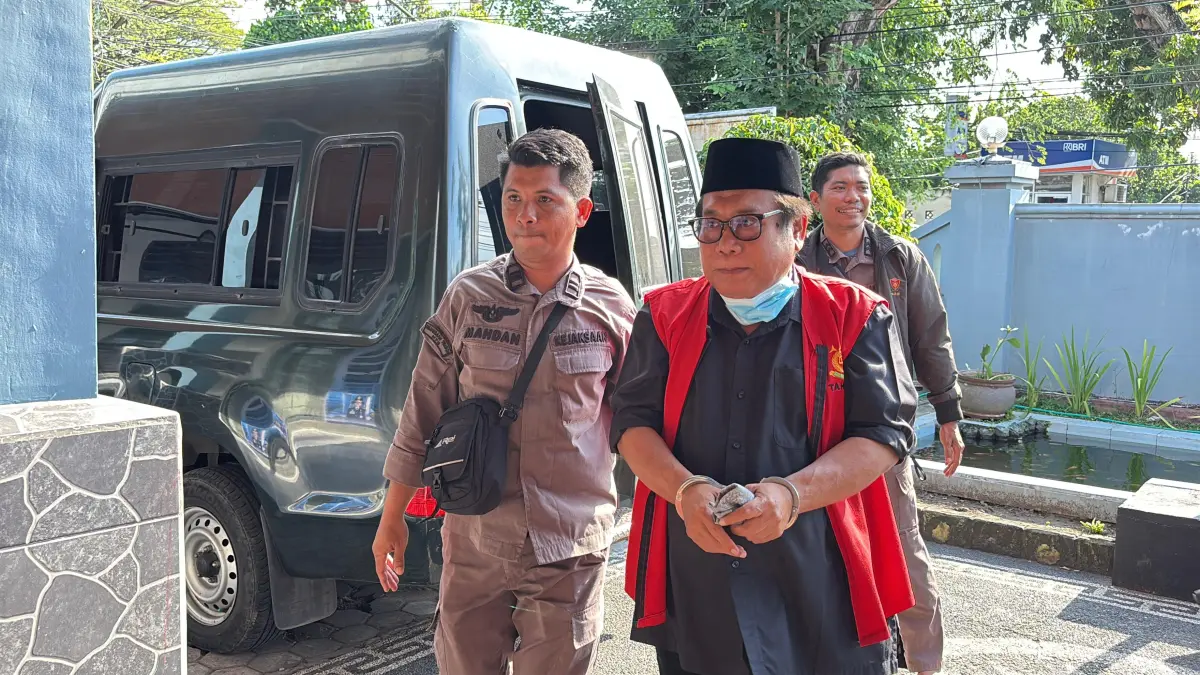
The Central Lombok District Attorney’s Office has executed the imprisonment of Suhaili, the former two-term Regent of Central Lombok, following a definitive ruling by the Supreme Court of Indonesia. The move comes after the legal process reached its conclusion through a cassation ruling, ending a period of legal uncertainty surrounding the former official.
Suhaili, a prominent political figure in West Nusa Tenggara (NTB), was escorted to detention after the prosecution finalized the execution of his sentence. The imprisonment is the result of a fraud case that has drawn significant public attention due to the defendant’s previous high-ranking status in the regional administration.
The execution of the sentence marks a critical juncture in the local judicial landscape, signaling the enforcement of court mandates regardless of the political standing of the accused. The process was carried out by the Central Lombok District Attorney’s Office (Kejari Lombok Tengah), which is tasked with ensuring that the Supreme Court’s final decisions are implemented.
Execution of Eight-Month Sentence
According to official reports, Suhaili has been sentenced to eight months in prison. The imprisonment follows a cassation ruling from the Supreme Court, which upheld the conviction related to fraud. The prosecution proceeded with the execution once the legal remedies were exhausted, ensuring the former regent began serving his term.
The process of taking the former official into custody was handled by the local prosecutor’s office. Reports indicate that the execution was carried out with strict adherence to legal protocols, including the use of handcuffs during the transport to the detention facility, a measure often employed during the execution of high-profile judicial orders to ensure security and compliance.
The fraud case that led to this conviction centered on allegations of deceptive practices. While the specific details of the transactions have been handled through the court system, the finality of the cassation ruling removes any further possibility of ordinary appeal, making the eight-month term mandatory.
The Legal Path to Conviction
The journey to the current imprisonment involved multiple levels of the Indonesian judiciary. The case initially moved through the district and high courts before reaching the Supreme Court for a cassation review. In the Indonesian legal system, a cassation (Kasasi) is a final review of the application of the law by the Supreme Court, rather than a re-evaluation of the facts of the case.
The Supreme Court’s decision to uphold the conviction indicates that the lower court’s application of the law regarding fraud was found to be correct. This ruling effectively closed the legal window for Suhaili to contest the verdict through standard channels, leaving the Central Lombok District Attorney’s Office with the mandate to execute the sentence immediately.
Legal analysts note that the imprisonment of a former two-term regent serves as a precedent for accountability in regional governance. The transition from a position of significant executive power to a detention center underscores the judiciary’s role in addressing white-collar crime and fraud within the political sphere.
Political Legacy and Regional Impact
Suhaili’s tenure in Central Lombok was extensive, having served as the Regent for two consecutive terms between 2010 and 2021. His influence in the region extended beyond the regency office. he previously held the position of Chairman of the Regional House of Representatives (DPRD) for the West Nusa Tenggara province from 2004 to 2010. This long history of leadership makes his current incarceration a significant event for the local electorate and political establishment.
The impact of this conviction is felt across the political spectrum in NTB. For the public, the enforcement of the sentence is often viewed as a victory for the rule of law. For the political class, it serves as a reminder of the legal risks associated with financial irregularities and the reach of the Supreme Court’s oversight.
The Central Lombok District Attorney’s Office has emphasized its commitment to upholding the law impartially. By executing the order against a former high-ranking official, the office aims to demonstrate that legal mandates are applied consistently, regardless of the individual’s former titles or political affiliations.
As Suhaili begins his eight-month term, the focus of the local administration shifts toward maintaining stability and ensuring that the governance of Central Lombok continues without disruption. The case highlights the ongoing challenges of combating fraud and corruption within regional leadership in Indonesia.
The next confirmed checkpoint in this matter will be the completion of the eight-month sentence, at which point the former regent’s legal status regarding this specific case will be resolved. Updates regarding any potential parole or early release, if applicable under Indonesian law, would be handled by the correctional facilities and the Ministry of Law and Human Rights.
We invite our readers to share their thoughts on the importance of judicial accountability in regional governance in the comments section below.