
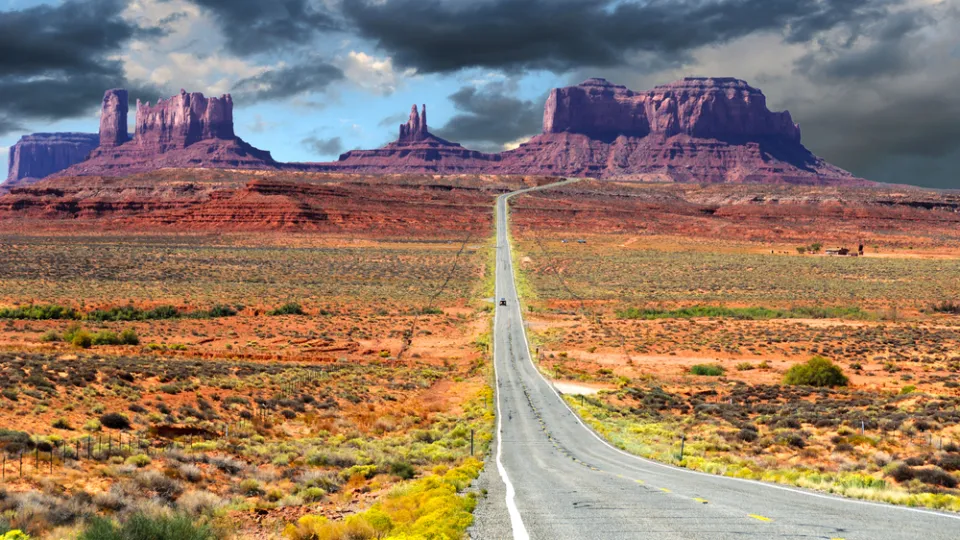
The American Southwest is a region defined by its contradictions. This proves a place where the silence of a prehistoric canyon is juxtaposed against the cacophony of a neon metropolis, and where the searing heat of a salt flat meets the alpine chill of a granite peak. For the global traveler, an American Southwest road trip offers more than just a sightseeing tour; it is an immersion into a geological timeline that spans millions of years, crossing the borders of California, Nevada, Arizona, and Utah.
Navigating this vast expanse requires more than a map; it requires an appreciation for the scale of the landscape. From the towering sequoias of the Sierra Nevada to the surreal “hoodoos” of Bryce Canyon, the region serves as a living museum of planetary evolution. This journey is not merely about the destinations, but the transition between environments—the way the lush greens of the coast fade into the ochre and crimson of the high desert.
For those planning a traverse of these four states, the experience is often anchored by the National Park Service (NPS) network, which protects some of the most fragile and awe-inspiring ecosystems on Earth. Whether one is seeking the spiritual solitude of the desert or the high-energy pulse of a world-class entertainment hub, the West provides a narrative of exploration and endurance that continues to captivate visitors from every corner of the globe.
California: From Granite Spires to the Basin of Fire
Any comprehensive tour of the West often begins or pivots through California, a state that encapsulates the diversity of the Pacific coast. While the cities of Los Angeles and San Francisco provide cultural anchors, the true essence of the California interior is found in its extremes. Yosemite National Park stands as a testament to the power of glacial erosion, featuring the iconic Half Dome and El Capitan. As a UNESCO World Heritage site, Yosemite is recognized globally for its exceptional natural beauty and geological significance.
Moving east from the mountains, the landscape shifts violently into the Mojave Desert. This transition leads travelers to Death Valley National Park, a place of superlatives. It is home to Badwater Basin, the lowest point in North America, sitting at 282 feet below sea level. The environmental stress of Death Valley—characterized by some of the highest recorded temperatures on the planet—creates a stark, minimalist beauty that prepares the traveler for the arid terrains of Nevada and Arizona.
The drive through California’s eastern corridors often follows the remnants of historic routes, where the road itself becomes a narrative. The shift from the lush valleys to the shimmering heat haze of the desert floor marks the psychological boundary of the trip, moving the visitor away from the comforts of the coast and into the raw, unfiltered heart of the American wilderness.
Nevada: The Neon Oasis and the High Desert
As the journey crosses into Nevada, the landscape is dominated by the Basin and Range province, characterized by abrupt mountain ranges separated by broad, flat valleys. Amidst this rugged isolation sits Las Vegas, a city that functions as an almost unreal pause in the surrounding natural context. The sudden transition from the silence of the desert to the sensory overload of the Las Vegas Strip is one of the most jarring and exhilarating experiences of the trip.

Las Vegas serves as more than just a gambling destination; it is the primary logistical hub for explorers venturing into the Southwest. The city’s infrastructure allows travelers to recharge before tackling the demanding drives into the interior. However, the natural beauty of Nevada extends far beyond the city limits. Red Rock Canyon National Conservation Area offers a striking contrast of crimson sandstone against a bright blue sky, providing a glimpse of the geological forces that shaped the rest of the region.
The “unreal” nature of Las Vegas—its artificial lakes, towering hotels, and perpetual lights—highlights the resilience of human engineering in a hostile environment. Yet, the true draw for many is the city’s role as a gateway. From here, the road leads away from the neon and back toward the ancient, where the only lights are the stars of a dark-sky desert night.
Arizona: The Heart of the Red Rocks
Arizona is the spiritual center of the American Southwest, where the earth reveals its inner layers in vivid shades of orange, red, and gold. The undisputed crown jewel is the Grand Canyon National Park. Carved by the Colorado River over millions of years, the canyon is a geological record of the Earth’s history, with some of the oldest exposed rocks on the planet reaching back nearly two billion years.
Beyond the Grand Canyon, Arizona offers a variety of landscapes that feel otherworldly. Sedona, with its towering red sandstone formations and renowned “vortexes,” attracts those seeking wellness and spiritual connection. Further north, the town of Page provides access to Antelope Canyon, a slot canyon famous for its flowing, wave-like walls of sandstone, and Horseshoe Bend, where the Colorado River makes a dramatic U-turn around a towering cliff.
The experience of Arizona is often defined by the scale of its vistas. Whether standing on the South Rim of the Grand Canyon or driving through the painted deserts, there is a pervasive sense of insignificance in the face of such immense geological time. The state’s heritage is also deeply intertwined with the Indigenous peoples, particularly the Navajo Nation, whose lands encompass much of the region’s most dramatic scenery, including the iconic Monument Valley.
Utah: The Geological Masterpieces of the Mighty 5
The journey culminates in Utah, a state that hosts five national parks—collectively known as the “Mighty 5″—which represent some of the most unique topography in the world. Zion National Park is often the first stop, where the Virgin River has carved a deep canyon through massive Navajo Sandstone cliffs. The hike through “The Narrows” allows visitors to walk directly in the river, flanked by walls that rise a thousand feet on either side.
Bryce Canyon National Park offers a completely different visual experience. Rather than a traditional canyon, it is a series of giant natural amphitheaters filled with “hoodoos”—tall, thin spires of rock created by frost wedging and chemical weathering. The contrast between the white limestone and the deep orange silt creates a landscape that looks more like a painting than a physical place.
The eastern portion of the state is dominated by Arches National Park and Canyonlands National Park. Arches is world-renowned for its over 2,000 natural stone arches, including the massive Delicate Arch. Canyonlands, as the name suggests, offers a vast expanse of canyons and mesas, providing a panoramic view of the Colorado River’s intricate carving of the plateau. Finally, Capitol Reef National Park connects these landscapes, featuring the Waterpocket Fold, a warp in the Earth’s crust that creates a 100-mile long ridge of rock.
Planning the Journey: Logistics, Timing, and Safety
Executing a road trip across California, Nevada, Arizona, and Utah requires meticulous planning due to the extreme environments. The most critical factor is timing. The summer months can bring lethal temperatures to Death Valley and Las Vegas, often exceeding 110°F (43°C). Conversely, winter can bring unexpected snow to the high altitudes of Bryce Canyon and Yosemite, potentially closing key roads.
For most travelers, the ideal windows are spring (March to May) and autumn (September to November), when temperatures are moderate and the crowds are thinner. A key recommendation for any visitor is the purchase of the “America the Elegant” pass, which provides entry to all national parks for a single annual fee, significantly reducing costs for those visiting multiple sites.
Safety in the Southwest is predicated on preparation. The vast distances between towns mean that running out of fuel or water can be a life-threatening situation. Travelers are advised to carry extra gallons of water, maintain a full tank of fuel, and notify others of their itinerary when venturing into remote areas of the Mojave or the Utah backcountry. The National Park Service provides real-time alerts on road closures and weather warnings that are essential for safe navigation.
Quick Reference: Key Southwest Destinations
| State | Primary Landmark | Key Feature | Best Time to Visit |
|---|---|---|---|
| California | Yosemite NP | Granite Cliffs/Waterfalls | Late Spring/Early Summer |
| Nevada | Las Vegas | Urban Entertainment | Winter/Spring |
| Arizona | Grand Canyon NP | Massive Gorge/River | Spring/Autumn |
| Utah | Zion NP | Slot Canyons/Red Cliffs | Spring/Autumn |
As the journey concludes, the traveler is left with a profound sense of the American West’s enduring power. From the neon glitz of Nevada to the silent spires of Utah, the region challenges the visitor to adapt and admire. The next confirmed milestone for regional tourism will be the release of the updated 2026 seasonal access permits for the most popular National Park trails, which are expected to be announced in the coming months via official NPS channels.
Do you have a favorite stop on a Southwest road trip, or are you planning your first visit? Share your experiences or questions in the comments below.