
A UK court has convicted Yuen Sung-biu, an administrative manager at the Hong Kong Trade Development Council’s office in London, and Wei Zhiliang, a former border official, for assisting a foreign intelligence agency. The verdict, delivered amid heightening diplomatic friction between London and Beijing, marks a significant application of the United Kingdom’s stringent national security legislation.
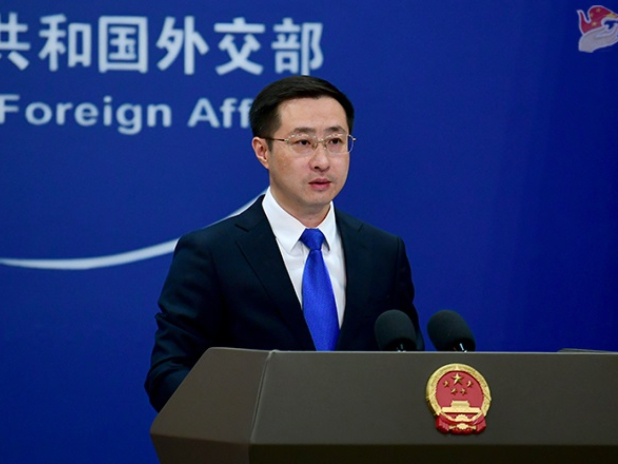
The convictions have triggered an immediate and sharp response from the People’s Republic of China. The Chinese Ministry of Foreign Affairs issued a strong condemnation of the ruling, stating that it has already lodged “solemn representations” with the British government. This legal clash underscores the growing tension surrounding the operational status of Hong Kong’s representative offices in the UK and the broader geopolitical struggle over foreign interference.
The case centers on allegations that Yuen and Wei engaged in activities that compromised British national security by providing support to a foreign intelligence service. While the specific details of the intelligence operations remain largely classified, the court’s decision confirms that the defendants’ actions met the threshold for criminal liability under the UK’s modern security framework.
For global observers, the Yuen Sung-biu UK National Security Act conviction is more than a criminal trial. it is a litmus test for how the UK intends to police its borders and diplomatic hubs against perceived espionage. The involvement of a staff member from a trade office—which lacks full diplomatic immunity—highlights a critical vulnerability in the legal protections afforded to regional administrative bodies operating on foreign soil.
The Verdict: Assisting Foreign Intelligence
The court found that Yuen Sung-biu and Wei Zhiliang acted in a manner that provided material assistance to a foreign intelligence agency. Under the National Security Act 2023, the UK government has broadened its ability to prosecute individuals who engage in espionage or foreign interference, regardless of whether the actions resulted in immediate harm to the state.
Yuen, who served as the administrative manager for the Hong Kong Trade Office in London, was positioned in a role that provided significant access to administrative networks and potentially sensitive information. The prosecution argued that this position was leveraged to facilitate the goals of a foreign power, effectively turning a trade-focused entity into a conduit for intelligence gathering.
Wei Zhiliang, identified as a former border official, was convicted alongside Yuen. The coordination between a current administrative official and a former security professional suggests a structured effort to gather or transmit information, a point that the court found compelling enough to secure convictions for both parties.
The use of the National Security Act in this case is particularly noteworthy. The 2023 legislation was designed to update the UK’s “Official Secrets Act” era laws, creating clearer definitions of “foreign interference” and “espionage.” By securing a conviction under this act, the UK government is signaling a zero-tolerance policy toward activities it deems as state-sponsored intelligence operations conducted within its jurisdiction.
Beijing’s Response and Diplomatic Fallout
The reaction from Beijing was swift, and severe. The Ministry of Foreign Affairs characterized the trial and subsequent conviction as a manifestation of political bias. In official statements, the Chinese government accused the UK of engaging in “anti-China political manipulation,” arguing that the legal proceedings were designed to smear China’s image and pressure the Hong Kong Special Administrative Region (HKSAR) government.
The Ministry’s decision to lodge “solemn representations” is a formal diplomatic gesture indicating that China views the conviction as a breach of international norms and a targeted attack on its administrative personnel. Beijing has urged the British government to cease its “political games” and respect the sovereignty and internal affairs of China and Hong Kong.

Further adding to the tension, the Office of the Commissioner of the Ministry of Foreign Affairs in Hong Kong echoed these sentiments, calling on the UK to stop using the legal system as a tool for political warfare. The rhetoric suggests that China may seek reciprocal measures or further diplomatic downgrades if it perceives the UK’s security apparatus as being used for political persecution.
- Convictions: Yuen Sung-biu (HK Trade Office manager) and Wei Zhiliang (former border official) were found guilty of assisting a foreign intelligence agency.
- Legal Basis: The convictions were secured under the UK’s National Security Act 2023.
- China’s Stance: The Ministry of Foreign Affairs strongly condemns the verdict, labeling it “political manipulation.”
- HK Government Action: The HKSAR government denies involvement and is providing legal support to Yuen.
- Strategic Impact: The case highlights the precarious legal status of Hong Kong trade offices in the UK.
The Hong Kong Government’s Position
The Hong Kong Special Administrative Region government has distanced itself from the criminal activities alleged by the UK court. In a public response, the HKSAR government stated that it was “never a party” to the incidents in question and strongly opposed the “untrue accusations” that implied the Trade Office as an institution was involved in espionage.
Despite this distancing, the Hong Kong government has confirmed that it is providing legal support to Yuen Sung-biu. Officials argued that because the case “unreasonably involves” the London trade office, it is necessary for the government to ensure its employee has access to a robust legal defense. This move is seen as an attempt to maintain employee morale and signal to other overseas staff that the government will not abandon them in the face of foreign prosecutions.
The tension between the HKSAR’s denial of institutional involvement and its decision to fund Yuen’s defense creates a complex narrative. While the government rejects the UK’s findings, its commitment to Yuen’s legal battle suggests it views the conviction as a political act rather than a purely criminal one.
Understanding the UK National Security Act 2023
To understand why this case is so significant, one must look at the architecture of the National Security Act 2023. This law was introduced to modernize the UK’s defense against 21st-century threats, including cyber-espionage and clandestine foreign influence.
The Act introduces several key offenses that were applicable in the Yuen and Wei case:
- Foreign Interference: Prohibits conduct that is intended to influence a political process or a government decision through “prohibited conduct” (such as coercion or deception) on behalf of a foreign power.
- Espionage: Criminalizes the obtaining or disclosing of protected information that is prejudicial to the safety or interests of the UK.
- Assisting a Foreign Intelligence Service: A specific offense that targets individuals who provide support, resources, or information to foreign agents, even if they are not formal intelligence officers themselves.
By convicting Yuen and Wei under these provisions, the UK is demonstrating that it no longer requires proof of “stolen documents” or “secret codes” to secure a conviction. The mere act of assisting a foreign intelligence agency—regardless of the scale of the information exchanged—is now sufficient for a criminal verdict.
The “Trade Office” Dilemma: Diplomacy vs. Administration
A central point of contention in this case is the nature of the Hong Kong Trade Development Council (HKTDC) offices. Unlike embassies, which are governed by the Vienna Convention on Diplomatic Relations, trade offices are often registered as commercial entities or administrative hubs. In other words their staff do not enjoy full diplomatic immunity.
For years, there has been a simmering dispute between the UK and China over the status of these offices. The UK government has grown increasingly wary that these hubs are being used for more than just promoting trade and investment. There have been repeated allegations that such offices serve as covers for “United Front” activities—efforts by Beijing to influence overseas Chinese communities and foreign political elites.
The conviction of Yuen Sung-biu validates the UK’s security concerns and provides a legal precedent for the government to scrutinize other similar offices. If trade office staff can be convicted of espionage, the “commercial” veil that previously protected these operations is effectively lifted.
What This Means for UK-China Relations
The diplomatic fallout from this case is likely to be long-lasting. The conviction occurs at a time when UK-China relations are already at a historic low, characterized by mutual accusations of interference and sanctions over human rights issues in Hong Kong and Xinjiang.
For the UK, the case is a matter of rule of law and national sovereignty. By prosecuting Yuen and Wei, London is asserting that no one—regardless of their official title or the nature of their office—is above the law when it comes to national security.

For China, the case is seen as a “political trial.” The use of terms like “anti-China political manipulation” suggests that Beijing views the UK’s National Security Act as a weaponized legal tool. This could lead to a cycle of retaliatory legal actions, where China may target British nationals or businesses in China under its own counter-espionage and national security laws.
The broader impact on global trade is also a concern. If trade offices are viewed as espionage hubs, the ability of regional governments to foster economic ties through these channels will be severely diminished. Businesses may become more hesitant to engage with entities that are under the scrutiny of national security agencies.
Next Steps and Legal Checkpoints
As the court has already delivered its verdict, the immediate focus shifts to the sentencing phase. Yuen Sung-biu and Wei Zhiliang now face potential prison sentences, the length of which will depend on the perceived severity of their assistance to the foreign intelligence agency.
The legal battle is far from over. Given the support from the HKSAR government and the strong condemnation from Beijing, it is highly probable that the defendants will seek an appeal. The appeal process will likely focus on the admissibility of the evidence used by the prosecution and whether the defendants’ actions truly met the legal definition of “assisting a foreign intelligence agency” under the 2023 Act.
Diplomatically, the “solemn representations” lodged by China may lead to further summons of diplomats or official protests. However, there is no indication that the UK government is prepared to reverse the court’s decision for the sake of diplomatic expediency.
The next confirmed checkpoint will be the sentencing hearing, where the court will determine the penalties for Yuen and Wei. This date, and any subsequent filings for appeal, will be closely watched by both the UK Foreign, Commonwealth & Development Office and the Chinese Ministry of Foreign Affairs.
We invite our readers to share their perspectives on this developing story in the comments below. Do you believe the use of national security laws in diplomatic hubs is a necessary safeguard or a political tool? Share this article to join the conversation.