
The political landscape of Colombia has lost one of its most formidable and transformative figures. Germán Vargas Lleras, the former Vice President and a cornerstone of Colombian governance for over three decades, has passed away, leaving behind a legacy defined by an aggressive pursuit of modernization and an unwavering commitment to the institutional strength of the state.
Vargas Lleras was not merely a politician; he was a strategic architect who fundamentally altered the physical and political geography of Colombia. From the corridors of Congress to the Vice Presidency, his career was marked by a rare combination of intellectual rigor and an executive drive that often bypassed traditional bureaucratic inertia to deliver tangible results for the nation.
His passing marks the end of an era for the Cambio Radical party, which he founded and led with a disciplined hand. To his admirers, he was the “doer” who finally broke the bottleneck of Colombian infrastructure; to his critics, he was a polarizing power broker whose influence permeated every level of the government. Regardless of the perspective, his impact on the Colombian state is indisputable.
The death of Germán Vargas Lleras comes at a time when Colombia continues to grapple with the long-term effects of the infrastructure revolution he spearheaded during his tenure as Vice President. His ability to mobilize capital and political will to connect remote regions of the Andes and the Caribbean coast remains a benchmark for Latin American development.
The Infrastructure Revolution and the 4G Legacy
While Vargas Lleras held numerous high-ranking offices, he is most prominently remembered for his tenure as Vice President from 2014 to 2018 under President Juan Manuel Santos. During this period, he was granted an unprecedented level of authority over the nation’s infrastructure portfolio, a move that allowed him to execute the ambitious “Fourth Generation” (4G) road projects.
Before the 4G initiative, Colombia’s road network was characterized by inefficiency, outdated designs, and a lack of connectivity between major urban centers and agricultural hubs. Vargas Lleras restructured the procurement and execution processes, introducing more competitive bidding and stricter oversight to accelerate the construction of tunnels, bridges, and highways. These projects were designed not just to move vehicles, but to integrate the Colombian economy by reducing transport costs and travel times across the country’s rugged terrain.
The scale of this undertaking was immense. By leveraging public-private partnerships, the administration managed to attract billions of dollars in investment, ensuring that the financial burden did not fall solely on the state. This model of infrastructure financing became a blueprint for subsequent administrations and served as a critical driver of GDP growth during his term. The 4G projects aimed to modernize thousands of kilometers of roads, effectively shrinking the distance between the interior highlands and the coastal ports, which is essential for a country dependent on exports.
Vargas Lleras’s approach to infrastructure was an extension of his broader philosophy of governance: efficiency over formality. He was known for his “field-first” approach, frequently visiting construction sites and demanding immediate solutions to delays. This hands-on management style ensured that projects that had been stalled for decades were finally completed, though it often put him at odds with contractors and local officials who were accustomed to a slower pace of government.
A Political Trajectory of Power and Strategy
The rise of Germán Vargas Lleras was not accidental; it was the result of a calculated ascent through the ranks of the Colombian political establishment. He entered public service at a young age, quickly establishing himself as a master of parliamentary procedure and a keen analyst of political currents. His versatility allowed him to serve in nearly every critical branch of the executive and legislative arms.
He served as the Minister of the Interior and the Minister of Education, roles in which he applied the same rigor he later brought to infrastructure. As Minister of Education, he focused on expanding access and improving the quality of technical training, recognizing that a modern economy required a skilled workforce to complement its physical assets. His time in the Interior Ministry solidified his reputation as a negotiator who understood the intricate balance of power between the central government and regional caudillos.

Beyond his ministerial roles, Vargas Lleras represented Colombia on the global stage, serving as the Ambassador to the United Kingdom. This experience broadened his perspective on international governance and diplomatic relations, which he later used to attract foreign investment into Colombia’s development projects. His ability to speak the language of international finance and diplomacy made him an invaluable asset to the Colombian state during its transition toward a more open, globalized economy.
The founding of the Cambio Radical party was perhaps his most significant political maneuver. By creating a platform that emphasized efficiency, transparency, and a break from the traditional bipartisan hegemony of the Liberal and Conservative parties, he carved out a distinct political identity. Cambio Radical became a pivotal force in Colombian elections, often acting as the kingmaker in coalition governments. His leadership of the party was characterized by a strict adherence to a centralized vision, ensuring that the party’s goals remained aligned with his strategic objectives.
Defending the Democratic Framework
Throughout his career, Vargas Lleras positioned himself as a staunch defender of Colombian democracy and the rule of law. He operated during some of the most turbulent periods of the nation’s history, including the height of the internal armed conflict and the subsequent efforts to achieve a lasting peace. His approach to democracy was rooted in institutionalism; he believed that the state must be strong, efficient, and capable of asserting authority across every square inch of the national territory.
His relationship with the peace process was complex. While he supported the overarching goal of ending the conflict, he frequently voiced concerns regarding the legal frameworks and the guarantees of justice for victims. He argued that peace could not be achieved through concessions that undermined the authority of the law or the stability of the state. This stance often placed him in the role of the “critical insider” within the Santos administration, providing a necessary counterweight to the more idealistic elements of the peace negotiations.
Vargas Lleras also played a key role in navigating the tensions between the executive and legislative branches. His deep understanding of the Colombian Constitution and his experience in Congress allowed him to shepherd complex legislation through a fractured parliament. He viewed the law not as a hurdle, but as a tool for development, and he spent much of his career refining the legal mechanisms that govern public contracting and administrative law in Colombia.
The Man Behind the Statesman
To understand the legacy of Germán Vargas Lleras is to understand a man of immense contradictions. He was described by colleagues as both an intellectual powerhouse and a relentless taskmaster. His public persona was often that of a confident, sometimes abrasive leader who had little patience for incompetence. However, those who worked closely with him often spoke of his profound dedication to the country and his capacity for tireless work.
He belonged to a political dynasty, but he spent his career forging an identity that was separate from his lineage. He was a student of history and politics, which informed his strategic approach to governance. He did not view politics as a game of popularity, but as a science of results. This focus on outcomes over optics is what allowed him to implement unpopular but necessary reforms in infrastructure and education.
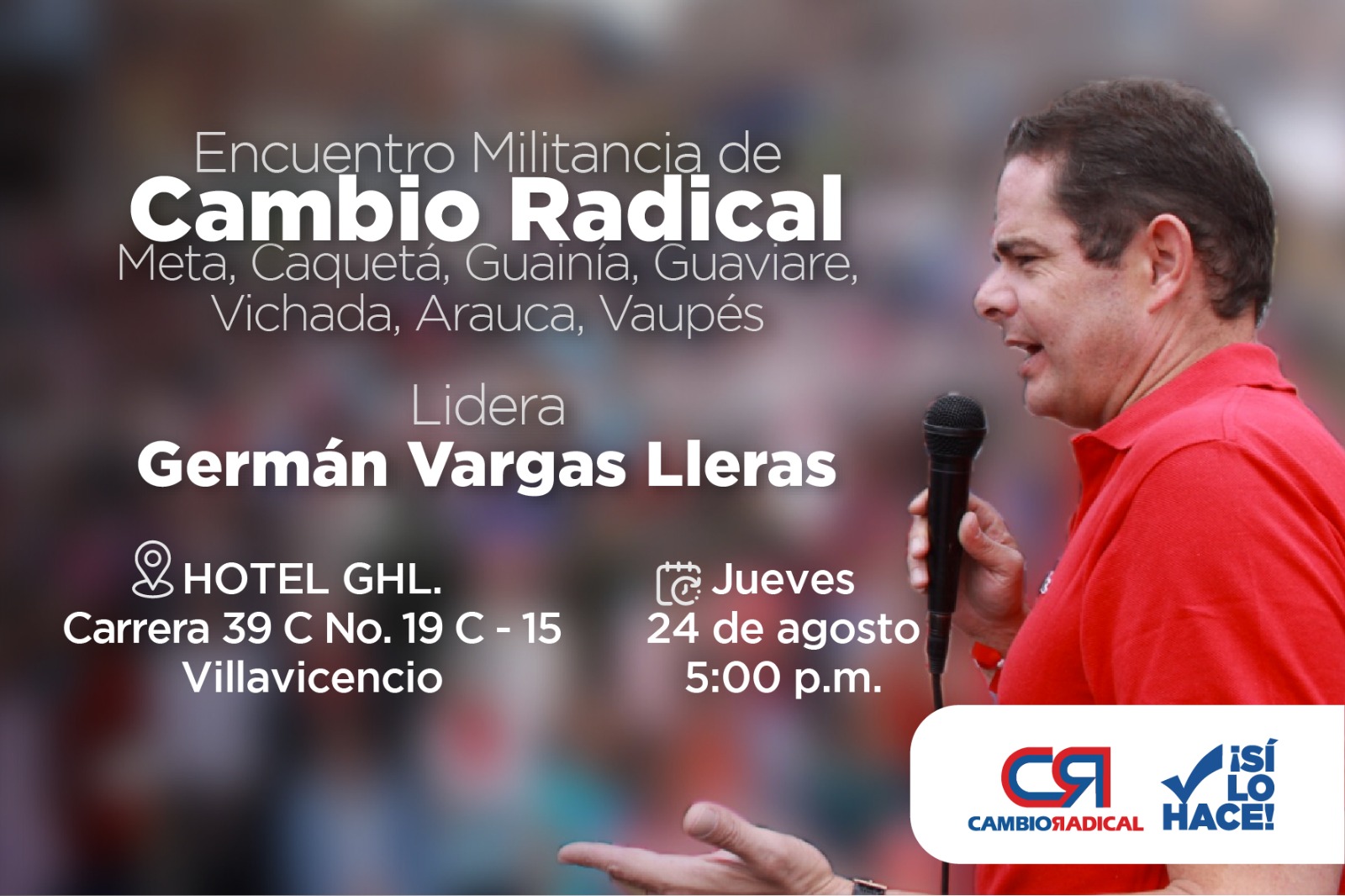
His influence extended beyond his official titles. He was a mentor to a new generation of Colombian technocrats, teaching them that political will is the most important ingredient in national development. He championed the idea that the state should not just regulate, but should actively lead the way in modernization. By the time he left the Vice Presidency, he had shifted the conversation in Colombia from *whether* the country could modernize its infrastructure to *how prompt* it could be done.
Impact and Future Implications
The passing of Vargas Lleras leaves a significant vacuum in the leadership of the Colombian center-right. As the primary strategist for Cambio Radical, his absence will likely lead to a period of realignment within the party and among its allies. The question of who can maintain the party’s cohesion and continue its influence in the National Congress will be a primary focus for political analysts in the coming months.
Beyond the immediate political fallout, the long-term impact of his work will be measured in the durability of the 4G roads and the economic vitality of the regions they connect. The “Vargas Lleras model” of infrastructure—characterized by aggressive timelines and private sector integration—will likely be studied by other developing nations seeking to modernize their transport networks. The challenge for future administrations will be to maintain the maintenance and expansion of these networks without the singular drive of the man who brought them into existence.
For the average Colombian citizen, his legacy is found in the reduced travel times between Bogotá and the coast, the new tunnels that bypass treacherous mountain passes, and the increased accessibility of rural markets. While the political debates surrounding his methods may continue, the physical evidence of his contribution to the country is etched into the landscape of Colombia itself.
As Colombia enters a new phase of political transition, the standards of executive efficiency set by Vargas Lleras will remain a point of reference. His life serves as a case study in how a single individual, through a combination of political skill and administrative obsession, can accelerate the development of a nation.
Official tributes and a state funeral are expected to be announced by the Colombian government in the coming days, providing a final opportunity for the nation to reflect on the life of a man who spent more than three decades shaping the destiny of the republic.
Next Step: The Colombian Presidency is expected to issue a formal decree regarding the national mourning period and the schedule for the state funeral services. Further updates will be provided as the official itinerary is confirmed.
World Today Journal encourages readers to share their reflections on the legacy of Germán Vargas Lleras in the comments section below.
Worth a look