
In a sudden diplomatic shift that has captured global attention, U.S. President Donald Trump announced on Friday that Russia and Ukraine have agreed to a three-day temporary ceasefire. The truce, which spans from May 9 to May 11, 2026, represents a fragile but significant pause in the protracted conflict that has devastated Eastern Europe.
The announcement, delivered via social media, confirms that the agreement includes a large-scale humanitarian component: the exchange of approximately 1,000 prisoners of war. This development comes at a moment of extreme symbolic tension, coinciding with Russia’s annual celebrations of the end of World War II.
President Trump stated that he personally requested the temporary cessation of hostilities, facilitating the agreement between Russian President Vladimir Putin and Ukrainian President Volodymyr Zelenskyy. In his announcement, Trump expressed his hope that this short-term reprieve would serve as the “beginning of the end” for the long-running war.
A Strategic Pause for Humanitarian Gain
The core of the agreement is the immediate halt of combat operations for 72 hours. While short-term truces are often viewed with skepticism in geopolitical circles, the inclusion of a prisoner swap involving 1,000 individuals provides a tangible humanitarian incentive for both Kyiv and Moscow to maintain the peace.
For Ukraine, the priority has shifted toward the recovery of its citizens. President Volodymyr Zelenskyy acknowledged the agreement on social media, framing the decision as a pragmatic choice. He emphasized that the lives of Ukrainian prisoners hold far greater value than the symbolic importance of events occurring in Moscow’s Red Square.
This humanitarian exchange is expected to take place alongside the ceasefire, providing a rare window for the movement of captives across the front lines. Such exchanges are critical not only for the individuals involved but for the morale of the domestic populations in both warring nations.
The Trump Mediation and the ‘Beginning of the End’
The role of the United States as a direct mediator in this specific truce highlights a focused effort by the Trump administration to engineer a breakthrough in the conflict. By positioning himself as the primary catalyst for the request, President Trump is signaling a desire for a rapid resolution to the hostilities.
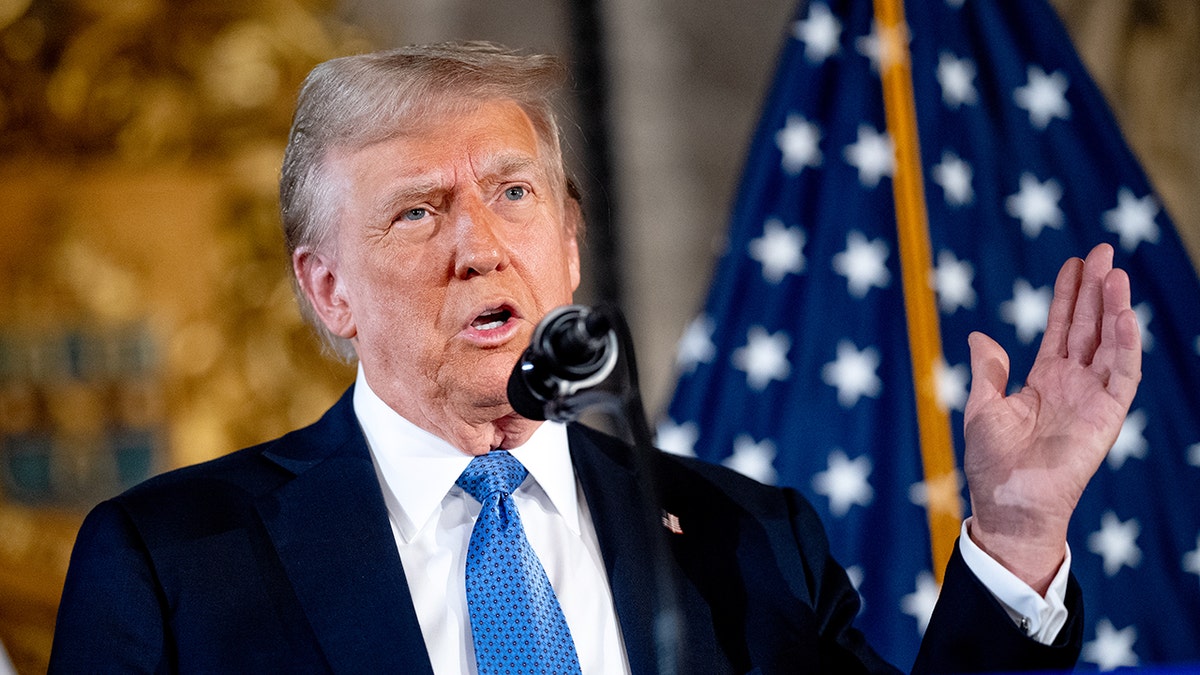
The phrase “beginning of the end,” used by the U.S. President, suggests an ambition to transition this temporary pause into a more permanent diplomatic framework. However, the brevity of the three-day window indicates that Here’s currently a test of trust rather than a comprehensive peace treaty. The international community is now watching closely to see if the discipline maintained during these 72 hours can be leveraged into longer-term negotiations.
The Symbolism of Victory Day
The timing of this ceasefire is inextricably linked to May 9, the date Russia commemorates the Soviet victory over Nazi Germany in 1945. This day typically features a massive military parade in Red Square, serving as a projection of Russian military power and national resilience.
Prior to the U.S.-mediated agreement, Russia had unilaterally declared a two-day ceasefire to mark the anniversary. Ukraine had initially refused to honor that unilateral gesture, citing continued Russian attacks on the ground. The shift to a mutually agreed-upon three-day truce, brokered by Washington, provides a more stable security environment for the Russian celebrations while offering Ukraine a concrete reward in the form of prisoner releases.
The intersection of military symbolism and diplomatic pragmatism is evident here. By securing a ceasefire that includes prisoner swaps, the U.S. Has effectively linked the security of Russia’s high-profile celebrations to the humanitarian needs of Ukraine.
Ukraine’s Pragmatic Pivot
President Zelenskyy’s willingness to agree to the truce—despite the symbolic weight of the Victory Day parade in Moscow—underscores a calculated approach to the war. In previous statements, the Ukrainian leadership had expressed a desire to disrupt the optics of the Russian parade, but the opportunity to bring home 1,000 prisoners outweighed the tactical value of a symbolic strike.
This decision reflects the immense pressure on the Ukrainian government to prioritize the lives of its soldiers and captured personnel. By explicitly stating that Red Square is not as important as the lives of prisoners, Zelenskyy has framed the ceasefire not as a concession to Moscow, but as a victory for Ukrainian humanitarian interests.
The success of this truce will depend on the strict adherence of both militaries to the terms. Any violation during this window could not only jeopardize the prisoner exchange but also undermine the credibility of the U.S.-led mediation effort.
The next critical checkpoint for this agreement will be May 11, the date the ceasefire is scheduled to expire. Whether the “beginning of the end” manifests as a continued diplomatic dialogue or a return to active combat will depend on the outcomes of the prisoner swaps and the subsequent communications between the three leaders.
We welcome your thoughts on this development in the comments below. Please share this report to keep your network informed on the evolving situation in Eastern Europe.
Keep reading