
The combination of the Tianzhou 10 cargo spacecraft and its Long March 7 Y11 carrier rocket has been vertically transferred to the launch area at the Wenchang Space Launch Site in Hainan province. The move, which took place on Friday, May 8, 2026, signals that the mission has officially entered its final stage before liftoff.
According to the China Manned Space Agency, the vertical transfer confirms that all assembly and testing of the spacecraft and the rocket within the technical area have been successfully completed. The mission is now positioned for a series of critical final checks before the spacecraft departs for the Tiangong space station.
This resupply mission is a vital component of the ongoing maintenance of China’s orbital presence. Once launched, Tianzhou 10 will deliver nearly 6.3 metric tons of essential supplies to the Tiangong space station, ensuring the continued operational capacity of the facility and the wellbeing of the personnel currently aboard.
The cargo is specifically designed to support the in-orbit work and daily requirements of the Shenzhou XXIII and Shenzhou XXIV astronaut crews. This logistics chain is essential for long-duration human spaceflight, providing the necessary consumables and technical hardware to sustain a permanent human presence in low Earth orbit.
Final Preparations at Wenchang Space Launch Site
The transition to the launch pad is more than a physical move. it represents the completion of the primary integration phase. With the spacecraft now encased in the fairing at the top of the Long March 7 Y11 rocket, the ground teams are shifting their focus to site-specific readiness.
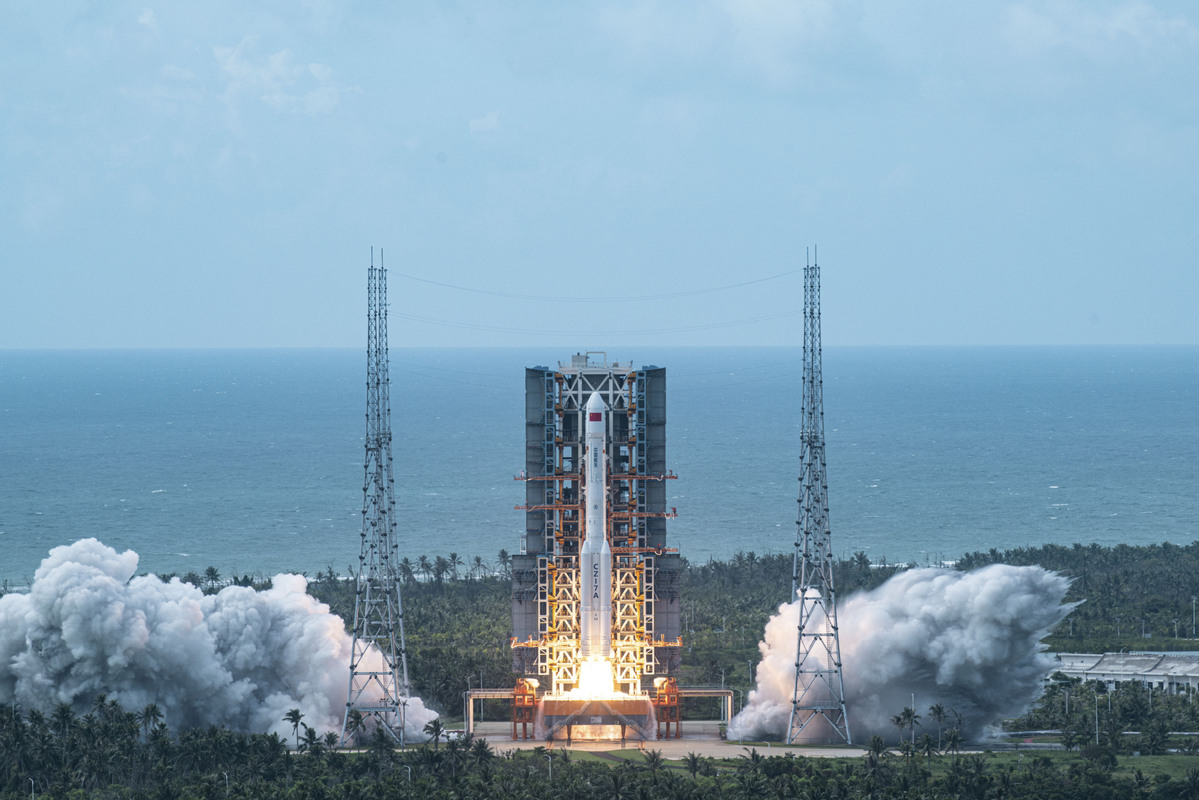
The China Manned Space Agency has reported that the facilities and equipment at the Wenchang site are in great condition. The upcoming schedule involves a rigorous sequence of joint tests and prelaunch functional checks to ensure every system is nominal. These steps are designed to mitigate risk and verify that the rocket and spacecraft can communicate and operate in harmony during the ascent phase.

Among the immediate priorities are rocket-tower coordination tests, which ensure the mechanical interfaces between the launch structure and the vehicle are aligned. Teams will conduct tank replacement and air-tightness checks—critical procedures to ensure that the propellant systems are secure and free of leaks before the volatile fuels are loaded.
The mission is scheduled to launch in the coming days, with the exact timing depending on a window deemed “appropriate” by mission controllers, accounting for both technical readiness and orbital mechanics.
Essential Cargo for Orbital Operations
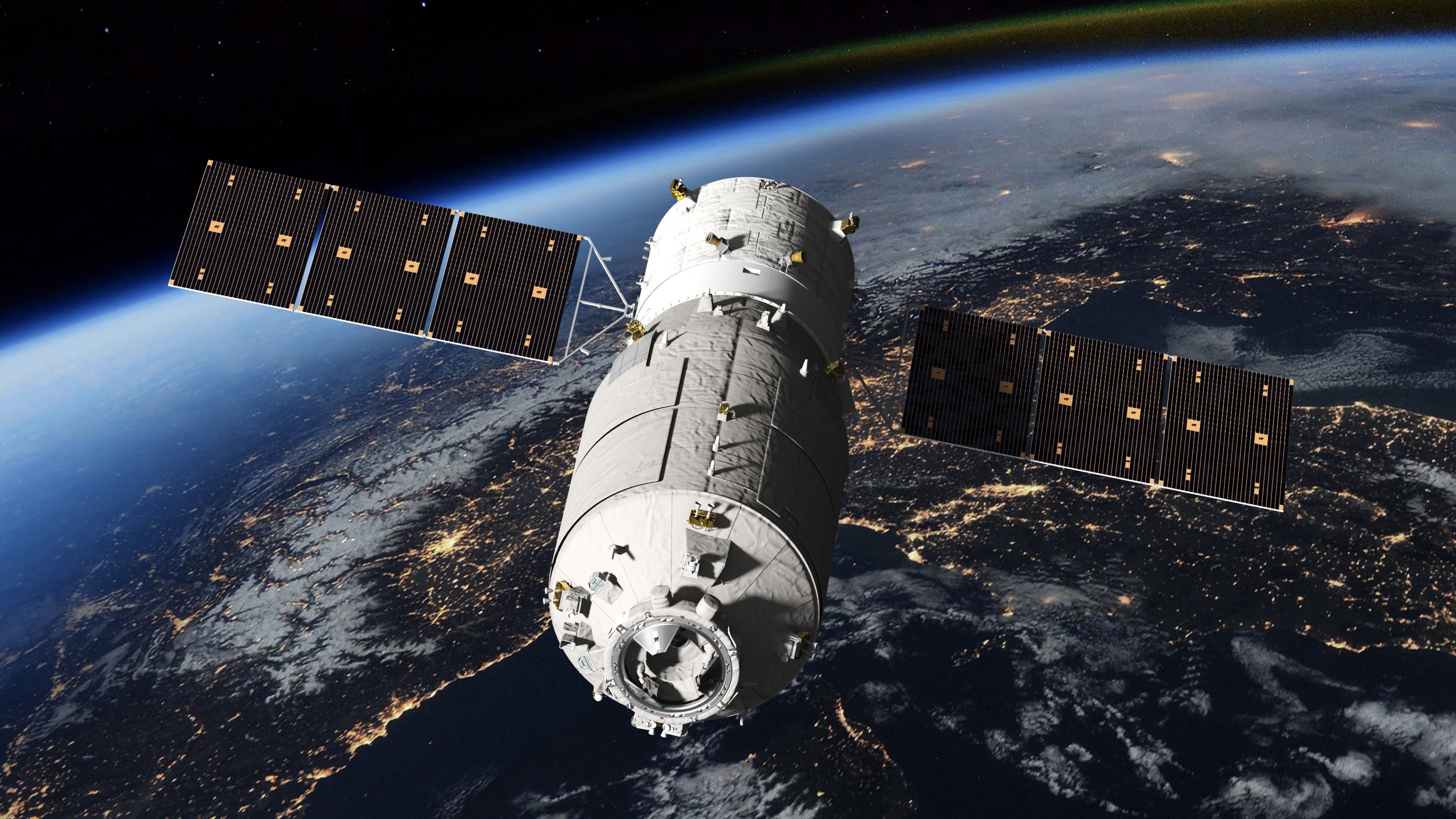
The scale of the Tianzhou 10 mission underscores the complexity of maintaining a modular space station. The nearly 6.3 metric tons of supplies being transported are not merely consumables but a diverse array of technical equipment. Official reports indicate that the cargo includes more than 220 distinct items.
These items are categorized into four primary support systems:
- Astronaut Systems: Supplies and equipment specifically for the daily life and health of the Shenzhou XXIII and XXIV crews.
- Space Station Systems: Hardware and spare parts required to maintain the structural and operational integrity of the Tiangong station.
- Cargo Spacecraft Systems: Components necessary for the spacecraft’s own docking and operational maneuvers.
- Space Application Programs: Scientific experiments and tools for research conducted in the microgravity environment.
In addition to the hardware and supplies, Tianzhou 10 is carrying approximately 700 kilograms of propellant. This fuel is critical for the space station’s attitude control and orbit boosting, preventing the station from decaying into the atmosphere and ensuring it remains in its designated orbital plane.
The Path to Liftoff
The process of launching a cargo craft like Tianzhou 10 follows a strict aerospace protocol. The “vertical transfer” is the penultimate milestone. Once the vehicle is on the pad, the focus shifts to the “wet” phase of preparation—the loading of propellants.
Propellant loading is one of the most sensitive stages of any launch. Because the Long March 7 rocket utilizes cryogenic fuels, the timing must be precise to avoid boil-off and ensure maximum efficiency. The air-tightness checks mentioned by the agency are the primary safeguard against catastrophic failure during this phase.
Following the successful loading of propellant and the final “go” from the China Manned Space Agency, the rocket will lift off from Hainan province. The spacecraft will then perform a series of orbital maneuvers to rendezvous and dock with the Tiangong station, where its cargo will be transferred to the crew via robotic arms and manual unloading.
The arrival of Tianzhou 10 will provide a significant boost to the station’s resources, allowing the Shenzhou XXIII and XXIV crews to extend their research timelines and maintain the station’s complex life-support systems.
The next confirmed checkpoint for the mission will be the announcement of the specific launch window and the commencement of propellant loading. We will continue to monitor the Wenchang Space Launch Site for updates on the final countdown.
Do you follow the progress of the Tiangong space station? Share your thoughts on the expansion of orbital logistics in the comments below.
Worth a look