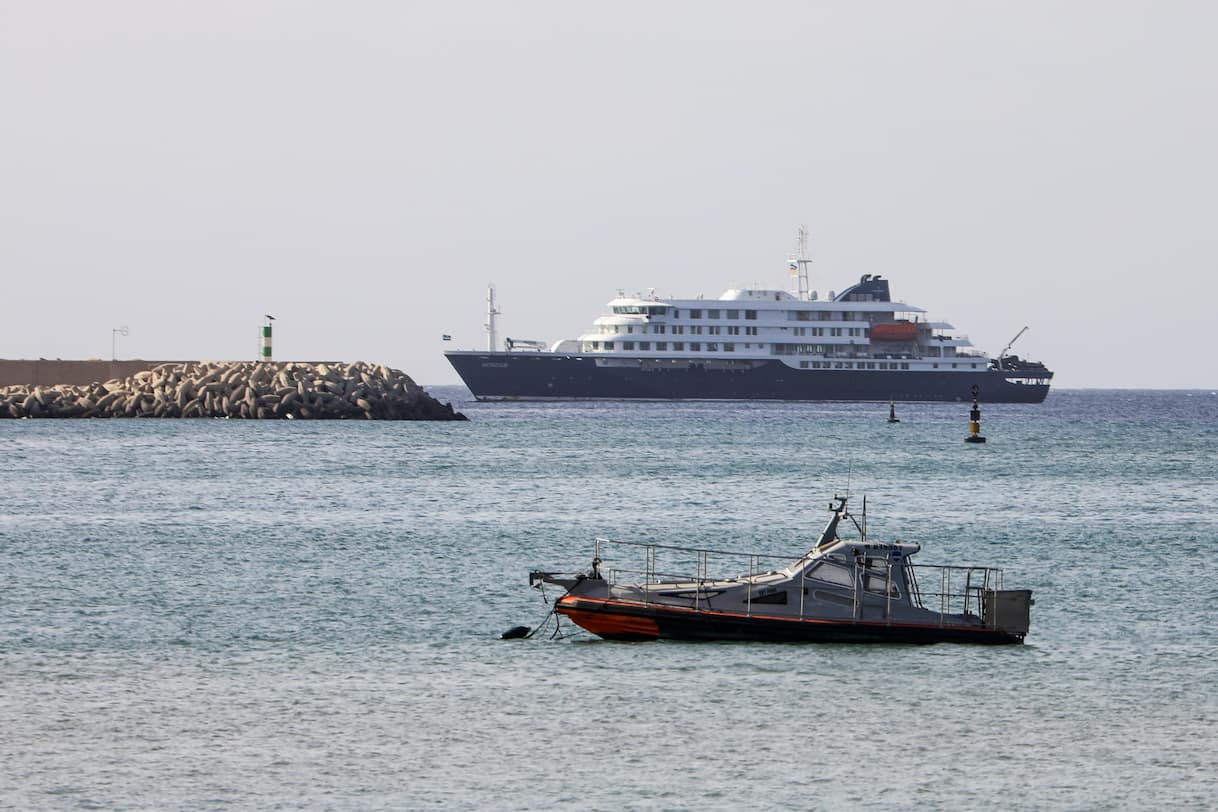
The global health community is on high alert following a rare and alarming outbreak of the Andes virus aboard the cruise ship Mv Hondius. While hantaviruses are typically known for their transmission from rodents to humans, this specific strain has triggered international concern due to its documented ability to spread directly between people, turning a localized incident into a complex international public health challenge.
As of May 8, the situation has escalated with the World Health Organization (WHO) reporting a total of eight cases, including three deaths. This represents a stark mortality rate of 38%, underscoring the severity of the infection. While six of these cases have been laboratory-confirmed as the Andes virus, the potential for further transmission has prompted emergency health measures across multiple continents, from the Canary Islands to Italy and South Africa.
The crisis has now expanded beyond the confines of the ship. Health authorities in Italy have initiated “active surveillance” for four passengers who shared a KLM flight with a woman who had previously been aboard the Mv Hondius. That woman subsequently passed away in Johannesburg, highlighting the volatile nature of the virus’s travel trajectory and the necessity for rapid, coordinated containment efforts.
For those of us in the medical community, the Andes virus represents a significant departure from the typical hantavirus profile. Most hantavirus infections are sporadic and linked to environmental exposure. however, the Andes strain’s capacity for human-to-human transmission shifts the risk profile from environmental safety to infectious disease containment, requiring a level of vigilance similar to that seen during the early stages of other respiratory outbreaks.
The Mv Hondius Outbreak and the Path to Tenerife
The Mv Hondius, the vessel at the center of the outbreak, is currently navigating toward the Canary Islands. The ship is expected to arrive in Tenerife during the night between Saturday, May 9, and Sunday, May 10. In preparation for the ship’s arrival, Spain has activated its emergency health plan to manage the arrival of passengers and crew, ensuring that the evacuation process is handled under strict medical protocols.
The scale of the international response is significant. Tedros Adhanom Ghebreyesus, the Director-General of the World Health Organization, is traveling to Tenerife to personally coordinate the evacuation of the cruise ship’s passengers. The involvement of the WHO’s top leadership signals the gravity of the situation, particularly given the confirmed presence of a virus known for its transmissibility between humans.
Beyond the ship, the reach of the virus has already touched mainland Europe. In Catalonia, a woman who came into contact with one of the victims is currently in quarantine. This case serves as a critical reminder that the risk extends to anyone who had close contact with infected individuals, regardless of whether they were on the vessel for the duration of the voyage.
International Reach: Italy’s Active Surveillance
The Italian Ministry of Health has moved swiftly to mitigate the risk of domestic transmission following a high-risk exposure event involving a KLM flight. The concern centers on a woman who had been a passenger on the Mv Hondius; she boarded a connecting flight to Rome, remaining on the aircraft for only a few minutes before departing. This individual later died in Johannesburg due to the virus.
Despite the brief nature of the exposure, Italian health officials have adopted a “principle of maximum caution.” The ministry has activated active surveillance for four passengers who were on that specific flight. To ensure comprehensive monitoring, the contact details of these individuals have been acquired and shared with the regional health authorities in the areas where the passengers reside: Calabria, Campania, Toscana, and Veneto.
This proactive approach is designed to detect any early symptoms of the Andes virus outbreak before they can lead to further community spread. By monitoring these individuals in their home regions, Italy aims to prevent the establishment of a local cluster, recognizing that the window for intervention is narrow given the virus’s potential for rapid progression.
Understanding the Andes Virus: A Medical Perspective
To understand why the Andes virus is causing such alarm, it is necessary to distinguish it from other members of the hantavirus family. Generally, hantaviruses are zoonotic, meaning they are transmitted from animals to humans. According to the Centers for Disease Control and Prevention (CDC), these viruses are primarily spread by rodents through contact with their urine, droppings, or saliva.
Hantaviruses typically cause two distinct clinical syndromes depending on the strain and the region:
- Hantavirus Pulmonary Syndrome (HPS): Found predominantly in the Western Hemisphere, including the United States, where it is often spread by the deer mouse. HPS is a severe respiratory disease that can lead to rapid lung failure.
- Hemorrhagic Fever with Renal Syndrome (HFRS): More common in Europe and Asia, this syndrome primarily affects the kidneys. The Seoul virus is a notable example of an HFRS-causing virus found worldwide.
The Andes virus is a specific strain that causes HPS, but it possesses a dangerous anomaly: it is the only hantavirus known to spread from person to person. While most hantavirus cases are the result of an individual cleaning a rodent-infested shed or living in an area with high rodent populations, the Andes virus can move through close contact between humans. This characteristic fundamentally changes the epidemiological approach, moving the focus from rodent control to quarantine and contact tracing.
Recognizing the Symptoms
For those under surveillance, recognizing the early signs of infection is critical. The incubation period for hantavirus pulmonary syndrome can range from one to eight weeks after exposure. The illness typically progresses in two distinct phases:

The Initial Phase: Early symptoms are often non-specific and can be mistaken for the flu. These include:
- Severe fatigue
- Fever
- Muscle aches, particularly in the large muscle groups such as the thighs, hips, back, and shoulders
- In approximately half of all patients: headaches, dizziness, chills, and abdominal issues including nausea, vomiting, and diarrhea
The Late Phase: Four to 10 days after the initial symptoms appear, the disease progresses rapidly to the lungs. This phase is characterized by coughing and severe shortness of breath as the lungs fill with fluid, leading to the high mortality rates associated with the syndrome.
Global Health Response and the Path Forward
The coordinated response between the Spanish government, the Italian Ministry of Health, and the World Health Organization reflects a modern strategy of “aggressive containment.” By treating a brief flight encounter as a significant risk, health authorities are applying lessons learned from previous global pandemics—prioritizing early detection over the assumption of low probability.

The evacuation in Tenerife will be a pivotal moment in managing this outbreak. The primary goals will be the safe disembarkation of all passengers, the immediate isolation of symptomatic individuals, and the rigorous tracing of every person who had close contact with the confirmed cases. The use of a dedicated emergency health plan in Spain ensures that the local infrastructure is not overwhelmed and that the virus is contained within a controlled medical environment.
As a physician and journalist, I believe it is essential to communicate the risk without inducing panic. While the 38% mortality rate is sobering, the number of confirmed cases remains tiny. The ability of the international community to track a passenger from a cruise ship, through a KLM flight, to a death in Johannesburg, and then back to four specific individuals in Italy, demonstrates a level of surveillance capability that was not present in previous decades.
The focus now remains on the passengers of the Mv Hondius and the individuals under surveillance in Italy. The next critical checkpoint is the arrival of the vessel in Tenerife tonight, where the WHO-led evacuation will begin. We will continue to monitor the official reports from the WHO and the Spanish health authorities for updates on the condition of the passengers and any new confirmed cases.
Do you have questions about hantavirus symptoms or the current travel advisories? Share your thoughts in the comments below or share this article to keep your network informed.