
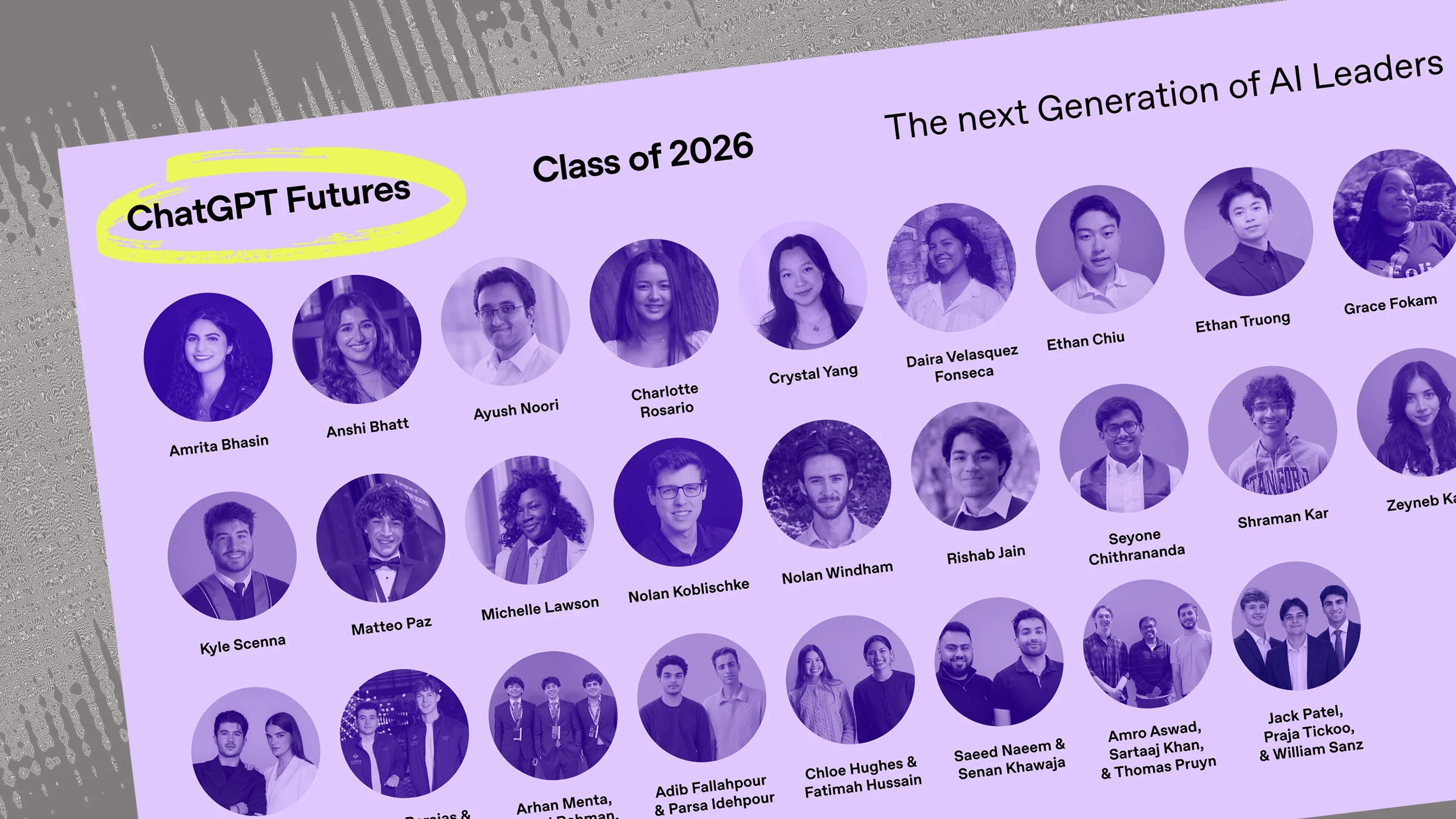
When Crystal Yang was in high school, she noticed a gap in the digital gaming world: the viral success of Wordle was inaccessible to her blind friend. This realization sparked a journey that began with research at Texas A&M University and evolved into the founding of Audemy, a nonprofit dedicated to creating audio-powered games for blind and visually impaired players. To date, the organization has developed more than 50 accessible games and is currently prototyping a tactile, audio-integrated gaming console that functions without an internet connection.
Yang’s work is a prime example of how generative artificial intelligence is being used not just for efficiency, but as a force multiplier for accessibility. From conducting user research and drafting formal papers to utilizing computer-aided design (CAD) tools for hardware prototyping, AI has allowed Yang to scale her impact far beyond the traditional capabilities of a student founder. “It’s been a very helpful tool throughout, allowing me to champion the issues I’m passionate about, as well as continue using it to multiply my capabilities,” Yang noted.
Yang is one of 26 students and young innovators who recently received a $10,000 grant through a program called ChatGPT Futures awarded by OpenAI. The initiative is designed to highlight how the next generation is leveraging AI to solve complex social and scientific problems. The recipients, aged 18 to 25 from the U.S. And Canada, were selected based on their ability to demonstrate agency and a bold vision for the future using AI tools.
The First ‘AI-Native’ University Cohort
The timing of these awards is significant. The graduating class of 2026 represents the first cohort of university students to have had access to ChatGPT throughout nearly their entire undergraduate experience, following the tool’s public debut in the fall of 2022 launched by OpenAI. This has created a unique demographic of students who view AI not as a disruptive novelty, but as a foundational component of their academic and professional toolkit.
Leah Belsky, the head of education at OpenAI, suggests that this access is fundamentally changing the nature of student ambition. According to Belsky, AI tools—including the conversational capabilities of ChatGPT and the specialized coding power of Codex—are enabling students to execute projects that previously required professional-grade resources or specialized institutional support. “AI is giving them confidence,” Belsky said. “It’s giving them agency, and it’s giving them a sense that they can actually learn and do things that they didn’t previously think were possible.”
This shift is particularly evident in how students are bypassing traditional barriers to entry in entrepreneurship and software development. Belsky noted that AI can expand access to experiences that were once reserved for those in elite hacker spaces or specialized entrepreneurial classes, effectively democratizing the ability to build apps, launch nonprofits, and develop complex software.
From Space Robotics to Neurological Breakthroughs
The breadth of the ChatGPT Futures projects underscores the versatility of current AI applications. While some honorees are focusing on the physical world—such as building space robots to handle routine astronaut tasks or developing Wi-Fi signal analysis to locate disaster survivors through debris—others are tackling systemic social issues. Projects include AI systems to help elderly populations avoid online scams and tools that allow street vendors in Latin America to track and manage their finances more effectively.

In the realm of medicine, the impact is potentially transformative. Ayush Noori, a Rhodes Scholar at the University of Oxford with degrees from Harvard University, developed a graph AI model named Proton. The system is designed to generate hypotheses regarding neurological diseases, a mission driven by Noori’s personal experience caring for his late grandmother who suffered from a rare neurodegenerative condition.
The Proton model has already demonstrated early success in identifying candidate drugs for Alzheimer’s disease and bipolar disorder. These findings were subsequently validated through an analysis of health records and experiments conducted on lab-grown brain tissue. Noori, who is trained in both computer science and neuroscience, stated that his mission is to develop AI systems that transform the understanding, diagnosis, and treatment of currently unsolved medical conditions.
Navigating the Tension in Modern Education
The celebration of these achievements comes amid a heated global debate over the role of AI in the classroom. Many educators and critics argue that an overreliance on generative AI may stifle critical thinking and hinder the learning process. There are widespread concerns that students might skip the “tedious” but essential iterative processes of learning—such as drafting, failing, and revising—in favor of instant, AI-generated outputs.

academic integrity remains a primary concern. Faculty members across K-12 and higher education have warned that the ease of AI-generated assignments can foster a culture of cheating and erode the trust between students and instructors. The challenge for modern institutions is to distinguish between “outsourcing” thought and “augmenting” capability.
However, the ChatGPT Futures program argues that the focus should shift toward “agency.” Belsky maintains that when used intentionally, AI does not replace the need for human collaboration or formal education. For example, while AI helped Crystal Yang with recruitment and onboarding, she still manages a human team of volunteer developers for Audemy. Similarly, Ayush Noori’s research on Proton is the result of extensive collaboration with other human scientists.
The goal, according to Belsky, is to work with the broader education ecosystem to create a future where universities intentionally unlock this type of agency for all students, rather than simply reacting to the technology with prohibition.
What Happens Next for the Honorees
The 26 grant recipients are scheduled to visit OpenAI in June to meet with company employees and present their projects. Unlike many corporate grants, the $10,000 awards come without restrictive mandates on how the funds are spent. OpenAI’s hope is that the students will use the resources to advance their specific projects while inspiring other young people to build similar AI-driven solutions.
As the class of 2026 nears graduation, their trajectory will likely serve as a case study for how the integration of AI into early higher education affects career readiness and innovation. Whether through the creation of accessible gaming consoles or the discovery of new medical treatments, these students are redefining the boundaries of what is possible for an individual creator in the age of artificial intelligence.
We will continue to monitor the progress of the ChatGPT Futures cohort as they move from the prototyping phase to real-world implementation. Share your thoughts in the comments below: Do you believe AI grants like these are the best way to foster innovation, or should the focus remain on traditional academic funding?