
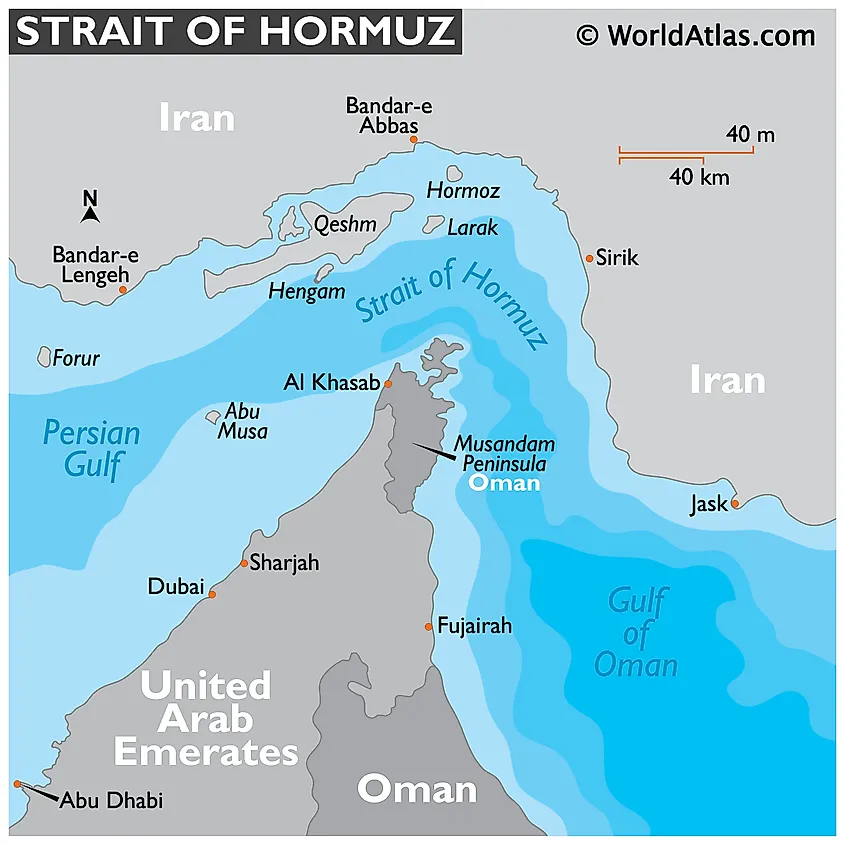
In the narrow, volatile waters of the Strait of Hormuz, the global economy depends on a precarious stability. Here, the Islamic Republic of Iran employs a naval strategy that is as fragmented as it is calculated, operating through two distinct naval forces with often overlapping jurisdictions but vastly different operational philosophies.
The tension between these two forces—the regular navy and the ideological guard—creates a complex security environment for international shipping and foreign militaries. At the heart of this asymmetric approach is a fleet of “midget submarines,” stealthy vessels designed not for ocean-crossing endurance, but for lethal ambush in the shallow depths of the Persian Gulf.
Understanding Iran’s two navies is essential to deciphering how Tehran intends to project power and deter adversaries in a region where a single miscalculation could trigger a global energy crisis. While the world often views Iran’s naval capacity as a monolith, the reality is a dual-track system designed to handle both traditional state-on-state conflict and unconventional maritime warfare.
The Strategic Divide: IRIN vs. IRGCN
Iran’s maritime defense is split between the Islamic Republic of Iran Navy (IRIN) and the Islamic Revolutionary Guard Corps Navy (IRGCN). This division is not merely administrative; it is a reflection of Tehran’s internal power dynamics and its divergent strategic goals.
The IRIN serves as the conventional, “blue-water” force. Its primary mission is to protect Iran’s interests in the Gulf of Oman and the broader Indian Ocean. The IRIN operates larger vessels and maintains a more traditional naval hierarchy, focusing on long-range patrols and diplomatic presence. Its most significant underwater assets are the Russian-made Kilo-class diesel-electric submarines, which provide the capability for deep-water operations and long-term surveillance US Naval Institute.
In contrast, the IRGCN is a “brown-water” or “green-water” force, focused almost exclusively on the Persian Gulf and the critical choke point of the Strait of Hormuz. The IRGCN does not seek to challenge the U.S. Navy in the open ocean; instead, it utilizes “swarm tactics,” employing hundreds of fast attack craft (FAC) and missile boats to overwhelm larger opponents through sheer numbers and agility.
This dual structure allows Iran to hedge its bets. While the IRIN manages the formal face of the state’s naval presence, the IRGCN provides the regime with a tool for asymmetric escalation, operating with a level of aggression and deniability that a traditional navy typically avoids.
The Ghadir-Class: Iran’s Underwater Ambushers
Within this asymmetric framework, the “midget submarine” has become a cornerstone of Iran’s deterrent strategy. The most prominent of these is the Ghadir-class submarine, a vessel specifically engineered for the unique geography of the Persian Gulf.
The Ghadir-class is based on the North Korean Yono-class design, optimized for shallow-water operations. Unlike the larger Kilo-class submarines, which are hindered by the shallow depths of the Gulf, the Ghadir is small enough to hide in the undulating seabed and coastal fringes. These vessels are designed to remain stationary and undetected on the ocean floor, acting as submerged mines that can launch torpedoes at passing warships or tankers.
The primary advantage of the midget submarine is its acoustic signature. Because of their size and the way they are operated in shallow, noisy coastal environments, they are notoriously difficult for traditional sonar systems to detect. For the IRGCN, the Ghadir is not a tool for naval dominance, but a tool for “anti-access/area denial” (A2/AD), ensuring that any foreign intervention in the Strait of Hormuz comes with a high and unpredictable risk.
The Fate of the Midget Submarine in a High-Tech Era
As naval technology evolves, the “fate” of these midget submarines is a subject of intense debate among defense analysts. The rise of unmanned underwater vehicles (UUVs) and advanced synthetic aperture sonar has significantly improved the ability of Western navies to map the seabed and detect small anomalies.
Critics argue that the Ghadir-class is becoming a legacy asset—a “boogeyman” that is more psychologically threatening than tactically effective. In a high-intensity conflict, modern anti-submarine warfare (ASW) assets could potentially neutralize these vessels before they can deploy their torpedoes. The limited endurance and crew comfort of midget submarines make them unsuitable for anything other than short-term ambush missions.
However, proponents of the asymmetric model argue that the “fate” of the midget submarine is secure because it does not need to be “better” than a nuclear attack submarine; it only needs to be “invisible enough” to create uncertainty. In the cluttered acoustic environment of the Persian Gulf—filled with commercial shipping, fishing boats, and varying salinity levels—the Ghadir remains a potent threat. The mere possibility of their presence forces opposing commanders to operate with extreme caution, slowing down response times and increasing the mental load on crews.
Global Implications for Maritime Trade
The existence of a dedicated, stealthy underwater force in the Strait of Hormuz has direct consequences for global energy security. A significant portion of the world’s liquefied natural gas (LNG) and crude oil passes through this narrow corridor. Any perceived increase in the capability or deployment of IRGCN midget submarines can lead to spikes in maritime insurance premiums and shipping costs.
The danger lies in the potential for “gray zone” warfare. Because midget submarines are difficult to track, an attack on a commercial vessel could be carried out with plausible deniability, leaving international investigators unable to definitively prove the origin of the strike. This ambiguity is a deliberate feature of the IRGCN’s strategy, designed to provoke responses while avoiding a full-scale conventional war.
For the international community, the challenge is not just technical but strategic. Countering a swarm of fast boats is one task; hunting for a handful of silent, seabed-dwelling midget submarines is another entirely. The ongoing arms race in the region is now shifting toward autonomous sensors and AI-driven detection systems aimed specifically at neutralizing these “invisible” threats.
Key Strategic Comparison
| Feature | IRIN (Regular Navy) | IRGCN (Revolutionary Guard) |
|---|---|---|
| Primary Domain | Blue Water (Indian Ocean/Gulf of Oman) | Brown/Green Water (Persian Gulf/Hormuz) |
| Core Philosophy | Conventional Naval Power | Asymmetric/Swarm Warfare |
| Submarine Assets | Kilo-class (Conventional Diesel-Electric) | Ghadir-class (Midget Submarines) |
| Primary Goal | State Projection & Diplomacy | Regime Survival & Area Denial |
As regional tensions fluctuate, the interplay between these two navies will continue to define the security architecture of the Middle East. The IRIN provides the state’s formal presence, while the IRGCN provides the regime’s “teeth,” with the midget submarine serving as the ultimate wild card in the deck.
The next critical checkpoint for observers will be the upcoming annual naval exercises conducted by both Iranian forces, which typically showcase new iterations of their underwater capabilities and test the integration of the two navies in joint operations.
Do you believe asymmetric naval strategies like Iran’s effectively deter larger superpowers, or are they obsolete in the age of AI and autonomous drones? Share your thoughts in the comments below.