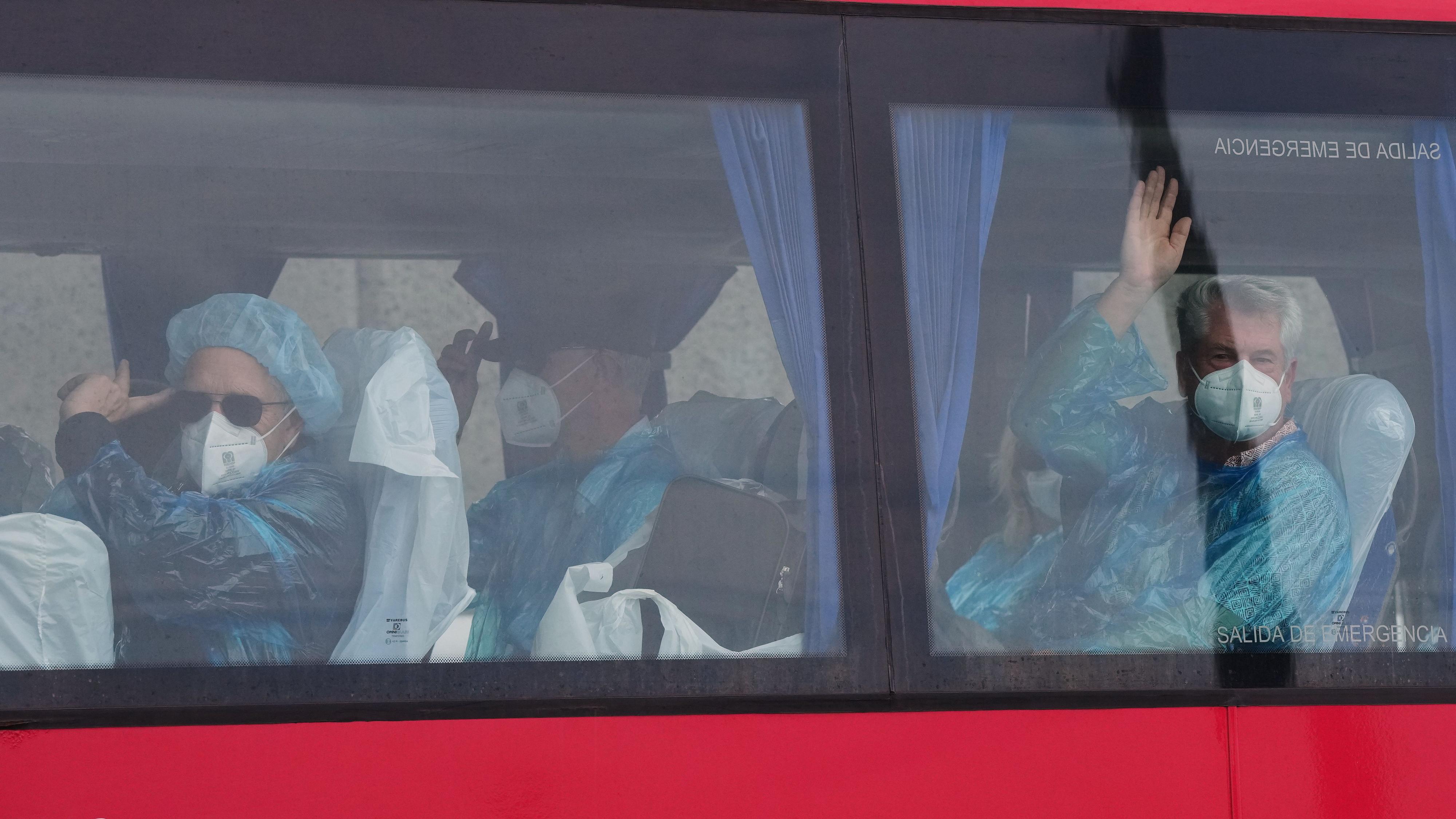
The repatriation of passengers from the MV Hondius, a cruise ship ravaged by a hantavirus outbreak, took a tense turn on Sunday when one of the evacuated French nationals reportedly began exhibiting symptoms of the virus while aboard a flight home. The incident occurred as international health authorities scrambled to conclude a high-stakes evacuation operation in the Canary Islands, marking a precarious end to a month-long maritime crisis.
The suspected case adds a layer of urgency to an operation that has already seen three deaths linked to the outbreak. While Spanish health officials have characterized the disembarkation process as a success, the emergence of new symptoms during transport highlights the volatility of the virus and the complexities of managing a public health emergency across international borders.
The MV Hondius had been anchored offshore from the port of Granadilla in Tenerife, surrounded by military police boats and under strict quarantine. The operation to remove passengers and crew involved rigorous medical screening and the use of specialized protective gear to prevent further transmission as individuals were moved from the vessel to the tarmac.
The Evacuation of the MV Hondius
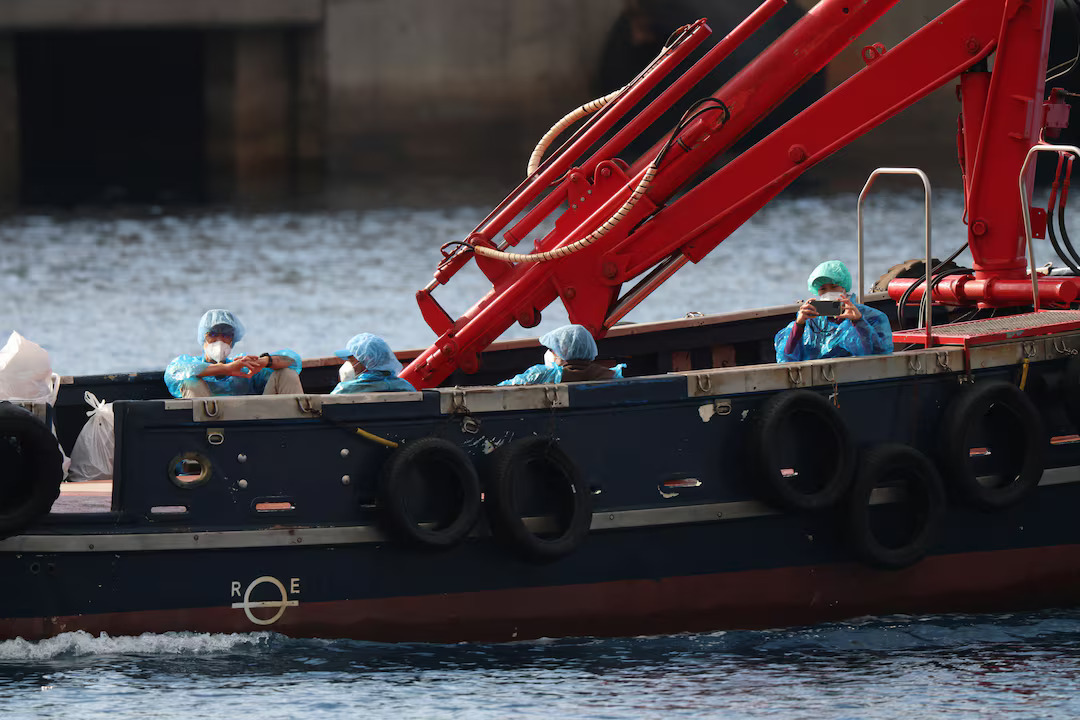
The evacuation effort reached its peak on Sunday morning, with medical teams boarding the vessel at approximately 07:00 local time to conduct final health assessments. Passengers, visible on the decks wearing medical face masks, were disembarked in minor groups under the supervision of military and health personnel. In a striking display of biohazard protocol, staff in white hazmat suits oversaw the process, hosing down evacuees on the airport tarmac to minimize the risk of environmental contamination before they boarded their respective flights.
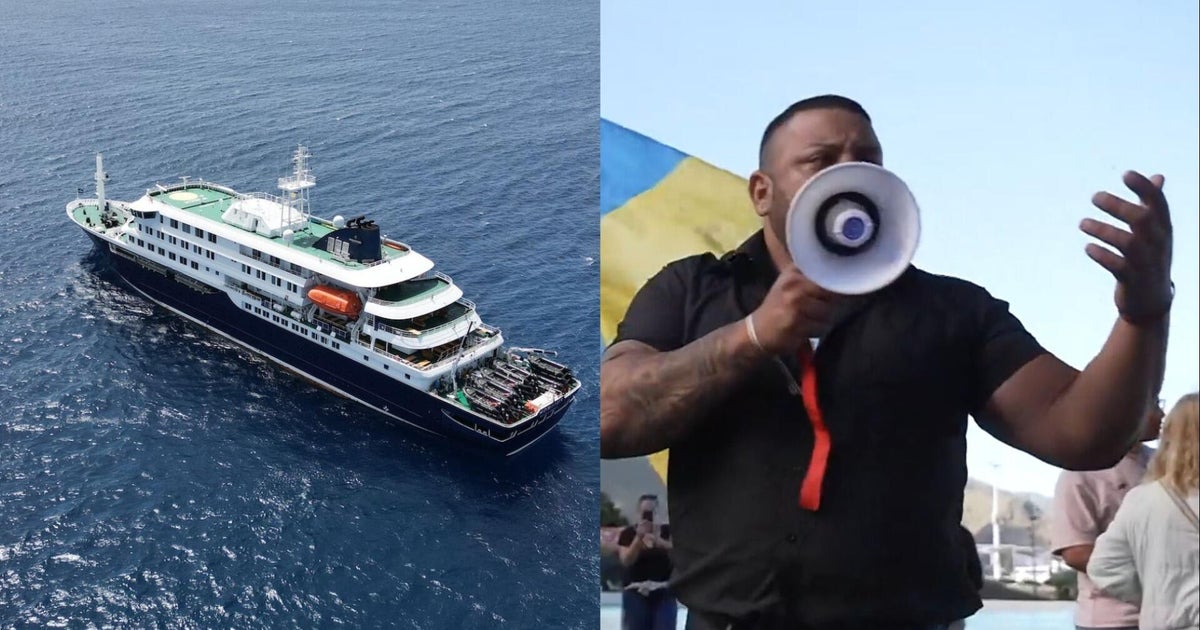
According to Spain’s health secretary, Javier Padilla, the operation aimed to clear the ship of the majority of its passengers. By the end of Sunday, more than 90 passengers were scheduled to be flown home from the Canary Islands. While the majority of the evacuation was executed according to plan, the report of a French national showing symptoms mid-flight has raised concerns about the incubation period and the efficacy of initial screenings.
The logistics of the repatriation were divided by nationality to ensure coordinated quarantine and care. Fourteen Spanish nationals were flown from Tenerife to Madrid, where they were placed under mandatory quarantine at a military hospital. Other groups were transported to Paris and Manchester to be managed by French and British health authorities, respectively. Flights for Turkish, Irish, and U.S. Citizens were also scheduled for Sunday, leaving fewer than 60 people remaining aboard the vessel.
A Deadly Outbreak at Sea
The crisis aboard the MV Hondius has been marked by tragedy, with three deaths reported during the outbreak. Two of those deaths were confirmed to be caused by hantavirus, a rare but severe respiratory disease. The ship had been dealing with the outbreak for approximately one month before the decision was made to conduct the mass evacuation in Tenerife.
Hantaviruses are a family of viruses typically spread to humans through contact with infected rodents. Transmission occurs primarily when people are exposed to the urine, droppings, or saliva of rodents, often through the inhalation of aerosolized particles. In the Western Hemisphere, the most common manifestation is hantavirus pulmonary syndrome (HPS), a severe respiratory disease that can lead to rapid lung failure and death if not treated aggressively.
The onset of HPS typically occurs one to eight weeks after exposure. Early symptoms often mimic the flu, including fatigue, fever, and muscle aches—particularly in the thighs, hips, and back. As the disease progresses, patients may experience shortness of breath and coughing, signaling the onset of the pulmonary phase. The emergence of symptoms in a passenger during the repatriation flight suggests that the window of incubation may have overlapped with the initial medical screenings conducted on the ship.
Government Response and Public Health Claims
The Spanish government has defended the handling of the crisis, with high-ranking officials expressing confidence in the operational execution. Mónica García, Spain’s Minister of Health, has described the operation as a success, asserting that the government effectively managed the risk despite encountering various oppositions during the planning and execution of the disembarkation.
The “unprecedented” nature of the operation was necessitated by the risk of the virus spreading from the ship into the local population of the Canary Islands. By anchoring the MV Hondius offshore and utilizing military police and specialized medical teams, authorities attempted to create a “sterile corridor” from the ship to the aircraft. However, the reported symptoms of the French passenger serve as a reminder that biological threats are rarely contained with absolute certainty.
Public health experts emphasize that while hantavirus is not typically known for person-to-person transmission—with the exception of the Andes virus—the concentration of potentially infected individuals in the confined space of a cruise ship and subsequent aircraft requires extreme caution. The mandatory quarantine of Spanish nationals in a military facility in Madrid reflects this precautionary approach.
What Which means for International Travel and Health
The MV Hondius incident underscores the vulnerability of the cruise industry to zoonotic outbreaks. Because ships operate as closed ecosystems, a single point of contamination—such as a rodent infestation in a galley or storage area—can lead to a cluster of infections that are challenging to track and contain until symptoms manifest.
For passengers and crew, the aftermath of the evacuation involves a period of intense monitoring. Those who have been exposed or are suspected of being infected are subject to strict quarantine protocols to ensure that any late-onset symptoms are treated in a controlled clinical environment. This is particularly critical for HPS, where early supportive care in an intensive care unit can significantly improve survival rates.
The coordination between Spain, France, the United Kingdom, and other involved nations highlights the necessity of the International Health Regulations (IHR), which govern how countries report and respond to public health emergencies of international concern. The rapid movement of patients to specialized facilities in their home countries was designed to relieve the burden on the Canary Islands’ local healthcare infrastructure while ensuring patients received the specific care required for hantavirus.
Key Takeaways: The MV Hondius Crisis
- Casualties: Three people have died during the outbreak, with two confirmed as hantavirus cases.
- Evacuation: Over 90 passengers were evacuated from Tenerife on Sunday using strict biohazard protocols.
- New Risk: One French national reportedly showed symptoms of the virus during their repatriation flight to Paris.
- Quarantine: Spanish nationals are currently under mandatory quarantine at a military hospital in Madrid.
- Transmission: Hantavirus is primarily rodent-borne, causing severe respiratory distress (HPS) in humans.
Next Steps and Monitoring
The focus now shifts to the clinical outcome of the suspected case on the French repatriation flight and the monitoring of the remaining passengers still aboard the MV Hondius. Health authorities in Paris and Madrid are expected to provide updates on the status of the quarantined individuals as the incubation window closes.
The next official checkpoint will be the release of the final health reports for the evacuated passengers, which will determine if the outbreak has been successfully contained or if further cases will emerge from the cohort.
World Today Journal will continue to monitor this developing story. We invite our readers to share their thoughts in the comments section below and share this report to keep others informed on global health security.