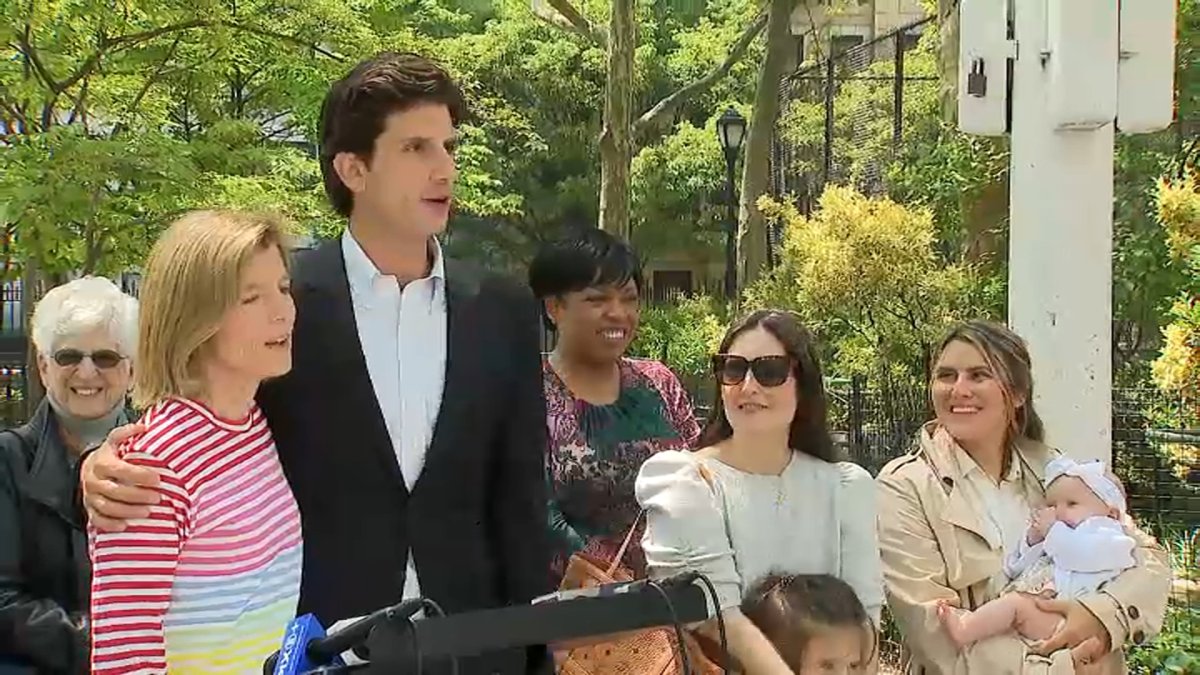
New York congressional candidate Jack Schlossberg is proposing a radical overhaul of the federal Child Tax Credit, calling for monthly payments instead of the current annual system and framing it as a “Monthly Moms Bonus” to provide immediate financial relief to families. The plan, announced on Mother’s Day alongside his mother Caroline Kennedy, would also expand the credit’s value and finance the changes by redirecting $1 billion in proposed White House ballroom funding currently under debate in Congress.
The proposal comes as New York’s 12th Congressional District prepares for its June primary election, where Schlossberg is seeking the Democratic nomination to replace retiring Representative Jerry Nadler after more than three decades in office. With at least five Republican candidates also vying for the seat, the race promises to be closely watched as both parties vie for influence in one of the most politically significant districts in the nation.
Schlossberg’s “Monthly Moms Bonus” would transform the existing Child Tax Credit—which currently provides up to $2,200 annually per qualifying child—into a monthly payment system. The campaign argues this change would better align with families’ monthly budgeting needs, providing more predictable and immediate financial support. According to the Internal Revenue Service’s most recent guidelines, the credit is currently structured as a lump-sum payment, creating significant timing challenges for families planning their finances.
Key Proposal Details: Monthly Payments and Funding Mechanism
At the heart of Schlossberg’s proposal is the conversion of the annual Child Tax Credit into 12 monthly installments. While the campaign has not yet released specific figures for the expanded monthly payment amount, primary sources confirm the existing annual credit covers up to $2,200 per qualifying child. The monthly distribution would represent approximately $183 per month per child under the current structure, though Schlossberg’s plan suggests potential increases.
The financing mechanism for this expansion is equally contentious. Schlossberg’s campaign proposes using $1 billion in funding that Senate Republicans have allocated for construction of a new White House State Ballroom—a project President Donald Trump has championed following a recent security incident at the White House Correspondents’ Dinner. The campaign argues that redirecting these funds would better serve American families than a presidential ballroom.
While the $1 billion figure for the ballroom project appears in multiple credible reports, it’s important to note that this funding has not yet been formally approved by Congress. The Senate Appropriations Committee has included the request in its draft budget, but final approval would require passage by both chambers and signature by the President. As of this writing, the legislation remains under consideration.
Political Context: A High-Stakes Primary Race
Schlossberg’s candidacy represents a significant opportunity for Democrats in New York’s 12th District, which includes Manhattan and parts of the Bronx. The district has been represented by Democrats for decades, with current Representative Jerry Nadler serving since 1992. Nadler’s retirement creates an open seat that could shape the political landscape of one of the most influential congressional districts in the country.
The primary election is scheduled for June 25, 2026, with the general election following in November. Schlossberg faces a crowded Democratic field with nearly a dozen other candidates vying for the nomination. His proposal for monthly child tax credit payments positions him as a progressive candidate focused on family economic issues, potentially appealing to the district’s diverse voter base.
On the Republican side, at least five candidates are also running for the seat, creating a competitive environment that could make the general election particularly interesting. The district’s political makeup—with significant liberal and moderate voters—makes it a potential battleground that could influence control of the House of Representatives.
Economic Impact: How Monthly Payments Could Change Family Finances
Schlossberg’s proposal to convert annual tax credits into monthly payments represents a significant shift in how federal financial assistance reaches families. Currently, the Child Tax Credit operates as a refundable credit, meaning families receive the full amount at tax time. This system creates timing challenges for many households, particularly those living paycheck to paycheck.

Economic research suggests that monthly disbursement of similar benefits could have several positive effects:
- Improved cash flow management for families
- Reduced reliance on high-interest borrowing between tax refunds
- More predictable budgeting for essential expenses like childcare and education
- Potential stimulation of local economies through more consistent spending patterns
However, the proposal also raises important questions about administrative feasibility. The IRS would need to implement systems capable of processing monthly payments for millions of eligible families, which could present significant logistical challenges. The agency would also need to address potential fraud prevention measures for a more frequent payment schedule.
Family Support: The Kennedy Connection
Schlossberg’s proposal gained particular attention due to his mother’s presence at the announcement. Caroline Kennedy, a prominent figure in her own right as the daughter of Jacqueline Kennedy Onassis and former U.S. Ambassador to Australia and Japan, lent her support to the initiative. Her involvement highlights the personal motivation behind the proposal, as Schlossberg framed it as a direct response to the financial challenges many families face.
:max_bytes(150000):strip_icc():focal(773x0:775x2)/caroline-kennedy-jack-schlossberg-4-df330ce6e4b24d839954953a32663755.jpg "Jack Schlossberg Proposes")
“I learned from my mother that there’s nothing more important than how we raise our children,” Kennedy stated during the event. “I’m proud that Jack has a plan to help mothers and children right away.” This personal connection to the issue adds emotional weight to the proposal, positioning it as both a policy solution and a family-focused initiative.
What Happens Next: The Path to Implementation
For Schlossberg’s proposal to become reality, several key steps would need to occur:
- The candidate would need to win the Democratic primary on June 25, 2026
- He would then face the Republican nominee in the November general election
- If elected, Schlossberg would need to introduce legislation in the 118th Congress
- The proposal would require approval from both the House Ways and Means Committee and the Senate Finance Committee
- Final passage would need support from both chambers of Congress and presidential signature
Given the current political climate, the proposal faces significant hurdles. The $1 billion funding mechanism—redirecting White House ballroom funds—would likely require bipartisan support, which may be difficult to secure given the contentious nature of current congressional negotiations. Any expansion of the Child Tax Credit would need to be offset by other revenue sources or spending cuts elsewhere in the budget.
Broader Implications: Child Tax Credit Reform in Context
Schlossberg’s proposal comes at a time when discussions about tax policy and social welfare programs remain prominent in Washington. The Child Tax Credit has been a subject of intense debate since its expansion during the COVID-19 pandemic, when monthly payments were implemented as part of the American Rescue Plan Act. Those monthly payments provided significant relief to families but were allowed to lapse after 2021.

Recent polling suggests strong public support for some form of child tax credit expansion, with many families citing financial strain as a major concern. A 2025 survey by the Pew Research Center found that 68% of parents with children under 18 supported some form of expanded child tax benefits, though opinions varied on the specific structure and funding mechanisms.
The political debate over child tax credits has become increasingly partisan, with Democrats generally favoring expansion and Republicans often advocating for more targeted approaches or offsetting the costs with other spending reductions. Schlossberg’s proposal represents an attempt to bridge this gap by offering a concrete, family-focused solution with a specific funding source.
Key Takeaways
- Jack Schlossberg proposes converting the annual Child Tax Credit into monthly payments called “Monthly Moms Bonus”
- The plan would be funded by redirecting $1 billion in proposed White House ballroom construction funds
- Current Child Tax Credit provides up to $2,200 annually per qualifying child, which would translate to approximately $183 monthly under current parameters
- Schlossberg is running in New York’s 12th Congressional District primary to replace retiring Representative Jerry Nadler
- The proposal faces significant political and administrative challenges but reflects growing public support for expanded child tax benefits
The next major checkpoint in this story will be the June 25, 2026 primary election, where voters will determine whether Schlossberg advances to the general election. Should he win the nomination and subsequently the general election, his proposal would likely face intense scrutiny in Congress during the 118th Congress session beginning in January 2027.
We welcome your thoughts on this proposal and its potential impact on families across America. Share your perspectives in the comments below or on our social media channels. For more updates on this developing story, continue following World Today Journal’s coverage of New York’s congressional races and federal tax policy debates.
Related reading
- Trump Media Sells Fast-Access Truth Social Data Feed to Wall Street Firms
- Breast Cancer Risk: Up to 95% of Young Women Missed by NHS Checks
- Gyeonggi Province Discusses Educational Systems to Expand Employment Support for Persons with Disabilities (archyde.com)
- Young Adults Living With Parents Show Steady Long-Term Trend in US Data (archyworldys.com)