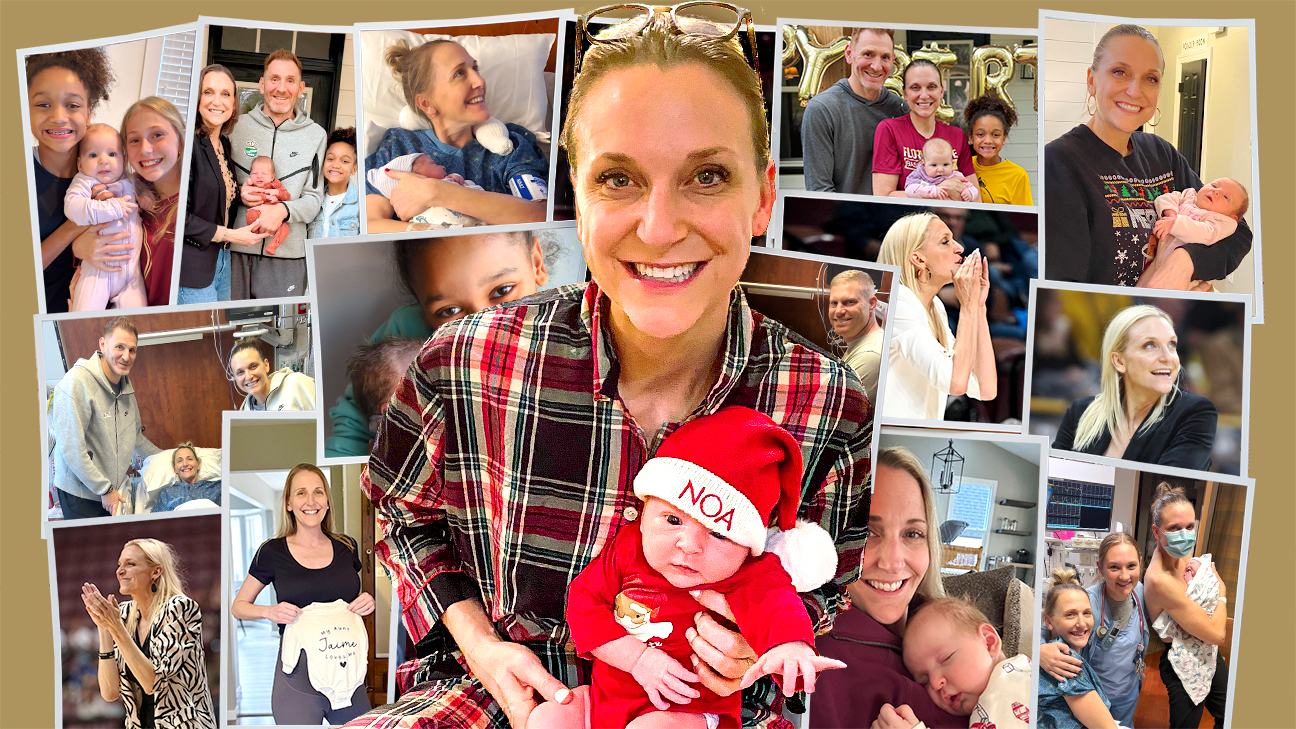
For Brooke Wyckoff, the world shifted on its axis when a diagnosis of breast cancer threatened not only her health but her vision of the future. As an assistant coach for the Florida State University women’s basketball team, Wyckoff is accustomed to the high-pressure environment of collegiate athletics, where resilience is a requirement. However, the battle against cancer presented a challenge that no playbook could prepare her for, leading to a period of profound uncertainty regarding her ability to grow her family.
The intersection of oncology and reproductive health is often a fraught territory. For many women, the aggressive treatments required to combat breast cancer—including chemotherapy and hormonal therapies—can lead to premature menopause or permanent infertility. For Wyckoff, the reality of her medical journey led her to a heartbreaking conclusion: she believed the possibility of having another child had been stripped away by the disease.
Yet, in a turn of events that felt more like a cinematic script than a medical reality, a surprising offer from a family member transformed her grief into hope. The journey from a cancer diagnosis to the birth of a child via a surrogate is a testament to the lengths family will go to support one another, highlighting a story of sacrifice and sisterly love that has resonated far beyond the sidelines of the court.
This story is not merely about the triumph of medicine or the luck of a phone call; it is an exploration of the emotional architecture of support systems. In the face of a life-altering illness, the bond between Wyckoff and her sister became the bridge to a future she thought was lost, illustrating the profound impact of gestational surrogacy when driven by familial devotion.
The Toll of a Breast Cancer Diagnosis
The fight against breast cancer is a grueling process that extends far beyond the physical removal of a tumor. For Brooke Wyckoff, the diagnosis brought an immediate shift in priorities, forcing her to navigate the complexities of treatment while maintaining her professional commitments at Florida State. While the primary goal of cancer treatment is survival, the secondary effects often leave lasting scars on a patient’s identity and biological capabilities.
:max_bytes(150000):strip_icc():focal(999x0:1001x2)/Brooke-Wyckoff-coaching-103123-tout-c7c9fb95d3304c6fb7dba212cb8038db.jpg "Brooke Wyckoff Breast Cancer Diagnosis")
The medications used to treat breast cancer often target rapidly dividing cells, which includes not only cancer cells but also the cells within the ovaries. This can result in ovarian failure or a significant decline in egg reserve. For a woman wishing to expand her family, this medical reality creates a secondary trauma—the loss of reproductive autonomy. Wyckoff had reached a point where she felt she had to surrender the dream of another child, accepting a new, unwanted version of her future.
The psychological weight of this loss is often compounded by the “survivor’s guilt” or the feeling that the body has failed, even as it successfully fights off a malignant disease. For Wyckoff, the battle was twofold: she had to defeat the cancer to save her life and she had to mourn the potential loss of motherhood as she had imagined it.
An Unexpected Offer of Sacrifice
The trajectory of Wyckoff’s life changed with a surprising communication from her sister. While Wyckoff had come to terms with the idea that she would not be able to carry another child, her sister saw a way to bridge that gap. The offer was simple yet monumental: her sister volunteered to serve as a gestational surrogate.
Gestational surrogacy differs from traditional surrogacy in that the surrogate has no genetic link to the child. The embryo is created using the intended parents’ genetic material (or donors) and then transferred to the surrogate’s uterus. This process requires an immense amount of trust, physical endurance, and emotional commitment from the surrogate, who agrees to undergo hormonal treatments and the physical rigors of pregnancy for the benefit of another.
For Wyckoff, the offer was a shock that felt surreal. The willingness of her sister to step into this role provided more than just a biological pathway to motherhood; it provided a profound sense of being seen and supported during the most vulnerable period of her life. The decision to move forward with surrogacy turned a narrative of loss into one of collaboration and hope.
Navigating the Path to Motherhood
The process of surrogacy is rarely a straight line. It involves a complex orchestration of medical screenings, legal contracts, and emotional preparation. For Wyckoff and her sister, this journey was layered with the added context of Wyckoff’s recovery from cancer. The medical team had to ensure that the process was safe and that the transition to motherhood would not compromise Wyckoff’s ongoing health monitoring.
Throughout the pregnancy, the bond between the sisters deepened. The act of carrying a child for a sibling is a unique form of intimacy and altruism. It requires the surrogate to navigate the physical changes of pregnancy while maintaining a clear emotional boundary, knowing that the child they are nurturing belongs to someone else. For Wyckoff, watching her sister carry her child was a constant reminder of the resilience of the human spirit and the power of family.
The culmination of this journey was the birth of a child, an event that Wyckoff had previously written off as an impossibility. The arrival of the baby served as a definitive victory—not just over the cancer that had tried to claim her health, but over the despair that had tried to claim her future.
The Impact on the Florida State Community
In the world of collegiate sports, coaches are often viewed as the pillars of strength for their athletes. They are the ones providing the motivation, the strategy, and the emotional support. However, Brooke Wyckoff’s transparency about her health struggle and her subsequent journey to motherhood has flipped that dynamic, allowing her athletes and colleagues at Florida State Women’s Basketball to see her vulnerability and strength in a different light.
By sharing her story, Wyckoff has provided a blueprint for resilience. Her experience highlights the importance of support networks—not just in the context of family, but within a professional community. The support she received from the FSU community during her treatment and the celebration of her new child underscore the human element that exists beneath the competitive drive of NCAA athletics.
her story brings much-needed attention to the reproductive challenges faced by cancer survivors. Many women battle these issues in silence, unaware of the options available to them or the possibility of gestational surrogacy. Wyckoff’s journey serves as a beacon of hope for others navigating the intersection of oncology and infertility, proving that there are often alternative paths to the goals they cherish most.
Key Takeaways from Brooke Wyckoff’s Journey
- Medical Resilience: Breast cancer treatments can severely impact fertility, but they do not always eliminate the possibility of motherhood.
- The Power of Gestational Surrogacy: Gestational surrogacy allows intended parents to have genetically related children even when they cannot carry a pregnancy.
- Familial Support: The role of Wyckoff’s sister demonstrates how altruistic surrogacy can provide emotional and biological healing for cancer survivors.
- Visibility in Sports: Sharing personal health struggles in a high-profile coaching role helps humanize athletes and staff, fostering a culture of empathy and support.
Understanding the Broader Context: Cancer and Fertility
The experience of Brooke Wyckoff is a specific instance of a broader medical challenge. According to health guidelines and oncology research, the impact of cancer treatment on fertility varies depending on the age of the patient, the type of cancer, and the specific medications used. For those diagnosed with breast cancer, the use of chemotherapy and certain endocrine therapies (like aromatase inhibitors) can induce ovarian failure.

Medical professionals now increasingly recommend “oncofertility” consultations. Oncofertility is a field that combines oncology and reproductive endocrinology to help patients preserve their fertility before beginning cancer treatment. This can include egg freezing, embryo freezing, or ovarian tissue cryopreservation. While these options are not always available or viable for every patient, they represent a growing shift toward treating the “whole patient,” including their future desires for family planning.
For those who cannot preserve their fertility before treatment or who find that their reserves are depleted, surrogacy remains a viable, albeit complex, option. The emotional toll of this path is significant, but as seen in Wyckoff’s case, the result can be a profound restoration of hope and a strengthening of family bonds.
As Brooke Wyckoff continues her career with the Florida State Seminoles, her story stands as a reminder that the most significant victories often happen off the court. The birth of her child is a testament to the fact that while cancer can change a life, it does not have to define the limits of that life’s possibilities.
The next chapter for Coach Wyckoff involves balancing the demands of a high-level coaching career with the joys and challenges of motherhood, all while remaining a vigilant survivor of breast cancer. Her journey continues to inspire both her players and the wider sports community.
Do you have a story of resilience or a personal experience with surrogacy and family support? We invite you to share your thoughts and experiences in the comments below.
Related reading