
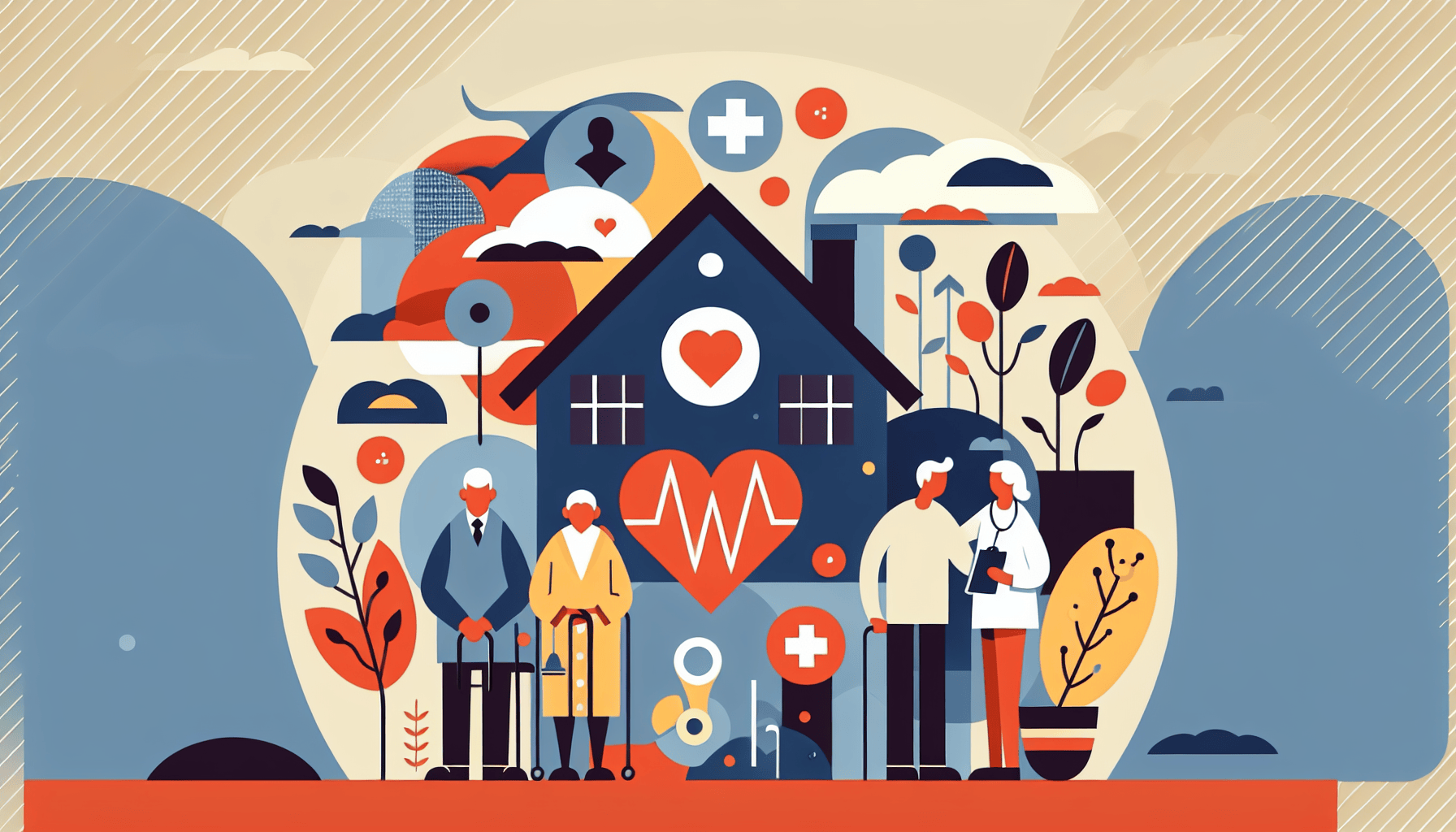
For decades, the hallmark of acute medical crisis has been the hospital admission—the sterile corridors, the constant hum of monitors, and the separation from family. However, a paradigm shift is underway as healthcare systems increasingly move the “hospital” to the patient. This transition toward home-based acute care is not merely about comfort. it is becoming a clinically viable strategy to improve patient survival and reduce the burden on overstretched emergency departments.
New research published in JAMA Network Open suggests that hospital-at-home clinical outcomes can be significantly better than traditional inpatient care in several key metrics. By delivering hospital-level care in a patient’s own residence, supported by remote monitoring and clinician visits, providers are seeing a marked decrease in mortality and a reduction in the need for emergency interventions following discharge.
As a physician and journalist, I have followed the evolution of medical innovation with a particular interest in how we can make acute care more humane and accessible. The findings of this study provide a rigorous evidence base for the “Hospital-at-Home” (HaH) model, demonstrating that for appropriately selected patients, the home environment may actually be safer than the traditional hospital ward.
The study analyzed data from 15,871 Medicare fee-for-service beneficiaries who were treated at hospitals participating in the hospital-at-home waiver program between January 1, 2021, and December 1, 2022. Of these, 4,174 patients received care via the HaH model, while 11,697 were admitted to traditional inpatient units. The results indicate a clear advantage in survival and short-term stability for those treated at home.
Significant Reductions in Mortality and ICU Escalation
One of the most striking revelations of the research is the disparity in in-hospital mortality rates. Patients receiving acute care at home showed significantly lower odds of death compared to those in traditional settings. Specifically, the mortality rate for hospital-at-home admissions was just 0.4%, whereas the rate for traditional inpatient admissions was 3.6%, according to the JAMA Network Open study.
This survival advantage is complemented by a reduction in the need for intensive care. The data shows that patients in the HaH program had lower odds of ICU escalation, with only 3.5% requiring a transfer to the ICU, compared to 7.9% of those admitted to traditional inpatient units. This suggests that the HaH model, when applied to a clinically appropriate patient population, effectively manages acute illness without the frequent need for high-intensity facility escalation.
the model appears to reduce the “revolving door” effect of emergency room visits immediately following a health crisis. Emergency department (ED) utilization within 30 days of discharge was lower for the home-based group, with 8.8% of HaH patients visiting the ED, compared to 10% of traditional inpatient admissions.
The Readmission Paradox
Despite the gains in mortality and ED utilization, the research highlights a critical area where the HaH model has yet to outperform traditional care: hospital readmissions. The study found no significant difference in the rates at which patients were readmitted to the hospital within 30 days of their initial episode.
Readmission rates among hospital-at-home patients stood at 11.7%, while the rate for traditional inpatient admissions was 11%. This negligible difference suggests that while the HaH model is safer during the acute phase and reduces immediate ED reliance, it does not inherently prevent the recurrence of the underlying condition or the need for subsequent hospitalization more effectively than traditional care.
From a public health perspective, this finding underscores that the “where” of the care—home versus hospital—may not be the primary driver of readmission. Instead, readmission rates are likely influenced by long-term recovery support, the complexity of the patient’s comorbidities, and the quality of the transition to outpatient primary care.
Economic Impact and Systemic Implementation
Beyond clinical outcomes, the HaH model offers a potential solution to the rising costs of acute care. The researchers observed modest reductions in total 30-day health care spend for patients treated at home. While the cost savings were not transformative, they indicate that the model can deliver high-quality, safe care without increasing the financial burden on the healthcare system.
However, the adoption of this model remains uneven across the United States. The study noted that HaH admissions were highly concentrated within a subset of facilities, particularly in the US Northeast and South. This geographic disparity points to a significant challenge in achieving equitable access to medical innovation. Many rural facilities have yet to participate, often due to the logistical hurdles of implementing remote patient monitoring and mobile clinician teams.
The uncertainty surrounding the program was previously exacerbated by a series of short-term extensions to the hospital-at-home waiver. Earlier this year, however, the waiver program received a five-year extension, providing hospitals with the regulatory stability needed to invest in the infrastructure required for home-based acute care.
What This Means for the Future of Acute Care
The implications of these findings are profound. The ability to maintain similar or better short-term outcomes among appropriately selected patients suggests that the traditional hospital stay is not always the gold standard for acute recovery. By reducing the risk of hospital-acquired infections and the psychological stress of institutionalization, the HaH model aligns with a more patient-centric approach to medicine.
To broaden the benefits of this model, the healthcare industry must now address the “implementation gap.” This includes:
- Expanding Infrastructure: Investing in high-speed connectivity and remote monitoring tools for rural and underserved areas.
- Refining Patient Selection: Developing clearer clinical guidelines to ensure that only “operationally appropriate” patients are enrolled in HaH to maintain the low mortality rates observed in the study.
- Integrating Post-Acute Care: Enhancing the link between HaH discharge and primary care to address the stubborn readmission rates.
As we move toward a more decentralized healthcare system, the goal is not to eliminate hospitals, but to reserve them for the most severe cases while providing high-acuity care in the environment where patients feel most secure: their own homes.
The next major milestone for the program will be the ongoing evaluation of the five-year waiver extension, which will allow researchers to determine if these clinical benefits can be scaled consistently across diverse health systems and demographics.
Do you believe the home is a safe place for acute medical care, or do the risks of being away from a full hospital staff outweigh the benefits? We welcome your thoughts and experiences in the comments below.
Worth a look