
The Swiss Market Index (SMI) opened the trading session on Monday, May 11, 2026, characterized by a striking paradox: a broad base of advancing stocks countered by significant losses among the index’s heaviest weights. While early indicators suggested a positive start for the majority of the blue-chip components, the overall index struggled to find a definitive direction as institutional selling hit several of Switzerland’s most influential corporations.
Market participants observed a fragmented landscape where the optimism of smaller SMI constituents was effectively neutralized by downturns in the healthcare, consumer goods, and financial sectors. This tug-of-war has left the benchmark index oscillating, reflecting a broader atmosphere of global uncertainty and a sensitivity to geopolitical commentary emerging from the United States.
For investors, the day’s volatility underscores the inherent structure of the Swiss Market Index, where a handful of mega-cap companies wield disproportionate influence over the total index movement. When pillars like Nestlé and Roche face headwinds, it can overshadow a bullish trend across nearly the entire rest of the board.
The Heavyweight Drag: Nestlé and Roche
The primary anchor on the SMI’s performance today has been the weakness in two of its most critical components: Nestlé and Roche. As the index’s heavyweights, any downward movement in these shares creates a significant gravitational pull on the overall market average.
Nestlé, a global leader in nutrition, health, and wellness, saw its shares trend lower, contributing to the index’s lack of momentum. Simultaneously, Roche, a cornerstone of the Swiss pharmaceutical and diagnostics sector, also faced selling pressure. The combined weakness of these two entities has largely negated the gains seen in other sectors, preventing the SMI from capitalizing on a positive pre-market sentiment.
This divergence—where the majority of stocks rise while the index remains flat or declines—often signals a “top-heavy” market correction. In such scenarios, investors may be rotating out of traditional safe-haven giants and into mid-cap opportunities, or reacting to sector-specific concerns that affect the pharmaceutical and consumer staples industries specifically.
Financials and Biotech Under Pressure: UBS and Lonza
The downward trend extended beyond healthcare and consumer goods, reaching into the financial and biotechnology sectors. UBS and Lonza both recorded losses during the session, further complicating the SMI’s attempt to establish a bullish trajectory.
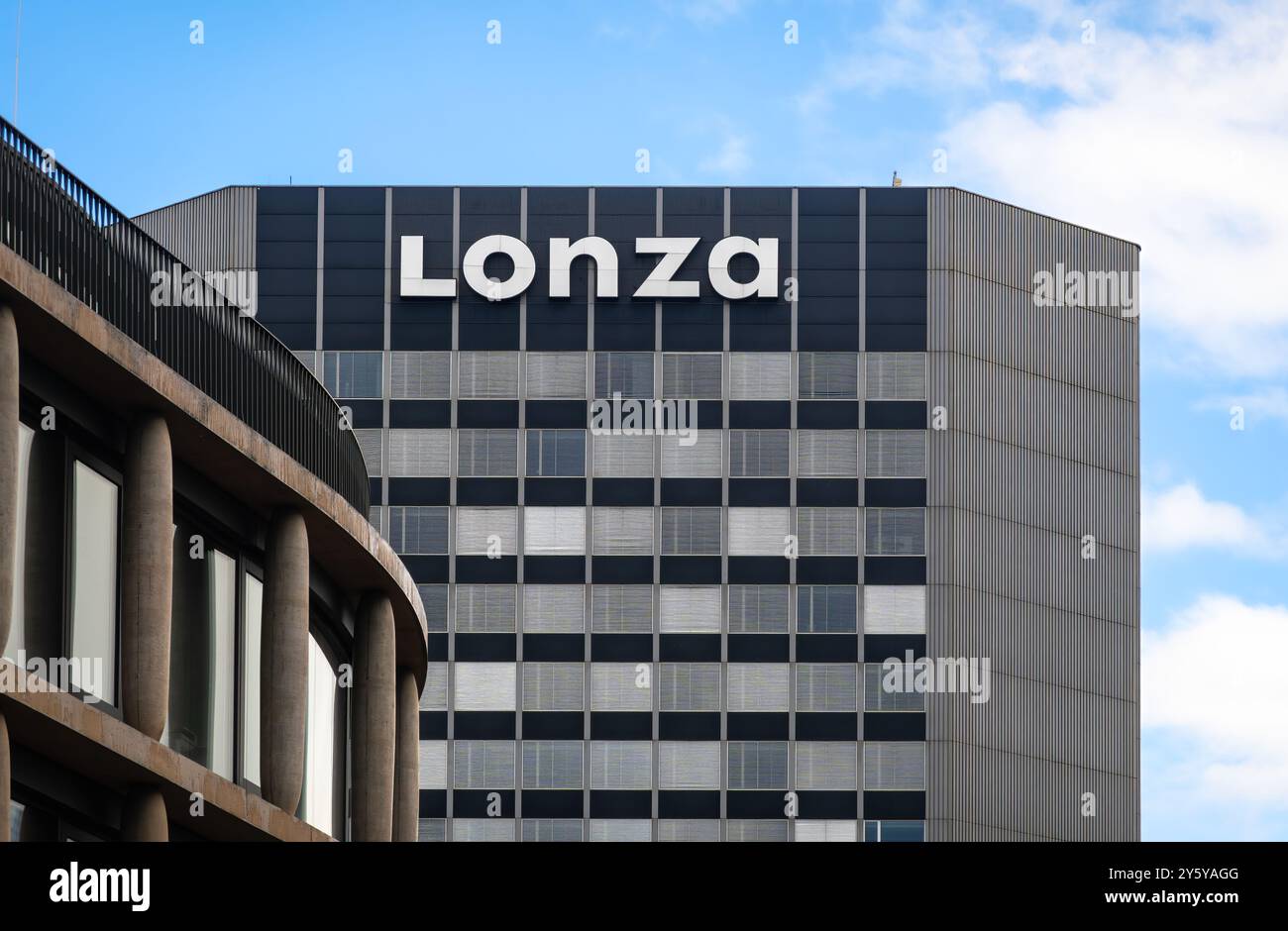
The decline in UBS shares reflects the ongoing volatility within the global banking sector, where Swiss financial institutions remain highly sensitive to international regulatory shifts and macroeconomic instability. Similarly, Lonza, a key player in the contract development and manufacturing organization (CDMO) space, saw its valuation dip, adding to the losses in the biotech segment.
The simultaneous decline of UBS and Lonza suggests that the day’s selling is not limited to a single industry but is instead a broader re-evaluation of risk among the SMI’s most capitalized firms. When these high-value stocks lose ground in tandem, it typically indicates a cautious approach from institutional fund managers who may be hedging their positions against anticipated global volatility.
Global Headwinds: The Nikkei and Currency Shifts
The instability in Zurich is not occurring in a vacuum. Swiss markets are reacting to a wave of volatility originating in Asia and the United States. Specifically, the Nikkei 225 in Japan has come under significant pressure following recent comments from Donald Trump, creating a ripple effect across global equity markets.

The “Trump effect” often introduces uncertainty regarding trade tariffs and diplomatic relations, which historically triggers volatility in export-heavy economies like Japan and Switzerland. The resulting nervousness in Tokyo has contributed to a risk-off sentiment that is now permeating European trading floors.
Adding another layer of complexity is the movement in the foreign exchange markets. The Swiss Franc has shown signs of weakening against both the U.S. Dollar and the Euro. While a weaker Franc can theoretically benefit Swiss exporters by making their goods more competitive abroad, the immediate market reaction has been one of uncertainty rather than optimism.
the digital asset market has mirrored this cautious tone, with Bitcoin recording losses. The synchronized dip in both traditional equities and cryptocurrencies suggests a general retreat from risk assets as investors wait for clearer signals from the U.S. Political and economic landscape.
What So for the Global Investor
The current state of the SMI highlights a critical lesson in market analysis: the difference between “market breadth” and “index value.” On May 11, 2026, the market breadth was technically positive—with reports indicating that as many as 19 out of 20 SMI titles were in the green during pre-market trading. However, the index value remained stagnant or negative because the few companies that fell carried the most weight.

For the global investor, this situation emphasizes the importance of looking beyond the headline index number. While the SMI may appear “directionless,” the underlying strength in the majority of its components suggests that the broader Swiss economy remains resilient, even as its largest corporations navigate specific headwinds.
The key factors to monitor in the coming days include:
- U.S. Political Rhetoric: Further comments regarding trade or tariffs that could destabilize the Nikkei and, by extension, European markets.
- Currency Stabilization: Whether the Swiss Franc continues to retreat or regains its status as a primary safe haven.
- Heavyweight Recovery: Whether Nestlé and Roche can stabilize their share prices to allow the broader market’s positive momentum to lift the index.
As we move through the trading week, the focus will remain on whether the SMI can break out of its current range or if the drag from its largest components will lead to a more sustained correction.
The next confirmed checkpoint for market participants will be the official closing reports and the release of updated analyst ratings for the SMI’s top 20 constituents, which will provide further clarity on whether today’s losses are transitory or indicative of a longer-term trend.
We invite our readers to share their insights on the current Swiss market volatility in the comments below. How are you adjusting your portfolio in response to global geopolitical shifts?
- Lapin Police to Conduct Searches for 2006 Missing Men This Summer/Fall: Possible Ongoing Investigations
- 2026 Hybrid & Electric Car Guide: Best MPV Comparisons, Powertrain Types & Choices
- Global Fidget Market Boom Driven by NeeDoh Squishy Toys (time.news)
- China’s AI Surge: Market Growth, Tech Distillation, and US Tension (archynewsy.com)