
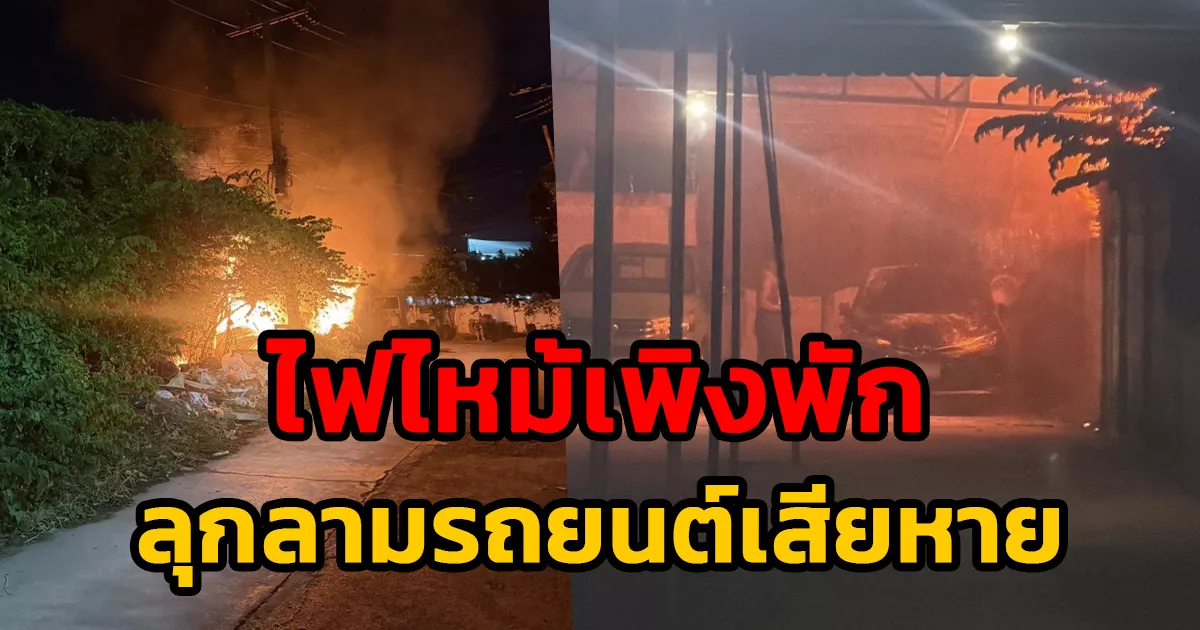
A residential fire broke out on the evening of May 11, 2026, resulting in the total destruction of a wooden shelter in Bangkok’s Bang Khun Thian district. The incident, which occurred in Soi Anamai Ngam Charoen 21, highlighted the ongoing vulnerabilities associated with informal housing structures in densely populated urban corridors.
Emergency services were alerted to the blaze at 19:36, prompting a rapid response from the Fire and Rescue Department. The fire originated within a single-story wooden shack topped with a zinc roof, a structure situated directly adjacent to a factory fence. Due to the highly flammable nature of the building materials, the fire spread quickly, consuming the entire residence.
While the primary structure was completely lost, the blaze also extended to the neighboring property. The fire reached the fence of the adjacent factory, causing damage to the roof of a parking area. One vehicle parked beneath the structure sustained minor damage as molten material from the parking roof dripped onto the car. Firefighters successfully contained the blaze using water, preventing a wider escalation into the industrial facility.
From a public health and safety perspective, this incident underscores the critical risks inherent in “shack-style” or informal dwellings. As a physician and health journalist, I have seen how the combination of combustible building materials—such as aged wood and corrugated zinc—and proximity to industrial or commercial zones can create hazardous environments. When these structures ignite, the speed of combustion often outpaces the ability of residents to evacuate safely and the resulting smoke can pose immediate respiratory threats to the surrounding community.
Incident Details and Damage Assessment
The fire was centered at house number 35 in Soi Anamai Ngam Charoen 21, located on Anamai Ngam Charoen Road in the Tha Kham sub-district of Bang Khun Thian. According to official reports from the Fire and Rescue Department, the total area affected by the fire was approximately 20 square meters.

The sequence of events indicates that the fire began inside the shelter and rapidly intensified. The structure’s composition—primarily wood with a zinc roof—acted as an accelerant, leading to the total loss of the dwelling. The proximity of the shack to the factory fence allowed the heat and flames to transfer to the factory’s parking infrastructure, though the damage to the vehicle was limited to surface impact from melting roof debris.
Preliminary investigations into the cause of the fire have remained inconclusive. Authorities stated that a definitive cause cannot be determined at this time because the intensity of the blaze completely destroyed the origin point and the interior of the shelter, leaving little forensic evidence for investigators to analyze.
The Public Health Risk of Informal Urban Housing
This event is not merely a property loss but a reflection of a broader urban health challenge. In many metropolitan areas, including Bangkok, informal housing often lacks the fire-rated materials and safety clearances required by modern building codes. The use of zinc roofing, while cost-effective, can lead to extreme internal temperatures during a fire and may contribute to structural collapse more rapidly than reinforced materials.
Beyond the immediate danger of flames, the environmental health impact of such fires is significant. The combustion of treated wood, plastics, and industrial roofing materials releases a cocktail of toxins into the air. For residents in the Tha Kham area, particularly those with pre-existing respiratory conditions such as asthma or COPD, the smoke from a 20-square-meter fire can trigger acute exacerbations, necessitating medical intervention.
the placement of residential shelters against factory fences creates a “bridge” for fire to move from a residential setting into an industrial one. Had the fire spread further into the factory, the risk would have escalated from a localized residential fire to a potential industrial disaster, depending on the materials stored within the facility.
Fire Prevention and Community Safety
To mitigate the risk of similar occurrences, urban planners and public health officials emphasize the importance of “defensible space”—a buffer zone between flammable structures and other buildings or fences. In the case of Soi Anamai Ngam Charoen 21, the lack of separation between the wooden shack and the factory fence played a direct role in the spread of the fire to the parking area.

For those living in similar conditions, basic fire safety measures can be life-saving. These include:
- Electrical Audits: Ensuring that wiring in wooden structures is not overloaded or frayed, as electrical faults are a leading cause of fires in informal housing.
- Clearance Zones: Maintaining a gap between the home and adjacent fences or walls to prevent fire leapfrog.
- Accessible Extinguishers: Keeping a basic fire extinguisher or a pressurized water source nearby to tackle small flames before they reach the roof.
The speed with which the Fire and Rescue Department arrived and utilized water to quench the flames prevented a much larger tragedy. However, the total loss of the home serves as a stark reminder that in structures made of wood and zinc, there is often no middle ground between a small fire and total destruction.
As the investigation continues, the focus remains on the recovery of the affected resident and the assessment of the factory’s structural integrity near the site of the blaze. Official updates regarding the cause of the fire will be provided by the Bang Khun Thian district authorities as more evidence becomes available.
We encourage readers to share this report to raise awareness about urban fire safety and to comment below with any questions regarding home safety in high-density areas.