
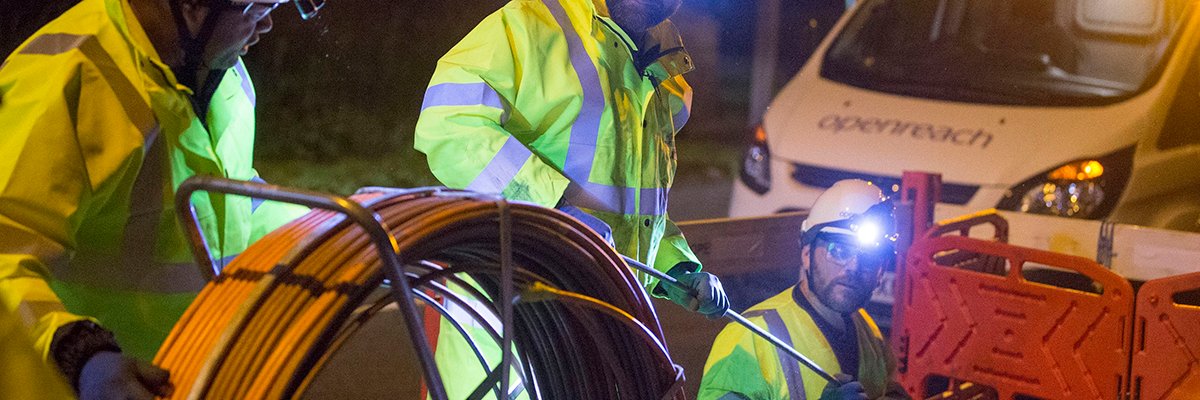
The digital landscape in Essex is poised for a significant transformation as thousands of homes and businesses prepare to transition from aging infrastructure to ultrafast connectivity. As part of a broader national effort to eliminate “blackspots,” a new phase of the gigabit broadband rollout in Essex will bring high-speed, full-fibre services to more than 9,500 premises that have historically struggled with slow and unreliable internet connections.
This expansion, delivered by Openreach, targets both urban areas and the countryside, ensuring that the benefits of high-capacity internet are not limited to major city centers. By replacing older copper lines with fibre-optic cables, the initiative aims to provide the stability and speed required for modern digital demands, from high-definition video conferencing to seamless cloud computing.
The project is a key component of Project Gigabit, a government-led programme designed to reach the “hard-to-reach” communities that are often deemed too expensive for commercial providers to service. By bridging this gap, the UK government intends to reduce regional disparities and ensure that rural economies can compete on a global scale.
Closing the Digital Divide in Essex
For many residents and business owners in Essex, the lack of reliable internet has been more than a mere inconvenience; it has been a barrier to economic growth. The current rollout specifically targets full-fibre blackspots—areas where the existing infrastructure is incapable of supporting gigabit speeds. The move to full-fibre (FTTP) means that the fibre optic cable runs directly into the premises, removing the bottlenecks associated with older hybrid systems.
The inclusion of both urban and rural premises in this phase highlights a strategic shift toward “levelling up” the region. In rural Essex, where geography often complicates the laying of cables, this investment is critical for enabling remote working and attracting new enterprises that require robust digital infrastructure to operate. For urban premises, the upgrade removes the congestion often found in densely populated areas, providing a more consistent experience during peak usage hours.
The deployment is not merely about speed; it is about reliability. Fibre optics are less susceptible to electromagnetic interference and weather-related degradation than traditional copper wiring, meaning fewer outages and more consistent throughput for the 9,500+ premises now entering the pipeline for upgrades.
The Architecture and Goals of Project Gigabit
Project Gigabit is a massive undertaking with a total budget of £5 billion, aimed at ensuring the UK’s network is fit for the future. The programme is managed by Building Digital UK (BDUK) and operates on a model that complements commercial activity. When private companies find it commercially unviable to build in a specific area, the government steps in to fund the infrastructure, which is then opened up to multiple service providers to encourage competition and lower costs for the consumer.
The government has set ambitious benchmarks for the nation’s connectivity. The original objective was to ensure that 85% of the UK had gigabit-capable connectivity by the end of 2025. Looking further ahead, the government expects 99% of all premises to have access to a gigabit-capable connection by 2032 via the official Project Gigabit guidance.
To accelerate this progress, recent strategic investments have seen up to £800 million allocated specifically to modernise broadband infrastructure across rural areas of England, Scotland and Wales. This funding is designed to push the rollout into the most challenging terrains, ensuring that no community is left behind in the transition to a digital-first economy.
Key Takeaways: The Essex Broadband Expansion
- Scope: More than 9,500 homes and businesses in Essex are scheduled for upgrades.
- Technology: Transition to full-fibre (FTTP) to eliminate “blackspots” in urban and rural areas.
- Funding: Part of the broader £5 billion Project Gigabit initiative.
- Provider: Infrastructure is being deployed by Openreach.
- National Target: The UK aims for 99% gigabit-capable coverage by 2032.
Economic Implications of Ultrafast Connectivity
From a macroeconomic perspective, the transition to gigabit-capable connectivity is viewed as a catalyst for productivity. High-growth sectors, particularly in technology and the creative industries, rely heavily on the ability to move massive datasets quickly. For a creative studio in Essex, for example, the ability to upload 4K video files to a client in seconds rather than hours can be the difference between winning or losing a contract.

the rise of hybrid work has fundamentally changed the requirements for residential internet. Bandwidth “battles” within households—where multiple users struggle to stream, game, and work simultaneously—are mitigated by the massive capacity of fibre optics. This shift allows professionals to live in rural Essex while maintaining the same productivity levels as those based in London’s tech hubs, potentially easing the housing pressure in the capital.
Beyond individual productivity, the upgrade supports critical public services. Schools, hospitals, and local government offices in the region will benefit from more stable connections, enabling the adoption of telemedicine, digital classrooms, and more efficient e-government services for taxpayers.
What Happens Next?
As Openreach begins the physical rollout in the identified Essex premises, residents and business owners can expect a phased installation process. This typically involves the laying of new fibre cables from the local exchange or cabinet directly into the property, followed by the installation of an Optical Network Terminal (ONT) inside the building.
The success of the Essex rollout will serve as a blueprint for other regions currently identified as blackspots. The government continues to monitor the performance of BDUK and its contractors through quarterly updates, ensuring that the procurement and delivery of contracts remain on schedule to meet the 2030 and 2032 deadlines.
The next confirmed milestone for the wider programme will be the release of the next Project Gigabit quarterly update, which will provide detailed metrics on the number of premises passed and the percentage of the UK that has now achieved gigabit-capable status.
Do you live or work in an area currently lacking high-speed internet? Share your experience with the digital divide in the comments below or let us know if your premises are among those being upgraded.