
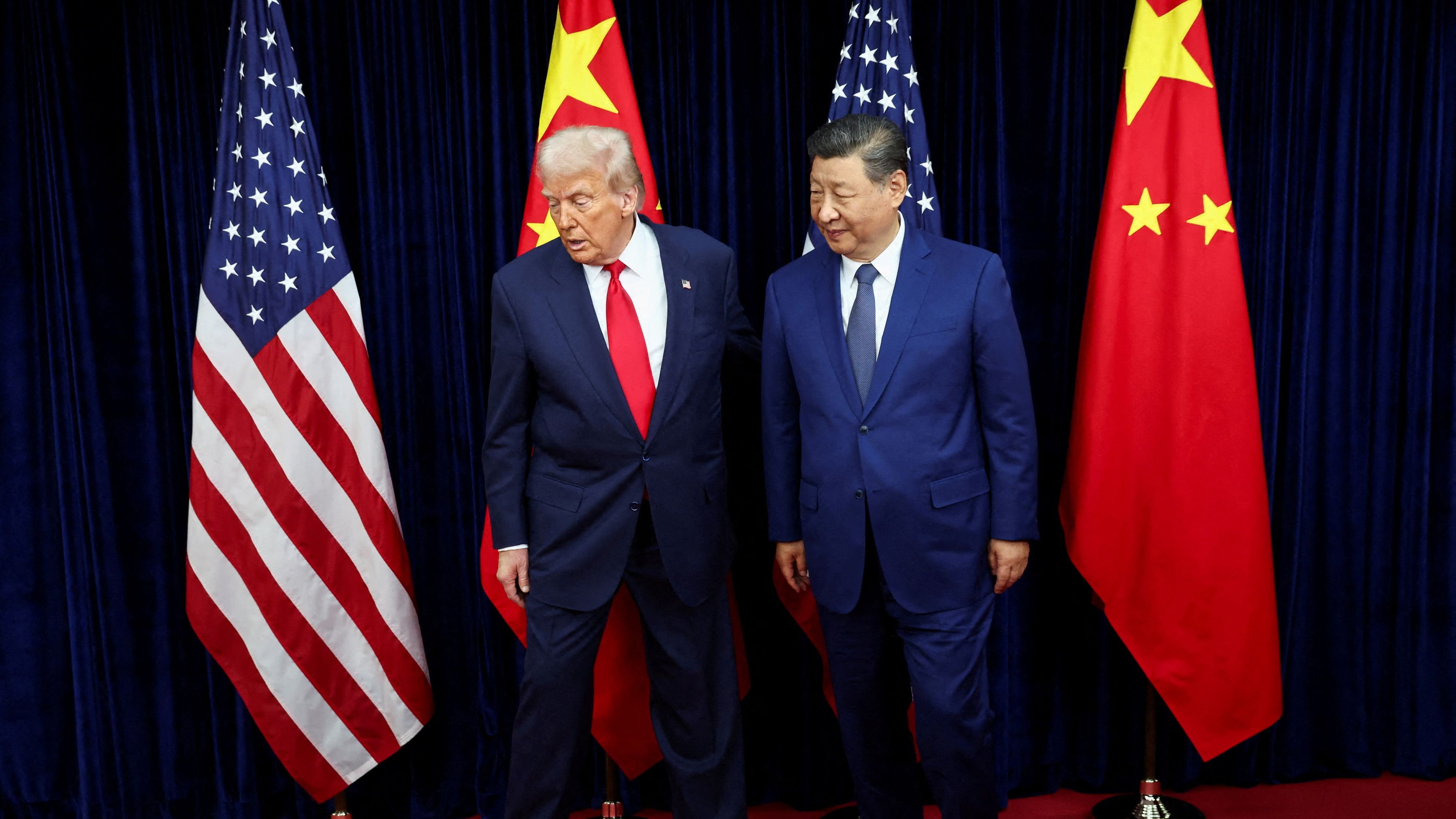
President Donald Trump is set to arrive in Beijing this week for a high-stakes summit with Chinese leader Xi Jinping, bringing with him a powerful cohort of American corporate leaders. The trip, which has been closely watched by global markets and diplomatic circles, signals a complex attempt to balance aggressive geopolitical positioning with the pragmatic demands of international commerce.
The White House has identified a delegation of 16 chief executives who will accompany the president, representing a cross-section of the United States’ most influential industries, from artificial intelligence and semiconductors to global finance and aerospace. This assembly of corporate power suggests that Trump’s business delegation to China is designed not only for diplomatic dialogue but as a mechanism for securing specific commercial agreements and purchase deals.
The timing of the visit is particularly fraught. The trip was previously delayed due to the ongoing war with Iran, a conflict that continues to volatilize global oil markets and disrupt critical supply chains. In recent statements, President Trump has criticized the Iranian response to U.S. Peace proposals, describing the current ceasefire as “unbelievably weak,” while simultaneously maintaining that his relationship with President Xi remains strong.
A Power List: The Corporate Heavyweights Heading to Beijing
The composition of the delegation reveals the administration’s priorities. By including leaders from the tech, financial, and industrial sectors, the U.S. Is signaling a desire to maintain market access while navigating deep-seated tensions over technology transfers and trade deficits.
Among the most notable attendees are Tesla CEO Elon Musk and Apple CEO Tim Cook. Musk’s inclusion is especially significant, marking a public rehabilitation of his relationship with the president after a period of estrangement following his departure from a top advisory role in the administration last May. For Cook, the trip is a critical opportunity to safeguard Apple’s intricate manufacturing and sales ecosystem within China.
The full list of executives scheduled to accompany the president includes:

- Technology & AI: Elon Musk (Tesla), Tim Cook (Apple), Sanjay Mehrotra (Micron), Cristiano Amon (Qualcomm), and Dina Powell McCormick (Meta).
- Finance & Investment: Larry Fink (BlackRock), Stephen Schwarzman (Blackstone), David Solomon (Goldman Sachs), Jane Fraser (Citi), and Ryan McInerney (Visa).
- Industrial & Aerospace: Kelly Ortberg (Boeing), H. Lawrence Culp Jr. (GE Aerospace), and Jim Anderson (Coherent).
- Trade & Logistics: Brian Sikes (Cargill), Michael Miebach (Mastercard), and Jacob Thaysen (Illumina).
While the list is extensive, some key industry players are missing. Cisco CEO Chuck Robbins was invited but is unable to attend due to the company’s earnings schedule. More tellingly, Nvidia CEO Jensen Huang was not invited. This absence comes at a critical juncture for Nvidia, as the company awaits necessary approvals from both the U.S. And Chinese governments to begin shipping the H200, an early model of its advanced A.I. Chips, to the Chinese market according to reports on the delegation’s composition.
The Diplomatic Agenda: Trade, AI, and Geopolitics
The summit is expected to move beyond general diplomacy to address specific structural changes in how the two superpowers interact economically. U.S. Officials have indicated that President Trump intends to propose the creation of a formal board of investment and a board of trade with China. These entities would likely serve as streamlined channels for resolving commercial disputes and facilitating large-scale purchase agreements.

However, the economic optimism is tempered by severe frictions. The discussions are slated to cover several “flashpoint” issues that have escalated in recent weeks:
- Artificial Intelligence: Tensions have risen over the export of high-end AI technology and the implementation of strict export controls designed to limit China’s military capabilities.
- Rare Earth Exports: The U.S. Remains concerned about China’s dominance over the minerals essential for green energy and defense technology.
- Regional Security: The status of Taiwan and the broader security architecture of the Indo-Pacific remain central to the geopolitical friction between Washington and Beijing.
- The Iran Conflict: With the war in Iran roiling global energy prices, the two leaders are expected to discuss the stability of oil markets and the viability of current ceasefire efforts as noted in recent White House briefings.
Why the CEO Presence Matters
In the current era of “economic statecraft,” the line between corporate interest and national security has blurred. By bringing CEOs like Larry Fink and Stephen Schwarzman, Trump is leveraging the influence of the world’s largest asset managers to signal that while the U.S. Will remain firm on security, it remains open to “smart business.”
President Trump emphasized this approach in the Oval Office, stating that while previous administrations may have been “taken advantage of,” the current strategy focuses on making “a lot of money with China” through more assertive negotiations. This blend of transactional diplomacy and corporate partnership is a hallmark of the current administration’s approach to the East.
Impact on Global Markets and Supply Chains
The outcome of this summit could have immediate repercussions for global supply chains, particularly in the semiconductor and automotive sectors. If the proposed boards of trade and investment are established, it could provide a more predictable framework for U.S. Companies operating in China, reducing the “political risk” premium that has plagued international investments since 2018.

For companies like Tesla and Apple, whose valuations are inextricably linked to Chinese consumption and production, the success of these talks is paramount. Any movement toward easing export controls or securing new purchase agreements for U.S. Agricultural and aerospace products—such as Boeing aircraft—would likely be viewed as a victory for the delegation.
Conversely, if the talks stall over AI technology or the situation in Taiwan, the market may brace for a new round of sanctions or retaliatory tariffs. The absence of Nvidia suggests that the “chip war” remains the most sensitive and least resolvable point of contention in the relationship.
| Sector | Key Representative | Primary Interest/Objective |
|---|---|---|
| Technology | Tim Cook (Apple) | Supply chain stability & market access |
| Automotive/AI | Elon Musk (Tesla) | Manufacturing autonomy & AI cooperation |
| Finance | Larry Fink (BlackRock) | Investment frameworks & capital flow |
| Aerospace | Kelly Ortberg (Boeing) | Securing aircraft purchase agreements |
| Agriculture | Brian Sikes (Cargill) | Expanding commodity exports |
What Happens Next
As the delegation departs Washington for Beijing, the global community will be looking for concrete signals of a “thaw” in relations. The primary indicator of success will not be the joint communiqués, but the announcement of specific business deals or the formalization of the proposed investment and trade boards.
The next confirmed checkpoint will be the official readout of the meetings between President Trump and President Xi Jinping, expected later this week, which will detail the agreements reached on trade and the status of the AI export disputes as reported by diplomatic sources.
Do you believe the inclusion of corporate CEOs helps or hinders national security interests in trade negotiations? Share your thoughts in the comments below or share this analysis with your network.