
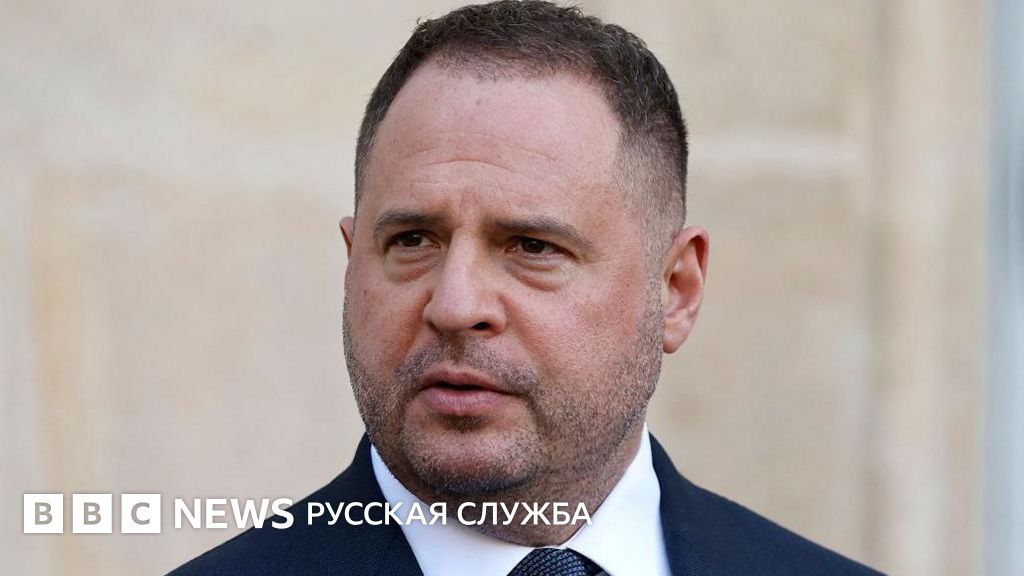
Ukrainian anti-corruption authorities have officially named Andriy Yermak, the former head of President Volodymyr Zelenskyy’s office, as a suspect in a high-profile money laundering case. The announcement, made on May 11, 2026, marks a significant escalation in a probe targeting high-level corruption within the Ukrainian government’s inner circle.
The Andriy Yermak money laundering investigation is being spearheaded by the National Anti-Corruption Bureau of Ukraine (NABU) and the Specialized Anti-Corruption Prosecutor’s Office (SAPO). According to official statements, the investigation has exposed an organized group involved in the legalization of 460 million hryvnia—approximately $10 million or €8.9 million—through luxury construction projects located near Kyiv.
Yermak, once regarded as one of the most influential figures in the country and a primary foreign policy negotiator for President Zelenskyy, was served with a notice of suspicion under Part 3 of Article 209 of Ukraine’s Criminal Code, which pertains to the laundering of property obtained through criminal means.
This legal action follows a period of intense scrutiny for the former chief of staff, who stepped down from his position in November 2025. His resignation occurred on the same day that NABU conducted searches of his office, a move that signaled the beginning of the end for his tenure as the president’s closest aide.
The “Midas Operation” and Energoatom Scandal
The current charges against Yermak are not isolated but are linked to a broader corruption probe known as the “Midas operation.” This investigation centers on an €85 million corruption scandal at Energoatom, Ukraine’s state-owned energy company. According to NABU, the members of the alleged criminal group laundered state funds, including those siphoned from Energoatom, by investing them into elite real estate.
Yermak is not the only high-ranking figure implicated in the wider probe. The investigation has also touched other associates of President Zelenskyy, including entrepreneur Timur Mindich and Oleksiy Chenyshov, the former deputy prime minister of Ukraine. Both Mindich and Chenyshov were previously charged with corruption, though they denied the allegations last year.
The scale of the alleged embezzlement is particularly sensitive given the context of Ukraine’s wartime economy. Reports indicate that the corruption scandal involving Energoatom involved funds that were intended for the country’s vulnerable energy infrastructure, which has been a primary target of Russian attacks.
The Fall of a Presidential Powerhouse
For years, Andriy Yermak was viewed as the “second most influential person” in Ukraine, acting as a critical bridge between the presidency, the parliament, and international allies. However, his influence became a liability in the autumn of 2025 as allegations of embezzlement and corruption began to surface publicly.
When President Zelenskyy announced Yermak’s resignation in November 2025, he thanked his long-time associate for his service but stated that the departure was necessary “to avoid any speculations.” Since then, Zelenskyy has remained largely silent regarding the specific legal proceedings and the alleged involvement of his former closest allies in the Midas operation.
Following his dismissal, Yermak claimed he was heading to the front lines to serve in the military. However, in mid-January 2026, Ukraine’s Defense Ministry reported to Verkhovna Rada deputy Yaroslav Zheleznyak that Yermak had not contacted any Territorial Recruitment Centers (TRCs) to request military service.
Legal Response and Current Status
Andriy Yermak has denied the allegations of luxury property ownership. Speaking to journalists in Kyiv on May 11, Yermak stated, “When the investigation is over, I will give comments. I have no mansions, I have only a flat and a car that you see.”
The investigative process continues to unfold with high visibility. On the day the suspicion was announced, a reporter from “Schemes,” the investigative unit of RFE/RL’s Ukrainian Service, observed SAPO prosecutor Valentyna Hrebenyuk entering Yermak’s vehicle for a meeting that lasted approximately 10 minutes.
The legal framework under which Yermak is being investigated—Article 209 of the Criminal Code—carries significant penalties if a conviction is secured, particularly when the laundering is conducted as part of an organized criminal group. The focus remains on tracing the flow of the 460 million hryvnia from state sources into the luxury construction projects outside the capital.
Broader Implications for Ukrainian Governance
This case represents a critical test for Ukraine’s anti-corruption institutions. As the country seeks continued support from Western allies, the ability of NABU and SAPO to prosecute figures as powerful as a former presidential chief of staff is seen as a benchmark for the rule of law.
The “Midas operation” highlights a systemic vulnerability where state funds, particularly those earmarked for critical infrastructure like energy, can be diverted into private real estate. The involvement of a former deputy prime minister and a prominent entrepreneur suggests a network of influence that spanned multiple levels of government.
For the global community, the outcome of the Andriy Yermak money laundering investigation will likely serve as an indicator of whether Ukraine can successfully purge high-level corruption while simultaneously managing a full-scale war. The transparency of the proceedings will be closely watched by international monitors and funding partners.
Key Case Details
- Primary Suspect: Andriy Yermak, former Head of the Office of the President of Ukraine.
- Investigating Agencies: National Anti-Corruption Bureau of Ukraine (NABU) and Specialized Anti-Corruption Prosecutor’s Office (SAPO).
- Amount Under Investigation: 460 million hryvnia (approx. $10 million / €8.9 million).
- Core Charge: Money laundering via elite construction near Kyiv (Part 3 of Article 209 of the Criminal Code).
- Connected Scandal: The “Midas operation” involving €85 million from state energy company Energoatom.
The next confirmed checkpoint in this case will be the conclusion of the police investigation, after which Yermak has indicated he will provide further comments. Further updates are expected as NABU and SAPO move toward formal court proceedings.
Do you believe these high-level prosecutions will strengthen Ukraine’s international standing? Share your thoughts in the comments below and share this report to keep the conversation going.